Freight Consolidation 101: How Combining Shipments Cuts Costs and Improves Supply Chain Efficiency
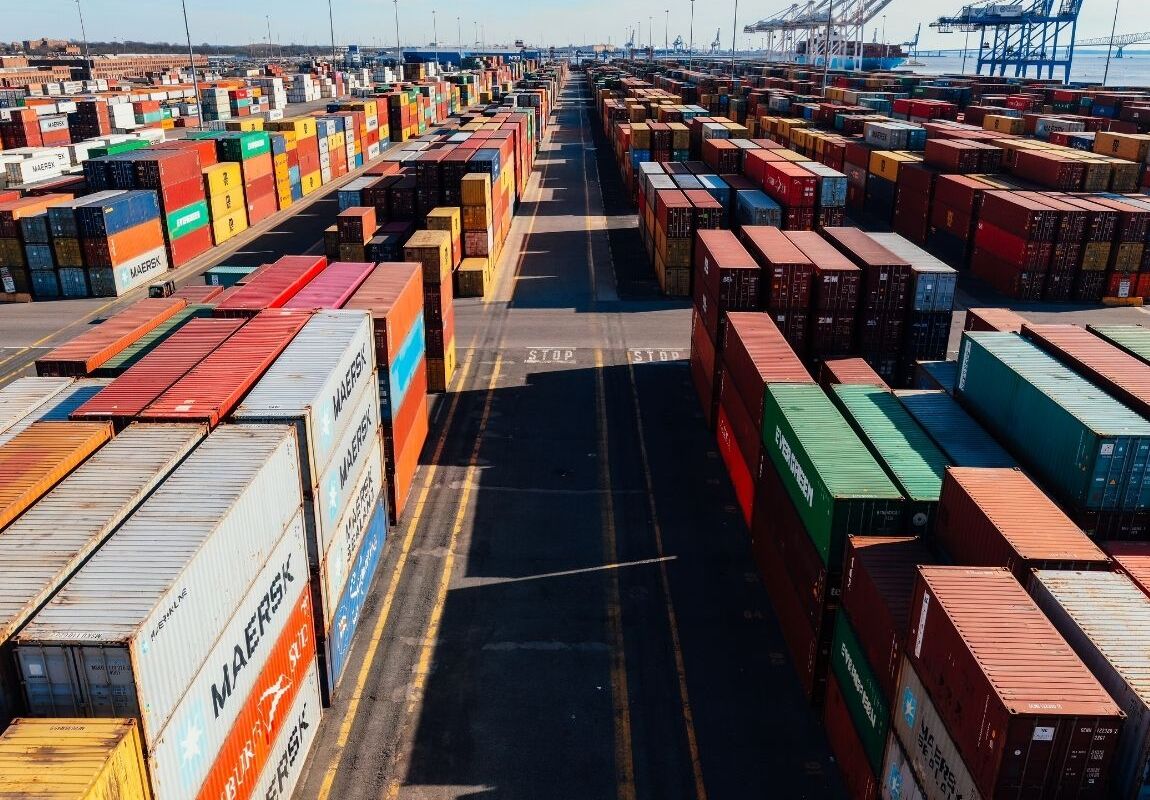
Freight consolidation (also called cargo consolidation) merges multiple smaller shipments into a larger load to save money and boost efficiency. In today’s market of rising fuel and labor costs, companies increasingly use consolidated freight shipping to streamline supply chains. By pooling shipments headed to the same region or customer, businesses reduce per-unit rates and simplify logistics, turning fragmented loads into full truckloads.
Why Freight Consolidation Is Growing in Demand
Transportation costs have surged in recent years, straining supply chain budgets. With global fuel prices and labor rates up, using one truck more efficiently makes big savings. At the same time, many companies face fragmented shipping – dozens of small LTL orders to the same area. Consolidation addresses both issues. By combining small loads (LTL) into fuller truckloads, firms lower shipping costs and cut handling fees. This also improves reliability and speed: a single consolidated load has fewer drop-offs and transfers, so deliveries stay on schedule. In short, as supply chains become more complex, freight consolidation delivers scale and predictability for shippers and carriers alike.
What Is Freight Consolidation?
Freight consolidation is the practice of combining smaller shipments into one larger shipment headed to the same destination. Think of it like carpooling for goods: instead of sending half-empty trucks, companies or freight forwarders bundle multiple LTL loads into full truckloads or containers. For example, an importer might send several small cargoes from different suppliers to one warehouse; those boxes are then loaded together into a single container or trailer. After consolidation, the goods travel as one shipment (often as a full truckload) until they reach a destination hub, where they are sorted and delivered onward. As volume goes up, per-unit freight cost goes down – so combining shipments achieves economies of scale.
Key terms to know:
- LTL Consolidation: Combining multiple less-than-truckload shipments into a fuller truck or container. This is like normal LTL freight, but coordinated through a consolidation hub or warehouse. In practice, shippers pay only for the space their cargo occupies, and the carrier covers shared costs.
- Multi-Stop Truckload: One truck makes several deliveries along a route. Consolidation often creates these multi-stop loads by grouping shipments to nearby locations, maximizing use of the trailer.
- Pool Distribution: A single shipper pools its goods destined for a region into one load. For example, a retailer “pools” shipments from multiple stores: all are sent together to a regional hub, then off-loaded and distributed to each store by local trucks. Pooling drastically cuts LTL fees while enabling faster local deliveries.
Types of Freight Consolidation Models
Freight consolidation can take several forms depending on shipment mode and customer needs. Common models include:
Traditional LTL Consolidation
Multiple small shipments (LTL loads) destined for the same area are grouped into one truck. Shippers drop their partial loads at a consolidation warehouse, where a logistics provider combines them into a fuller trailer. This is ideal for small to mid-sized shipments that don’t fill a truck on their own. By combining LTL freight, shippers gain FTL pricing and often pay only for the space used. For example, several manufacturers shipping to the same distributor could each send a few pallets; at a consolidation center these pallets are loaded together into one outbound truck.
Container Freight Consolidation (Imports)
Multiple importers share one ocean container (or truck) when individual orders are too small to fill it. A freight forwarder or 3PL receives LCL (less-than-container-load) shipments from different shippers and stuffs them into a full container (FCL). This means each company benefits from bulk container rates and lower per-unit ocean freight. For instance, a group of apparel and electronics firms might send their goods to a consolidation warehouse near the Port of Shanghai. One container is filled with all their products and shipped together to Los Angeles; once unloaded, each company’s cargo is sent to its own warehouse. Container consolidation reduces import costs and speeds unloading (customs and port fees apply only once per container rather than per smaller shipment).
Cross-Dock Consolidation
This fast-flow method uses a warehouse as a simple transfer point. In cross-docking, inbound shipments are unloaded and immediately transferred to outbound trucks with little or no storage time. Cross-docking facilities sort and merge freight on the fly. For example, goods from multiple suppliers can all arrive at a cross-dock center; forklifts quickly move them to outbound trucks bound for common destinations. Since shipments are never shelved long-term, cross-dock consolidation speeds up delivery and cuts handling costs. Retailers and grocers often use cross-docking to keep perishable items moving straight to stores.
Pool Distribution
In pool distribution, a shipper “pools” its own shipments headed to a multi-stop route. For example, a retailer with many stores in one region might consolidate pallets for all those stores into one trailer. That truck takes all the pallets to a regional distribution center, where they are sorted and loaded onto local delivery vehicles. Pool distribution thus merges regional deliveries into one full load, then breaks it back down close to the final destinations. This reduces cost by using cheaper long-haul shipping for most of the distance, while still meeting the tight delivery windows of local distribution. The end result: significant savings over pure LTL and fewer handling touches on the freight.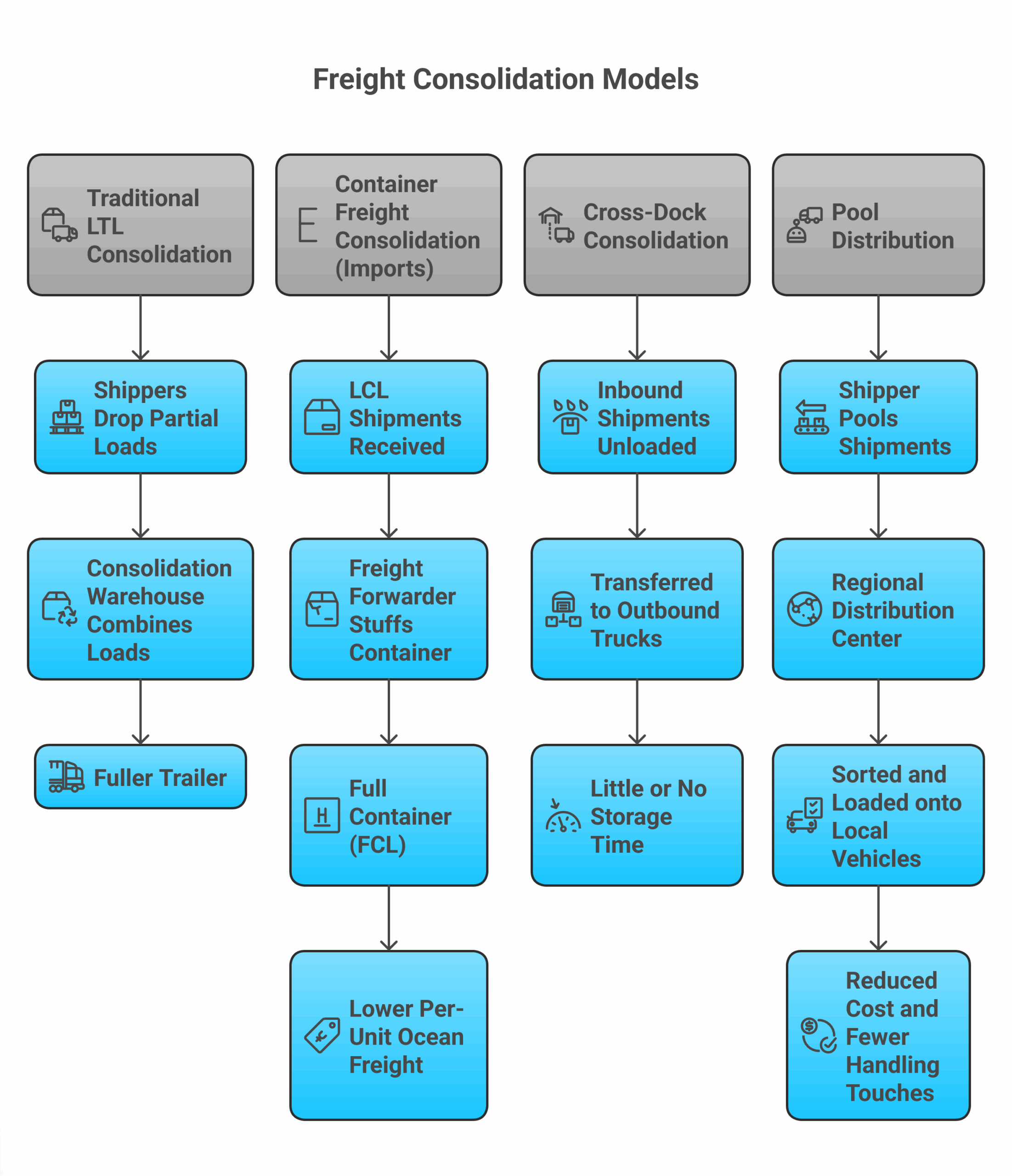
Benefits of Freight Consolidation
Freight consolidation offers several key advantages for shippers:
- Lower Transportation Costs: By maximizing truck or container utilization, consolidation dramatically cuts per-unit freight charges. Shippers share carrier costs across many shipments, avoiding high LTL premiums. Studies show that fully loaded trucks reduce cost per pallet-mile and allow companies to negotiate better rates. Consolidation also avoids paying for empty trailer space – you pay only for what you ship.
- Reduced Carbon Footprint: Fewer trucks on the road mean less fuel burned and emissions. Consolidated freight fills vehicles to capacity and minimizes unnecessary trips. For instance, each airplane shipment emits ~6× more CO₂ than trucking – so combining loads by ground transport significantly lowers climate impact. By using fewer trips and optimized routes, consolidation makes the supply chain greener and aligns with sustainability goals.
- Faster Transit and Delivery: Consolidation often means fewer handling stops. A consolidated truckload can travel more directly than several separate LTL parcels. With fewer touchpoints (loading/unloading events), shipments spend less time in transit. Consolidated cross-country loads arrive in ~2–3 days versus 6–10 days for highly fragmented LTL routes. In short, planning loads end-to-end allows carriers to optimize routes and meet delivery schedules more reliably. Faster, more predictable delivery boosts customer satisfaction.
- Lower Damage Risk: Every loading or transfer of freight carries a risk of damage. Consolidated shipments typically travel through fewer docks and handoffs than separate LTLs. For example, instead of unloading the same pallet 4–5 times in an LTL network, a consolidated load might only unload at origin, a consolidation center, and destination. Fewer handling steps translate to markedly fewer damaged goods and claims. In practice, shippers see better product integrity and less spoilage or breakage with consolidation.
- Better Inventory Planning: Consolidation usually brings more stable shipping schedules. When loads are batched on regular cycles (daily, weekly, etc.), companies can forecast deliveries and stock levels more accurately. Reliable, full truck deliveries mean production and retail inventory can be aligned on known dates. This stability aids demand planning and can reduce warehousing buffer stock. (Over time, businesses with predictable consolidated shipments spend less on rush freight and excess inventory.)
When Companies Should Use Freight Consolidation
Freight consolidation is most effective in these scenarios:
- High-Frequency, Small Shipments: If you regularly send partial loads (even just a pallet or two) to the same region, consolidation can cut costs. Businesses that ship many small orders each week (for example, e-commerce sellers or suppliers with frequent LTL shipments) benefit greatly.
- Common Destinations: When multiple shipments are headed to the same warehouse, distribution center or city, combining them makes sense. Retailers shipping to regional DCs or manufacturers sending kits to assembly plants often have fragmented inbound freight that can be pooled.
- Significant LTL Spend: Companies spending heavily on LTL or parcel freight may achieve savings by switching to consolidated loads. Even a 10–20% reduction in freight expense can justify implementing consolidation.
- E-commerce and Retail with Many SKUs: Retailers and DTC brands with multiple products going to the same destinations can pre-combine orders from different suppliers. For example, a merchant stocking several SKUs at a regional fulfillment center could ship items from each vendor into one consolidated container.
- Importers of LCL Cargo: If you frequently import less-than-container-load shipments, look into buyer’s consolidation programs or freight forwarders that merge your LCL cargo into FCL voyages. This gives small importers bulk rates on international freight.
- Manufacturers with Partial Truckloads: When production schedules result in half-full loads, manufacturers can save by holding and consolidating those partial loads (possibly from multiple plants) until a full truck can be dispatched.
The Role of Warehousing in Freight Consolidation
Warehouses and distribution centers play a vital role in making consolidation work smoothly:
- Staging & Temporary Storage: Consolidation hubs hold incoming shipments from various sources. Warehouses receive small loads (from factories, imports, etc.) and stage them until all planned shipments are ready. This staging lets operators wait for full truckloads or full containers before dispatch. Short-term warehousing ensures that goods can be merged together even if they arrive at different times.
- Cross-Docking Facilities: Some consolidation centers operate as cross-docks with minimal storage. Inbound pallets are unloaded from one truck and immediately reloaded onto outbound vehicles for consolidation. Because products spend little time on the shelves, shipments move fast through the hub. Cross-dock consolidation is ideal when speed is paramount – e.g. perishable goods or time-sensitive shipments are transferred to the correct outbound route within hours of arrival.
- Pallet Rework & Repackaging: Warehouses may repalletize, label, or repackage cargo to create consolidated loads. For instance, a consolidation center can break down mixed pallet loads from different suppliers and rebuild them into unified pallets for the new combined shipment. Handling (shrinkwrapping, sorting, labeling) is done once, rather than multiple times across separate shipments. This streamlines logistics and reduces errors.
- Regional Distribution Centers: After a long-haul consolidation run, goods often arrive at a regional DC (a “pool point”). There, the consolidated shipment is broken into local delivery lots. For example, a single truckload destined for the Midwest might be split at a central warehouse and sent out on smaller trucks to each local store. Regional DCs are strategic locations for “last-mile” pooling – they allow shippers to use full truckloads on highways and then handle local deliveries efficiently.
How to Choose the Right Freight Consolidation Provider
Selecting the right consolidation partner or 3PL is critical. Here are key factors to consider:
- Location and Network: Choose a partner with warehouses and terminals near your supply chain hubs. Providers should have facilities close to major ports, rail yards, and customer clusters so that shipments don’t deadhead far before consolidation. A nationwide or regional network of yards and cross-docks lets you consolidate efficiently across the country (for instance, picking up ocean cargo at a port vs. routing it through a distant inland hub).
- Comprehensive Services: The provider should offer more than basic trucking. Look for expertise in LTL/FTL coordination, container devanning, palletizing, labeling, and any special handling your freight requires. A consolidator that can receive mixed cargo from various suppliers and ready it for shipment (repacking, re-palletizing, pallet rework) will save you time and money.
- Strong Carrier Partnerships: Good consolidators maintain broad carrier networks. They should have relationships with multiple LTL and FTL carriers to secure volume discounts and capacity. This means they can mix and match trucks, trucks, and even use 4PL or freight forwarding solutions to get the best rates.
- Technology and Visibility: Real-time tracking and order management tools are essential. Choose a provider that offers a transparency portal or integrations so you can see consolidated shipments in transit. Digital platforms help you predict delivery and avoid scheduling conflicts.
- Flexible Storage & Cross-Dock Capability: Your consolidation partner must handle peak and off-peak volumes. Ample temporary storage space is needed if loads aren’t ready immediately, and sufficient dock doors and forklifts are required to combine and break down freight quickly. Ask if they offer value-add services like on-site inventory or blending for just-in-time consolidation.
- Reputation and Reliability: Finally, vet providers for experience in consolidation. Not all 3PLs handle complex consolidation well. Look for proven track records (testimonials, case studies) and transparent pricing. A trustworthy consolidator will walk you through fees, offer upfront cost breakdowns, and ensure smooth execution.
How OLIMP Supports Freight Consolidation Across the U.S.
As an example of a comprehensive consolidation provider, OLIMP Warehousing offers end-to-end consolidation services across its U.S. network. OLIMP uses short-term warehousing to stage incoming goods from different suppliers, then cross-docks them into outbound truckloads. Its nationwide facilities enable regional load pooling and last-mile consolidation. Key features include:
- Short-Term Staging: OLIMP’s warehouses receive pallets and container loads from various vendors. These goods are organized and consolidated into shipments destined for the same area.
- Cross-Docking Services: With dozens of docks and 24/7 access, OLIMP quickly transfers freight from inbound carriers to outbound trucks. This minimizes delays and storage time while creating full loads.
- LTL/FTL Coordination: OLIMP combines smaller LTL shipments into full truckloads, allowing customers to pay only for the trailer space they use. Conversely, it can break down FTL deliveries into LTL shipments for regional distribution.
- Port Transloading: OLIMP handles container devanning at key U.S. ports, moving goods from overseas containers to domestic trailers. This helps importers quickly consolidate ocean cargo into full inland loads.
- Network of Regional Warehouses: With strategically located warehouses, OLIMP supports pool distribution. For example, multiple smaller shipments bound for the same retail chain can be combined at a nearby DC and routed together to multiple store locations.
By offering these services under one roof, companies like OLIMP make freight consolidation practical. Shippers benefit from OLIMP’s expertise in planning and executing combined shipments, complete visibility of consolidated loads, and the cost savings of sharing truck space.
Final Thoughts
Freight consolidation is a proven way to cut shipping costs and streamline logistics. By pooling shipments, companies of all sizes—retailers, manufacturers, importers, brokers—can turn many small moves into one efficient load. This saves money, speeds up delivery, and even supports sustainability goals. If your supply chain involves frequent small shipments, consider working with a freight consolidator or 3PL partner. They can help design a consolidation plan that fits your network and unlocks the benefits of combined freight. Ultimately, smarter shipping through consolidation can make your supply chain leaner, more reliable, and more cost-effective.
You may be interested in
Freight Consolidation Services in North America: Top Benefits for Small Businesses
Freight consolidation (also known as consolidated freight shipping) means combining several smaller shipments into one larger load. This strategy – often called “carpooling for cargo” – lets businesses pay only for the space they use. By grouping multiple LTL shipments into a single full truckload or container, small and midsize companies (e-commerce sellers, manufacturers, importers/exporters […]
Freight Shipping Guide for Growing Brands: Reduce Costs & Deliver Faster
Shipping becomes more complex as your ecommerce or retail brand grows. Once your products exceed parcel‑carrier limits, packages heavier than 150 pounds are considered freight, you must navigate new modes, pricing models and logistics partners. Choosing the wrong mode or failing to optimize packaging and contracts can erode margins, while a strategic freight program shortens delivery […]
Retail Consolidation Services: The Complete Guide to Cost Savings and OTIF Compliance
Retail consolidation is a logistics strategy that groups multiple small shipments for the same retailer into one larger truckload. Instead of sending many underfilled LTL (less-than-truckload) loads, suppliers pool their goods to form consolidated full truckloads. This approach leverages economies of scale – sharing truck space to one retail center – and dramatically cuts per-unit […]
Ready to streamline your warehousing needs?
Request a quote today and discover how OLIMP's tailored solutions can optimize your operations
