Smaller but National US Warehousing Companies: Why Mid‑Sized 3PLs Deliver Big Results
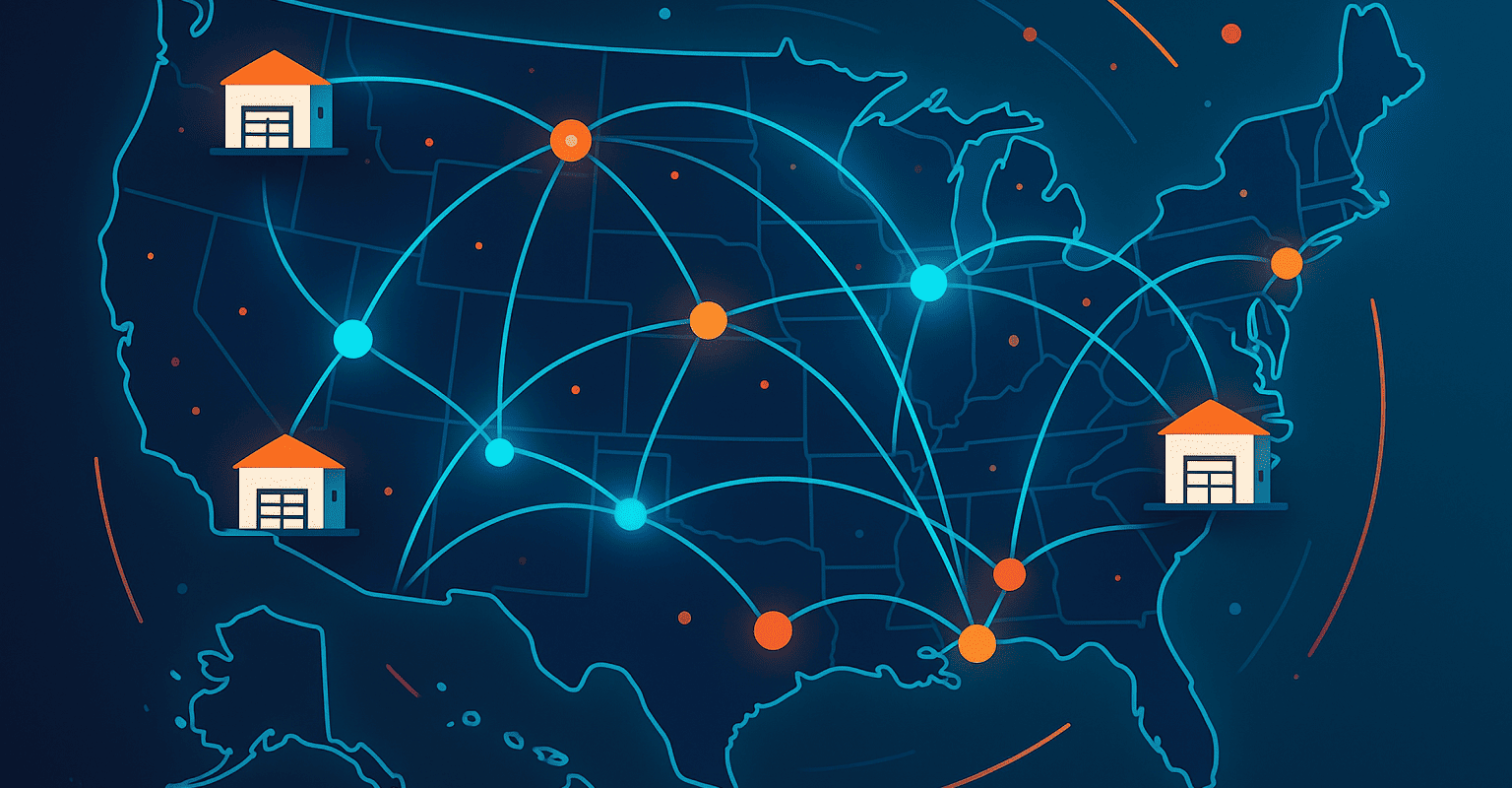
The U.S. third‑party logistics (3PL) market generated $299.5 billion in revenue in 2023, representing over 13 % of national logistics costs. With more than 72,000 3PL providers operating across the country, finding the right warehouse partner is both an opportunity and a challenge, especially for small and mid‑sized brands seeking nationwide coverage without paying for big‑box capacity. This guide explains why smaller national warehouse companies matter, how industry trends are reshaping logistics, and how Olimp simplifies coast‑to‑coast fulfillment.
Understanding 3PL and Warehousing Basics
What does a 3PL do? The Council of Supply Chain Management Professionals defines logistics management as part of supply‑chain management that plans and controls the efficient forward and reverse flow of goods and information between the point of origin and the point of consumption. Third‑party logistics providers (3PLs) handle transportation, warehousing, materials handling, order fulfillment, and supply/demand planning.
Market size and segments: The U.S. 3PL market is divided into dedicated contract carriage, value‑added warehousing and distribution, international transportation management and domestic transportation management. Domestic transportation management (freight brokerage, intermodal, managed transportation, last‑mile delivery) accounts for the largest share, and brokers must hold an FMCSA license.
Why Mid‑Market Brands Need Nationwide Coverage
E‑commerce sales are projected to reach $7.06 trillion in 2026 and continue climbing. Customers expect two‑day or even same‑day delivery. Small and mid‑sized brands with one regional warehouse cannot meet those expectations without skyrocketing shipping costs. They need multi‑node warehousing, multiple strategic locations that position inventory closer to customers, cut transit times and reduce carbon footprint.
Large enterprise 3PLs often offer these networks but may impose long‑term contracts, high minimum volumes or complex integrations. Smaller national warehouse companies fill the gap by offering nationwide reach with flexible capacity and personalized service. These providers are ideal for growing e‑commerce brands, subscription services, manufacturers and retailers that want coast‑to‑coast coverage without losing agility.
Trends Shaping the Modern 3PL Landscape
Technology and customer expectations are reshaping logistics in 2026:
- AI, robotics and automation: Forty‑one percent of supply‑chain organizations have already adopted robotics and automation, and another 42 % plan to within five years. Automated picking systems, collaborative robots (cobots) and AI‑driven route planning improve speed and accuracy.
- Predictive analytics: Advanced analytics and IoT sensors allow 3PLs to forecast demand, optimize inventory and monitor fleet performance.
- Blockchain & cybersecurity: Blockchain improves traceability and reduces fraud, while robust verification technologies and payment controls protect against cyber threats.
- Omnichannel logistics and micro‑fulfillment: Micro‑warehouses near urban centers shorten last‑mile delivery times, enabling same‑day delivery and fast returns. Omni‑channel logistics integrates online and in‑store fulfillment.
- Sustainability: Clients increasingly demand electric fleets, renewable‑powered warehouses and eco‑friendly packaging.
- Risk management: Geopolitical and economic uncertainties make diversified supply bases and regionalized networks critical.
What to Look for in a Smaller National Warehouse Provider
When choosing a nationwide 3PL, consider these factors:
- Coverage and scalability: Does the provider offer multiple facilities across major U.S. markets? Can they scale up during peak seasons and scale back afterward?
- Transparent pricing and no long‑term commitments: Look for on‑demand models that let you pay only for the space and services you use.
- Technology integration: Ensure the provider uses modern warehouse‑management systems, barcoding, real‑time inventory tracking and integration with your e‑commerce platform.
- Specialized storage: If you need temperature‑controlled, food‑grade, hazardous‑materials or bonded storage, verify that the provider maintains those certifications.
- Safety and compliance: Confirm that warehouse partners comply with OSHA’s general industry standards (29 CFR 1910) for walking‑working surfaces, exit routes, PPE and materials‑handling equipment. Ask for evidence of insurance and FMCSA licensing (for freight brokers).
- Value‑added services: Look for cross‑docking, transloading, kitting, returns management, packaging, drayage and yard storage services.
- Security: Facilities should have sprinkler systems, gated yards, 24/7 onsite security, surveillance cameras and ramps for efficient loading.
Digital Platforms vs. Traditional 3PLs
| Feature | Digital 3PL Platform (OLIMP) | Traditional National 3PL |
| Network access | Connects to 5,000+ vetted warehouses and fulfillment centers across North America. | Owns or leases a fixed number of facilities; capacity may be limited or concentrated in specific regions. |
| Booking process | Online portal; submit requirements and receive customized quotes within minutes. | Requires calls and negotiations; slower quoting and contract processes. |
| Flexibility | On‑demand storage and no long‑term leases-scale up or down as needed. | Often requires long‑term contracts or minimum volume commitments. |
| Ownership | Does not own warehouses; vets partners and verifies insurance. | Owns or leases facilities; may be asset‑heavy and less agile. |
| Special features | Access to facilities with sprinklers, gated yards, 24/7 security, loading ramps and proximity to airports/railways. | Features vary; not always transparent up front. |
Real‑World Example: OLIMP’s Nationwide Solution
OLIMP reimagines warehouse services for modern shippers by creating a digital marketplace for warehousing and fulfillment. Instead of searching for space manually, businesses submit a quote request through the OLIMP platform and receive tailored options. Key benefits include:
- Nationwide coverage: A network of 5,000+ vetted 3PL warehouses and fulfillment centers across the U.S. and Canada ensures inventory can be positioned near major population centers.
- Scalable peak‑season storage: OLIMP allows retailers to quickly secure additional space during holidays or promotions and scale back afterward without being locked into long leases.
- Comprehensive services: Partners offer inventory storage, pick‑and‑pack fulfillment, cross‑docking, transloading, drayage, pallet reworks, disposal and yard storage. Specialized facilities include cold storage, HAZMAT, food‑grade, medical and bonded warehouses.
- Safety & security: Many facilities feature advanced sprinkler systems, gated yards, 24/7 security, ramps and camera surveillance. OLIMP vets partners and verifies insurance to protect clients.
- Rapid onboarding: The digital platform reduces time spent on phone calls and negotiations; quotes are delivered quickly, helping carriers return to the road sooner.
Step‑by‑Step Guide: Selecting a Smaller National 3PL
- Assess your needs: Determine product types (dry goods, perishable, hazardous), order volumes, target customer locations and seasonal fluctuations.
- Check coverage and capacity: Ensure the provider has nodes in the regions where your customers live and can scale to meet peak demand.
- Verify safety and compliance: Confirm OSHA compliance, FMCSA licensing and insurance coverage.
- Evaluate technology: Look for providers offering WMS integrations, real‑time tracking, automated picking and analytics.
- Compare services and fees: Review storage rates, pick‑and‑pack fees, minimums, special handling charges and service level agreements.
- Review contracts: Check length of commitment, termination clauses, insurance liabilities, service guarantees and data security provisions.
- Monitor performance: Track key metrics such as order accuracy, on‑time shipping and inventory turnover; adjust your network or provider mix as needed.
Conclusion: Turn Warehousing into a Competitive Advantage
As e‑commerce growth and evolving consumer expectations continue to put pressure on logistics networks, small and mid‑sized brands must look beyond large, one‑size‑fits‑all 3PLs. Smaller national warehouse companies-especially those accessible through digital platforms- provide nationwide coverage, flexible contracts, specialized storage and advanced technology. By prioritizing safety, scalability and transparency, businesses can transform warehousing from a cost center into a competitive advantage.
Ready to optimize your supply chain? Use OLIMP’s digital platform to connect with a network of 5,000+ vetted warehouses and fulfillment centers across North America. Submit your requirements, receive customized quotes and scale your logistics operations with confidence.
Frequently Asked Questions (FAQ) – OLIMP Warehousing
Q: What are smaller but national US warehouse companies?
Smaller national warehouse companies are 3PL providers or digital platforms that operate a network of facilities across the U.S. but aren’t huge enterprise‑level logistics firms. They offer nationwide coverage, flexible contracts, technology integration and personalized service, making them ideal for small and mid‑sized brands seeking coast‑to‑coast fulfillment without long‑term commitments.
Q: How does micro‑fulfillment benefit small businesses?
Micro‑fulfillment centers are compact, highly automated warehouses located near urban customers. They use robotics and automated storage systems to prepare orders quickly and enable same‑day or next‑day delivery. For small businesses, micro‑fulfillment lowers shipping costs, improves customer service and facilitates entry into new markets without large investments.
Q: Do digital 3PL platforms replace traditional 3PLs?
Digital platforms like Olimp do not replace 3PLs; instead they aggregate and vet warehouses and fulfillment centers, giving businesses access to a wide range of providers through a single portal. This simplifies the search process, provides transparent pricing and allows clients to scale on demand. Traditional 3PLs remain important partners within these networks, but digital marketplaces make them more accessible.
Q: Can I store goods that require special handling?
Yes. Olimp’s network includes temperature‑controlled, HAZMAT, bonded, frozen, food‑grade, medical and other specialized facilities. You simply indicate your requirements when requesting a quote, and vetted partners that meet those specifications will respond.
You may be interested in
Choosing the Right National 3PL for D2C E‑Commerce Fulfillment
Direct‑to‑consumer (D2C) e‑commerce has exploded in recent years. Lockdowns accelerated a decade of growth within just a few months, and consumer expectations for fast, affordable delivery have never been higher. A 2025 survey shows that 74 % of online shoppers expect delivery within two days and 56 % of shoppers aged 18‑34 expect same‑day delivery. In this […]

Complete Guide to Dry Warehouse Storage and Dry Goods Shipping (2025 Update)
In today’s fast‑moving supply chains, ambient storage plays an essential role in keeping non‑perishable products safe, organized and ready for distribution. Dry warehouse storage refers to facilities that keep goods at room temperature and protect them from moisture, pests and contamination. Unlike cold storage, which relies on refrigeration or freezing, dry warehouses provide clean, climate‑stable […]

Need a Warehouse Now? Your Guide to Securing Flexible Storage with OLIMP
In today’s fast‑moving economy, businesses can’t afford to wait weeks or months for warehouse space. E‑commerce retailers, manufacturers, freight brokers and 3PLs often face sudden spikes in inventory, seasonal peaks, returns and supply‑chain disruptions that require space now. This guide explains how OLIMP’s on‑demand warehousing platform connects you with a nationwide network of storage facilities—so […]
Ready to streamline your warehousing needs?
Request a quote today and discover how OLIMP's tailored solutions can optimize your operations
