Lean Warehousing: How to Reduce Waste and Improve Operations
02/11/2026
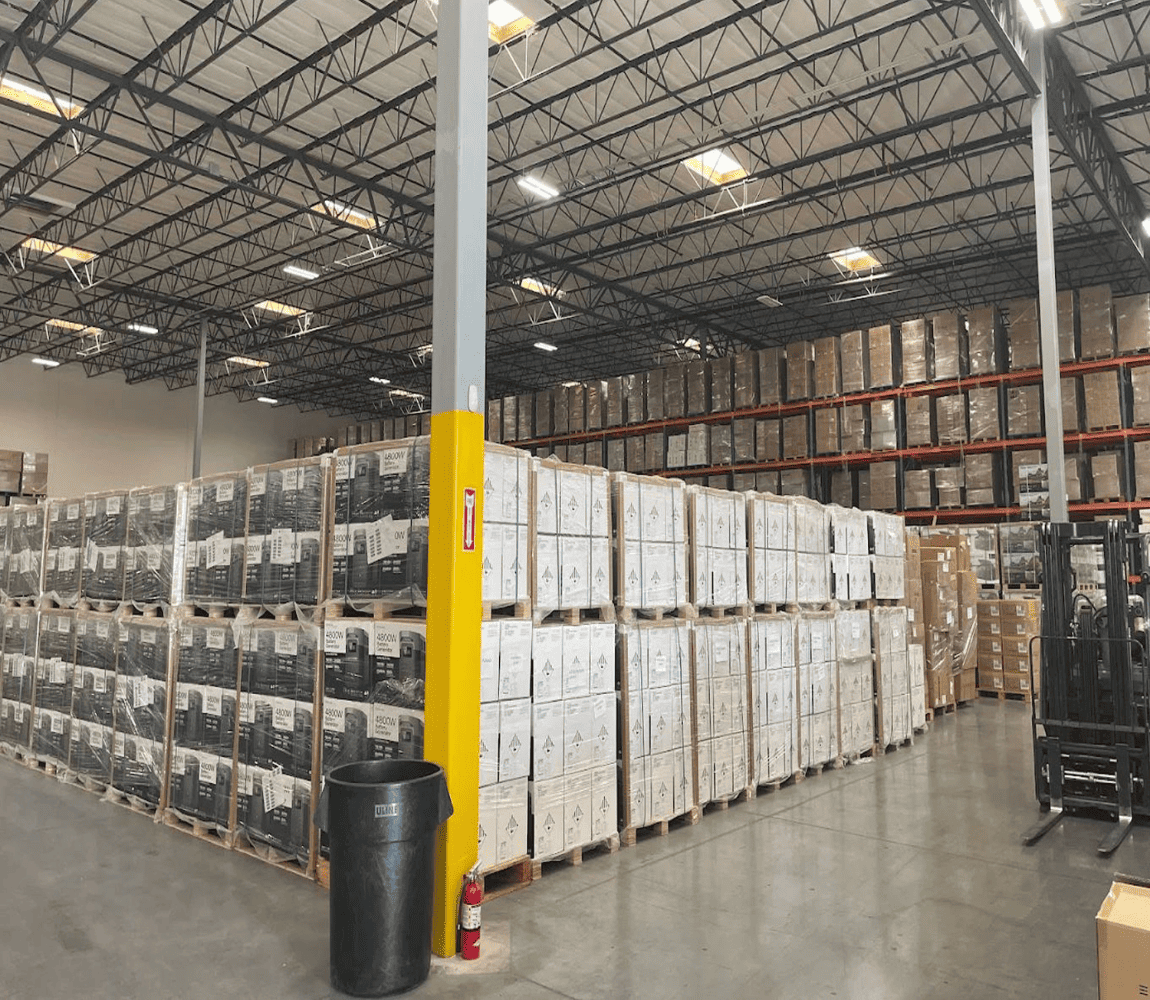
- Lean warehousing eliminates non‑value‑adding activities and optimizes flow.
- Five core principles-value, value stream, flow, pull and perfection-guide the improvement process.
- 5S (Sort, Set in Order, Shine, Standardize, Sustain) is a practical framework for organizing and sustaining lean practices.
- Benefits include reduced costs, faster fulfillment, better space utilization, greater flexibility and higher employee morale.
- Implement lean by auditing processes, redesigning layout, standardizing work, integrating technology and engaging employees in continuous improvement.
- Lean warehousing matters because rising e‑commerce demands and labor costs make efficiency essential in U.S. logistics.
Lean warehousing is an approach to warehouse management that reduces unnecessary movement, waiting, errors, and excess inventory while improving the flow of goods and information. It applies continuous improvement to receiving, storage, picking, packing, and shipping.
For manufacturers, distributors, and third-party logistics providers, the practical goal is reliable fulfillment with fewer avoidable delays and costs. Start by understanding where work stops, why mistakes happen, and which activities create extra handling.
What Are the Five Principles of Lean Warehousing?
The five lean principles provide a framework for improving how a warehouse serves its customers:
- Define value. Establish what the customer needs: accurate quantities, undamaged products, correct labels, and shipment within the agreed window.
- Map the value stream. Follow goods and information from receipt to dispatch. Record processing time, waiting, handoffs, and repeated work.
- Improve flow. Remove obstacles that interrupt movement between tasks, such as unclear storage locations or replenishment that arrives after picking begins.
- Use pull. Replenish or release work in response to downstream demand or consumption, with clear limits on quantities.
- Pursue continuous improvement. Involve employees in identifying problems, testing changes, and updating standard work.
Required safety inspections, product checks, and traceability controls belong in the process. Review how to perform them efficiently while preserving their purpose.
Where Does Waste Appear in Warehouse Operations?
The seven classic categories of waste translate into everyday warehouse problems. Use these examples during a walkthrough:
| Type of waste | Warehouse example | Practical response |
|---|---|---|
| Transportation | Moving a pallet through several temporary staging areas | Plan its destination before unloading |
| Inventory | Holding more stock than demand and supply risk justify | Review replenishment quantities and aging stock |
| Motion | Walking to find labels, tools, or products | Give frequently used items clear, accessible locations |
| Waiting | Pickers stop because replenishment is late | Coordinate replenishment with picking demand |
| Overproduction | Preparing promotional kits before quantities are confirmed | Release kitting work against authorized demand |
| Overprocessing | Entering the same shipment details into multiple systems | Capture data once and share it through integrations |
| Defects | Wrong items, damaged packaging, or incorrect labels | Investigate causes and improve checks at the relevant step |
Ask the people doing the work which problems recur. Their observations can reveal delays that a dashboard misses.
How Does 5S Improve a Warehouse?
The 5S method organizes the workplace and makes standards visible. Apply it to a defined area, such as receiving or packing, before expanding.
- Sort: Remove unnecessary tools and packaging. Flag obsolete or unidentified stock for an authorized inventory review.
- Set in order: Assign locations for scanners, labels, supplies, and equipment. Make storage and staging areas easy to identify.
- Shine: Clean and inspect work areas so leaks, damaged equipment, and other abnormalities are easier to spot.
- Standardize: Establish consistent labels, workstation layouts, and routines for maintaining the first three steps.
- Sustain: Assign ownership, train each shift, and check whether the agreed standards remain practical and effective.
For example, a packing station could have marked supply locations and a replenishment trigger for cartons. Measure whether this reduces interruptions instead of judging success only by appearance.
How Can You Improve Lean Warehouse Operations?
Make Receiving and Putaway Predictable
Confirm delivery appointments, expected quantities, and handling requirements before freight arrives. At receipt, verify the shipment, record discrepancies, and assign goods to a suitable location.
Use consistent warehouse receiving procedures so goods do not remain on the dock because paperwork, labels, or location assignments are missing. Define who resolves exceptions and how other teams can see their status.
Reduce Travel and Picking Errors
Review product locations using pick frequency, order combinations, item size, handling needs, and safe access. Frequently picked products should be easy to reach without creating congestion.
Compare warehouse order picking methods against your order profile. Batch picking can reduce repeat travel when orders share products, but sorting and packing must be able to handle the resulting workload.
Support mispick prevention with readable location labels, clear units of measure, and appropriate product and location scan checks. Investigate recurring errors before changing productivity targets.
Match Inventory to Demand and Supply Risk
Pull replenishment responds to consumption or downstream requirements. Forecasts still help plan purchasing, staffing, and seasonal capacity.
Set inventory buffers around demand variation and supply reliability. Reduce stock as those underlying conditions improve; a lower inventory balance alone does not prove that the warehouse is more efficient.
For inbound freight, just-in-time shipping requires coordination among suppliers, carriers, and receiving teams. Account for transport delays and product criticality before tightening delivery windows.
Coordinate Shipping and Cross-Docking
Release picking and packing work with carrier cutoffs and loading capacity in mind. Aligning warehousing and transportation schedules helps prevent finished orders from waiting for a truck or trucks from waiting for unfinished freight.
Where inbound goods have a confirmed outbound destination, cross-docking may remove storage and retrieval steps. Confirm timing, labels, freight condition, and handling requirements before routing a shipment through a cross-dock operation.
How Does a Warehouse Management System Support Lean?
Lean warehouse management defines how work should improve. A warehouse management system, or WMS, helps teams execute and record that work.
When evaluating a lean warehouse management system, focus on capabilities that address identified problems:
- Product and location scanning to support transaction accuracy.
- Putaway and picking rules suited to the facility.
- Replenishment triggers that help prevent empty pick locations.
- Cycle counting and a clear process for resolving discrepancies.
- Inventory status controls for available, held, or damaged goods.
- Integrations that reduce repeated data entry.
Available warehouse management capabilities vary by platform and configuration. Test your actual workflows, including exceptions, before purchasing software.
Avoid common WMS selection mistakes by involving receivers, pickers, supervisors, and inventory teams in the evaluation. Agree on process rules and clean up item data before automating them.
How Does a Lean Manufacturing Warehouse Support Production?
A lean manufacturing warehouse supplies materials to production in the quantities and timing the next process needs. This applies just-in-time production principles to the movement of raw materials, components, and finished goods.
A practical setup might use designated component locations, standard container quantities, and a card or electronic signal when materials need replenishment.
For example, consuming a container of components can trigger its replacement from warehouse stock. The replenishment quantity and delivery frequency should reflect usage, lead time, and disruption risk. The warehouse and production teams must also agree on how to report shortages and handle urgent requirements.
How Do You Implement Lean Warehousing?
Start with a manageable pilot that addresses a recurring service problem.
- Choose one process. Select receiving, replenishment, picking, or shipping based on observed delays or errors.
- Establish a baseline. Record processing time, waiting time, accuracy, volume, and relevant safety concerns.
- Observe the work. Walk the process with employees and map both physical movements and information handoffs.
- Test a focused change. Reposition supplies, improve labels, adjust a replenishment rule, or clarify responsibility for exceptions.
- Compare comparable conditions. Review results across similar order types and workloads. Check whether the change created problems elsewhere.
- Standardize and review. Document the improved method, train each shift, assign an owner, and continue checking performance.
Illustrative example: A receiving team repeatedly moves pallets because storage locations are assigned after unloading. The pilot assigns suitable locations in advance and identifies a separate area for exceptions. Compare pallet touches and dock-to-stock time before and after the change, while monitoring errors and safe access.
Which KPIs Should You Track?
Choose a small set of measures that reflect the problem being addressed. Define the timestamps, units, and denominator consistently before comparing results.
| KPI | Suggested measurement | What it helps reveal |
|---|---|---|
| Dock-to-stock time | Time from receipt at the dock until stock is available in its recorded location | Receiving and putaway delays |
| Picking accuracy | Correctly picked order lines ÷ total lines checked × 100 | Selection errors |
| Inventory accuracy | SKU-location records matching physical counts ÷ records checked × 100 | Reliability of inventory records |
| Warehouse order cycle time | Time from order release to shipment handoff | Queues across fulfillment steps |
| On-time shipment rate | Orders handed to carriers by the agreed cutoff ÷ orders due × 100 | Schedule reliability |
| Labor hours per order | Labor hours for the defined process ÷ completed orders | Effort required for comparable work |
Compare like-for-like order profiles: a full-pallet shipment and a mixed-SKU order require different work. Review productivity alongside damage, errors, and safety so a faster process still meets service requirements.
When Can Flexible Warehousing Support a Lean Operation?
Seasonal arrivals or delayed outbound shipments can crowd receiving, storage, and dispatch areas. Planned overflow storage can provide temporary capacity while the main facility maintains workable staging and picking space.
Evaluate the additional transport, handling, inventory visibility, and retrieval time before moving stock. Extra capacity should solve a specific constraint and have a clear release plan.
OLIMP connects businesses with warehouse partners for flexible warehousing and storage and cross-docking. To explore capacity for your operation, request a warehousing quote with your location, pallet count, dates, and handling requirements.
Frequently Asked Questions (FAQ) – OLIMP Warehousing
Q: What Does Lean Mean in Warehousing?
Lean means improving warehouse processes by reducing avoidable waste and solving recurring problems. It focuses on how people, products, and information move through receiving, storage, fulfillment, and shipping.
Q: What Are the 5S Steps in a Warehouse?
The five steps are sort, set in order, shine, standardize, and sustain. Together, they create organized work areas and repeatable routines for maintaining them.
Q: What Are the Main Benefits of Lean Warehousing?
Potential benefits include shorter lead times, fewer handling steps, improved accuracy, and better use of space and labor. Results depend on the problems addressed and whether improvements are maintained.
Q: Does Lean Warehousing Require Expensive Automation?
No. Clear labels, organized workstations, standard procedures, and better scheduling can support an initial lean project. Evaluate automation when a defined operational need and expected benefit justify the investment.
Q: Is Lean Warehousing the Same as Just-in-Time Inventory?
No. Just-in-time is an approach to supplying what is needed when it is needed. Lean warehousing also covers layout, work methods, quality, information flow, and ongoing problem-solving.
Q: Does Lean Warehousing Eliminate Safety Stock?
No. Inventory protection should reflect demand variation, supply reliability, and service requirements. Reduce buffers as the underlying sources of uncertainty improve, while checking that customers still receive reliable service.
Q: Can a 3PL Warehouse Use Lean Principles?
Yes. A 3PL can apply lean principles to receiving, storage, fulfillment, and dispatch. Standard processes should accommodate each customer’s labeling, inventory ownership, handling, and delivery requirements.
You may be interested in

Best Practices for Warehouse Receiving Processes
Warehouse receiving is the essential first step of warehouse operations – it encompasses everything from unloading inbound deliveries to updating inventory records. In practice, an effective warehouse receiving process means checking in, inspecting, and storing all incoming goods promptly and accurately. How inventory is received at a warehouse sets the tone for the rest of […]

Choosing the Right National 3PL for D2C E‑Commerce Fulfillment
Direct‑to‑consumer (D2C) e‑commerce has exploded in recent years. Lockdowns accelerated a decade of growth within just a few months, and consumer expectations for fast, affordable delivery have never been higher. A 2025 survey shows that 74 % of online shoppers expect delivery within two days and 56 % of shoppers aged 18‑34 expect same‑day delivery. In this […]
Ecommerce Warehouse: What It Is & How to Find the Right Fulfillment Solution.
An ecommerce warehouse is a facility designed to store, organize and fulfill online orders quickly and accurately, and finding the right one involves matching your inventory, fulfillment and budget requirements with a warehouse’s location, equipment and management systems. What Is An Ecommerce Warehouse? An ecommerce warehouse is a specialized storage facility where products sold through […]
Ready to streamline your warehousing needs?
Request a quote today and discover how OLIMP's tailored solutions can optimize your operations