Overflow Storage & Warehousing Solutions for Inventory Surges
08/29/2024

- Overflow storage defined: using additional space when your primary warehouse hits capacity; it helps retailers handle seasonal spikes, supply‑chain delays or bulk purchases.
- Why it happens: inaccurate forecasting, seasonal demand surges, supply‑chain disruptions and bulk buying all contribute to warehouse overflow.
- Why it matters: overcrowded warehouses cause operational inefficiencies, safety risks and higher costs; Prologis research says U.S. supply chains need 800 million sq ft of extra logistics space to build resilience.
- Solutions: optimize layout and vertical space, implement real‑time inventory systems, embrace automation, use cross‑docking and transloading, engage a 3PL for overflow warehousing, and apply pallet rework and drayage services when needed.
- Benefits of 3PL overflow storage: flexibility, cost control, reduced risk, scalability and faster fulfillment.
Overflow storage-often called overflow warehousing-is a flexible, short‑term solution for retailers, shippers and brokers when their main warehouse fills to capacity. During peak seasons or unexpected supply‑chain disruptions, partnering with a trusted 3PL allows you to offload excess inventory without committing to long‑term leases. This guide explains why inventory overflow happens, the risks of not addressing it, and actionable strategies to optimize your space and maintain seamless fulfillment.
What Is Overflow Storage & Overflow Warehousing?
Overflow storage refers to renting additional warehouse space on a short‑term basis when your existing facility lacks capacity. It allows businesses to store excess inventory for a limited period rather than leasing extra space permanently. Overflow warehousing is commonly used during holiday peaks, product launches or supply‑chain disruptions to keep goods moving and avoid stockouts. Working with a third‑party logistics (3PL) provider ensures overflow inventory remains in‑network and ready for quick order processing.
Why Does Inventory Overflow Happen?
Warehouse overflow usually stems from a combination of forecasting errors and market forces:
- Seasonal demand surges: Holiday shopping or back‑to‑school spikes can increase inventory levels three to four times normal volumes.
- Inaccurate forecasting: Overestimating demand leads to excess stock occupying valuable space.
- Supply‑chain delays: Late containers or manufacturing disruptions create mismatches between available space and inbound goods.
- Promotions & bulk buying: Buying in large quantities to secure discounts temporarily overwhelms existing storage.
- Business growth: Rapid sales growth requires breathing room while scaling to larger facilities.
Identifying the root cause helps determine whether overflow storage should be a seasonal tactic or part of a long‑term logistics strategy.
Why Adequate Warehouse Space Matters
Efficient warehouse space is vital for smooth operations. Overcrowded warehouses can lead to:
-
Operational Inefficiencies: Difficulty in locating and retrieving products.redestorageutah
-
Safety Hazards: Increased risk of accidents due to cluttered aisles and stacked goods.
-
Inventory Mismanagement: Higher chances of misplaced or lost items.
Prologis Inc. reported that an additional 800 million square feet of warehouse space was needed to handle excess inventories in a recent year.
Benefits of Short‑Term Overflow Storage
Partnering with a 3PL for short‑term storage provides several advantages:
- Flexibility: Businesses can rent space only when needed, avoiding long‑term leases.
- Cost control: Short‑term overflow solutions prevent overinvesting in permanent facilities.
- Risk reduction: Maintaining extra inventory reduces the likelihood of stockouts and backorders during high demand.
- Scalability: Overflow warehousing allows companies to adapt quickly to market fluctuations without major capital investments.
- Faster fulfillment: When overflow inventory stays within a 3PL’s network, orders can still ship quickly.
These benefits make overflow warehousing attractive for retailers, shippers and brokers who need agility during unpredictable periods.
Challenges & Risks of Inventory Overflow
Ignoring overflow issues can lead to severe operational and financial consequences:
- Cluttered workspaces: Overcrowded aisles hinder forklift movement and increase the risk of accidents.
- Delayed order fulfillment: Searching for misplaced items slows pick/pack operations and extends shipping times.
- Higher operational costs: Extra labor and equipment may be required to manage disorganized stock.
- Product damage: Stacking goods beyond safe heights or leaving them in temporary areas increases damage or shrinkage.
- Complex inventory tracking: Multiple storage sites without proper systems can cause confusion and miscounts.
A proactive overflow strategy helps mitigate these risks.
Strategies to Manage Inventory Overflow
1. Optimize Layout & Use Vertical Space
Maximize your existing footprint before renting additional space. Vertical storage solutions such as pallet racking, shelving and cantilever racking create additional levels and boost capacity without expanding the building. Mezzanine floors add work areas and are ideal for slow‑moving inventory. Optimizing travel paths, implementing lean layouts and clearly labeling zones can also improve efficiency.
2. Adopt Automation & Smart Storage Systems
Modern warehouses rely on automated storage and retrieval systems (AS/RS), conveyor systems and RFID to improve productivity and space efficiency. High‑bay racking uses the full height of the facility, and integration with a warehouse management system (WMS) provides real‑time visibility. Automation reduces handling errors, speeds up retrieval and frees staff to focus on value‑added tasks.
3. Implement Predictive Analytics & Real‑Time Inventory Management
Predictive analytics tools forecast demand and optimize reorder points. Regular reviews of metrics like space utilization, inventory turnover and order accuracy help identify bottlenecks. Training teams on space optimization and establishing standard operating procedures ensures consistent practices.
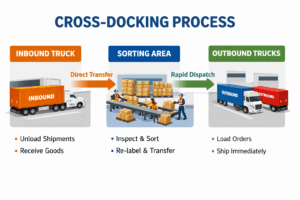
4. Use Cross‑Docking for Fast‑Moving Goods
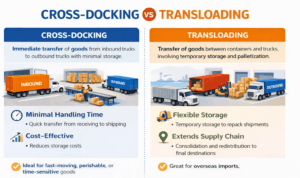
For products that need minimal storage, cross‑docking moves shipments directly from inbound to outbound vehicles. It reduces storage, handling and labor costs, accelerates fulfillment and improves supply‑chain agility. Cross‑docking is especially beneficial for high‑volume, time‑sensitive goods like retail promotions or perishable items.
5. Incorporate Transloading for Mode Flexibility
When freight must transfer between transportation modes (e.g., ship to rail to truck), transloading facilities act as strategic buffer zones. They allow freight to be stored, rerouted or consolidated as conditions change. Transloading reduces congestion, shortens transit times and improves routing efficiency. It is ideal for fluctuating shipment volumes, import‑heavy supply chains or cross‑border shipments.
6. Plan for Drayage in Port Logistics
Drayage involves moving containers a short distance, usually from a port to a nearby warehouse. It ensures goods transition smoothly between ships, trains and trucks, keeping cargo flowing and avoiding port congestion. When selecting an overflow warehouse near ports, ensure it offers drayage services or partners with carriers that do. Understanding drayage fees-fuel surcharges, chassis use, congestion charges-helps budget accurately.
7. Include Pallet Rework & Freight Rework Services
Rejected or damaged pallets can derail your supply chain. Pallet rework is required when freight is rejected due to broken pallets, weight limits, poor shrink‑wrapping, overhang or underhang. Partnering with a facility that offers rework services ensures damaged loads are repaired, rewrapped or repalletized quickly so goods can continue to their destination. Proper loading practices-avoiding overhang or underhang, meeting ISPM‑15 standards and using quality pallets-reduce the need for rework.
8. Engage a 3PL for Overflow Warehousing
Working with a 3PL combines these strategies into a single solution. Reputable providers offer flexible storage terms, real‑time inventory visibility and value‑added services like cross‑docking, transloading, drayage and pallet rework. Because overflow inventory remains within the 3PL’s network, it can ship directly to customers without extra handling, reducing lead times. When evaluating providers, consider:
- Location: near your primary warehouse or port to reduce drayage and transit costs.
- Scalability: ability to scale labor, space and transport up or down quickly.
- Technology: robust WMS and integration with your systems for real‑time visibility.
- Service offerings: cross‑docking, transloading, drayage, rework and value‑added services.
- Contract flexibility: short‑term agreements and transparent pricing.
Choosing OLIMP for North American Overflow Storage
OLIMP offers a vast network of thousands of warehouses across North America, connecting retailers, shippers and brokers with nearby overflow capacity. Facilities are available on demand, book in advance or on short notice, to accommodate seasonal peaks or unexpected inventory surges. OLIMP’s platform matches you with warehousing providers that offer cross‑docking, transloading, drayage and pallet rework, ensuring your overflow inventory stays in motion. There are no long‑term commitments, making OLIMP ideal for short‑term requirements.
erialogic.
Frequently Asked Questions (FAQ) – OLIMP Warehousing
Q: What is overflow warehousing?
Overflow warehousing refers to renting additional warehouse space when your primary facility is full, allowing you to store excess inventory temporarily. It’s a flexible solution for seasonal spikes and supply‑chain disruptions.
Q: How long can I use overflow storage?
There is no fixed duration; businesses can lease overflow space for weeks or months depending on demand. Short‑term arrangements prevent long‑term lease obligations.
Q: Is overflow storage cheaper than leasing a new warehouse?
Yes. Temporary overflow storage lets you pay for space only when needed, avoiding the capital expense of building or leasing a permanent facility.
Q: Can overflow inventory ship directly to customers?
If your 3PL integrates overflow warehouses into its fulfillment network, inventory can be picked, packed and shipped directly from the overflow site, ensuring faster fulfillment.
You may be interested in
Best On-Demand Warehousing Platform for Short-Term Overflow Storage
When warehouses reach capacity during peak seasons, promotions, or unexpected supply chain disruptions, businesses need fast access to additional storage. On-demand warehousing platforms solve this challenge by connecting companies with available warehouse space exactly when it’s needed. Among these solutions, OLIMP’s on-demand warehousing platform helps businesses quickly secure short-term overflow storage across thousands of warehouse […]

Complete Guide to Dry Warehouse Storage and Dry Goods Shipping (2025 Update)
In today’s fast‑moving supply chains, ambient storage plays an essential role in keeping non‑perishable products safe, organized and ready for distribution. Dry warehouse storage refers to facilities that keep goods at room temperature and protect them from moisture, pests and contamination. Unlike cold storage, which relies on refrigeration or freezing, dry warehouses provide clean, climate‑stable […]
Common Warehousing Myths Debunked: Myths vs. Reality
Warehouses are integral to today’s supply chains, yet many still see them as simple storage space. In reality, efficient warehouses manage inventory, fulfill orders, coordinate cross-docking, and even perform value-added tasks like packaging or assembly. This has become even more critical as global commerce grows – for example, about 6.6 million Americans worked in transportation […]
Ready to streamline your warehousing needs?
Request a quote today and discover how OLIMP's tailored solutions can optimize your operations