What Are Intermodal Shipping Containers? Types, Sizes, and Uses
01/03/2025
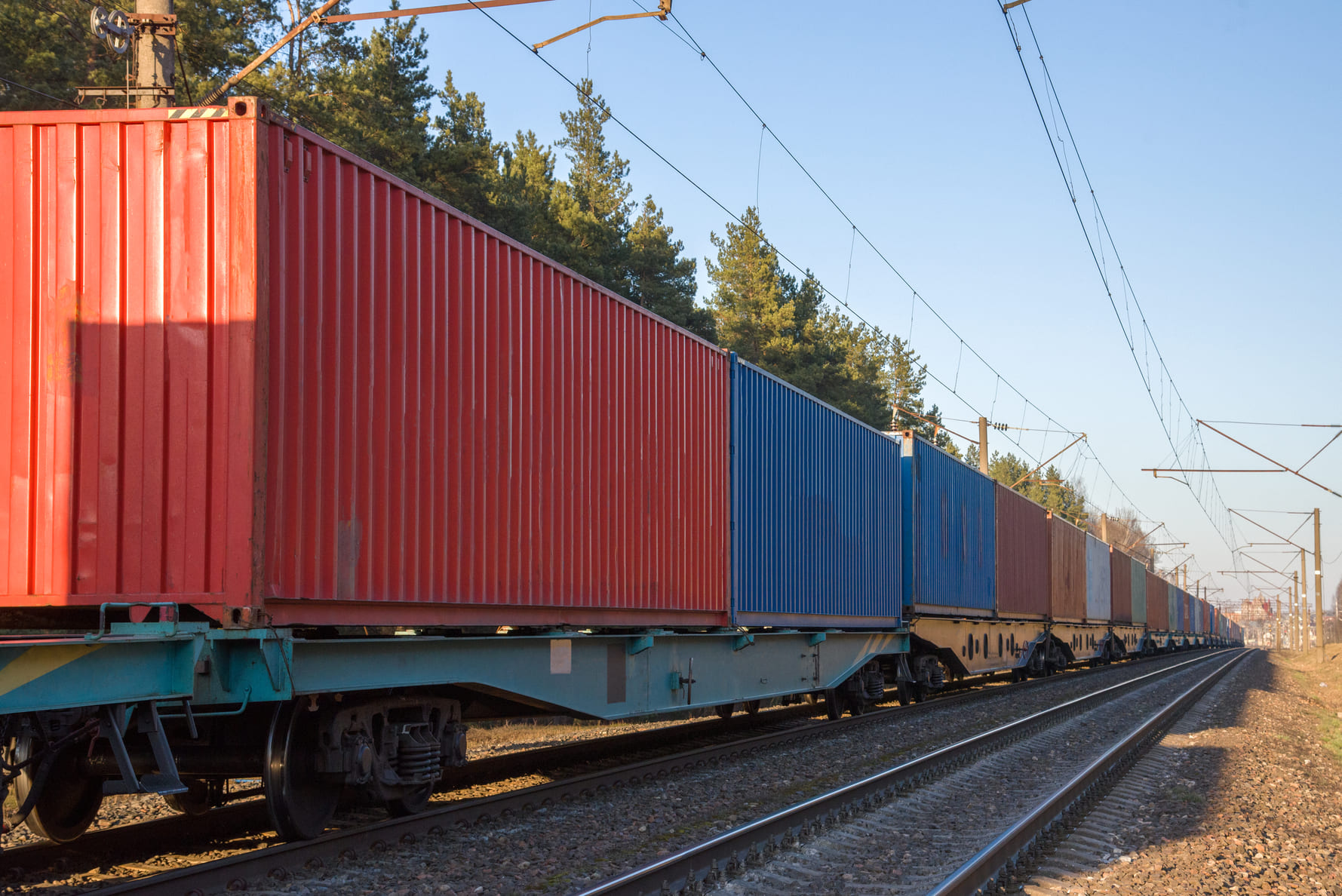
Intermodal shipping containers are reusable freight units designed to move between transport modes, such as trucks, trains, and ships, without unloading the cargo during each transfer. The container moves as one unit, keeping the shipment together as it travels.
Choosing the right equipment depends on the route, cargo dimensions, weight, and handling requirements. A container suitable for packaged retail goods may be unsuitable for chilled food, bulk liquids, or oversized machinery.
What Are the Two Types of Intermodal Containers?
In North American shipping, intermodal containers are commonly grouped into international containers and domestic containers. This distinction describes their operating network and size family.
There are more than two designs. Dry containers, reefers, tanks, and other specialized equipment describe how a container accommodates its cargo.
International containers
International containers are used for ocean shipments and connecting road or rail moves. Common lengths are 20 feet and 40 feet, with 45-foot high-cube equipment also available on some services.
These marine containers use standardized dimensions and handling fittings so compatible cranes, chassis, railcars, and vessels can move them.
Domestic intermodal rail containers
A domestic intermodal rail container is a freight container used mainly for rail-and-truck transportation within North America. The common 53-foot size provides more interior space than a typical 40-foot ocean container.
Domestic equipment supports the inland journey: a truck carries the container to a rail terminal, a train handles the rail leg, and another truck completes delivery. Confirm the equipment accepted on the specific route.
What Are the Main Intermodal Container Types?
Dry containers
Dry containers carry general freight that does not require active temperature control, including clothing, packaged consumer goods, and many manufactured products.
They have an enclosed roof, walls, floor, and doors. Their weather protection does not eliminate condensation risk, so moisture-sensitive cargo still needs suitable packaging and loading practices.
High-cube containers
A high-cube container is a taller version of a container, commonly 9 feet 6 inches high externally compared with 8 feet 6 inches for standard-height marine equipment.
The extra height is useful for bulky goods and taller loads. It provides more space, but does not automatically increase the permitted cargo weight.
Refrigerated containers, or reefers
Refrigerated containers use insulation and powered temperature-control equipment for cargo such as chilled food, frozen products, and suitable pharmaceutical shipments.
Plan refrigerated transportation around the product’s required temperature, airflow, monitoring, and power arrangements throughout the journey, including terminal stops.
Open-top containers
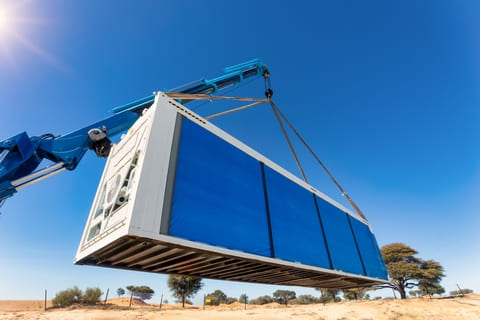
Open-top containers have a removable roof covering that allows suitable cargo to be loaded from above. They can accommodate machinery or tall items that are difficult to load through standard doors.
Cargo extending beyond normal container dimensions requires a specific handling and transport plan.

Flat-rack containers
Flat racks have a strong base and end structures, with no fixed roof or side walls. Depending on the design, the ends may be fixed or collapsible.
They suit heavy or oversized cargo such as industrial equipment and large machinery. Loading plans must account for weight distribution, support points, and securement.

Intermodal tank containers
An intermodal tank container is a tank mounted within a frame that allows it to move between compatible transport modes. Many liquid tank containers use a 20-foot frame.
They carry products such as food-grade liquids and chemicals; purpose-built designs also carry gases. Tank construction, fittings, cleaning requirements, and cargo compatibility must match the shipment.
Review the relevant bulk-liquid tank guidance with the operator before booking. A tank container is separate equipment from a railway tank car.

What Sizes Do Intermodal Shipping Containers Come In?
The table below shows common nominal lengths and typical external widths and heights. These measurements describe the outside of the container, not its usable loading space.
| Container | Nominal length | Typical external width | Typical external height | Common use |
|---|---|---|---|---|
| 20-foot standard | 20 ft | 8 ft | 8 ft 6 in | General international freight |
| 40-foot standard | 40 ft | 8 ft | 8 ft 6 in | Larger international shipments |
| 40-foot high cube | 40 ft | 8 ft | 9 ft 6 in | Bulky international freight |
| 45-foot high cube | 45 ft | 8 ft | 9 ft 6 in | Additional capacity on compatible services |
| 53-foot domestic | 53 ft | About 8 ft 6 in | About 9 ft 6 in | North American rail-and-truck freight |
Exact dimensions vary by equipment series. Check the assigned unit’s interior dimensions and door openings and, for domestic loads, the applicable 53-foot container specifications.
A load that fits inside the container may still be too tall or wide to pass through its doors. Pallets, protective packaging, and space needed for securement also reduce usable capacity.
How Do Intermodal Containers Move Between Trucks, Trains, and Ships?
The container transfers between vehicles while the freight remains inside. A typical international journey involves:
- Loading: Goods are packed and secured inside the container.
- Origin trucking: A truck carries the container on a chassis to a port or rail terminal.
- Main transport: The container travels by ship, train, or a combination of both.
- Destination transfer: Handling equipment places it onto a truck chassis for delivery.
- Unloading and return: The receiver unloads the freight, and the empty container returns to the designated location.
Domestic rail shipments follow a similar truck–rail–truck sequence without an ocean leg. Our guide to how intermodal shipping works explains the broader transport process.
The short truck movements connecting ports, rail terminals, and warehouses are generally called drayage.
When Should You Transload an Intermodal Container?
Transloading means unloading cargo from one transport unit and loading it into another. Lifting a sealed container from a ship onto a railcar does not, by itself, transload the cargo.
For example, an importer may unload a 40-foot ocean container at a warehouse and transfer its goods into domestic equipment for inland distribution.
Transloading can help when you need to:
- Combine compatible shipments through freight consolidation.
- Split an import shipment among several destinations.
- Palletize floor-loaded cartons for warehouse or retailer receiving.
- Reconfigure a load to meet equipment or route requirements.
- Release the ocean container while the goods wait for onward delivery.
There is no universal conversion ratio between ocean containers and domestic containers. The number of outbound units depends on actual cargo volume, weight, pallet layout, stackability, and equipment specifications.
When choosing a transloading warehouse near a port, confirm unloading capability, appointment availability, storage options, and outbound loading requirements.
How Do You Choose the Right Intermodal Container?
Start with the shipment requirements, then confirm the equipment with your carrier or logistics provider.
- Identify the cargo. Record the commodity, packaging, temperature requirements, and any special handling needs.
- Measure the complete load. Include pallets, crates, protective materials, and any overhang.
- Check weight limits. Verify cargo weight, load distribution, container payload, and applicable transport limits. A dense shipment can reach its weight limit before filling the available space.
- Confirm loading access. Check door clearance and whether loading requires a forklift, crane, or other equipment.
- Plan packing and securement. Use appropriate cargo packing and securing guidance, together with carrier requirements.
- Coordinate the handoffs. Confirm terminal cutoffs, chassis availability, receiving appointments, unloading arrangements, and empty-return instructions.
Use suitable container tracking tools to monitor relevant shipment milestones and identify delays that affect pickup or delivery.
What Are the Benefits and Limitations?
Intermodal freight containers reduce the need to handle individual items during transfers and make it possible to combine different transport modes within one journey.
However, a container alone does not guarantee lower costs or faster delivery. Compare the complete movement, including trucking at both ends, terminal handling, equipment charges, and any warehouse work.
Terminal access, available capacity, and delivery deadlines can determine whether an intermodal option fits the shipment.
Arrange Container Transloading and Warehouse Support
If your container needs unloading, palletizing, consolidation, or temporary storage, OLIMP can help you find transloading and warehousing support.
Share the container type, pickup location, cargo details, weight, pallet or carton count, required dates, and destination. Include temperature or specialized handling requirements so the facility can confirm suitability.
Request a quote to check options for your shipment.
Frequently Asked Questions (FAQ) – OLIMP Warehousing
Q: What is an intermodal container?
An intermodal container is a reusable freight unit designed to transfer between compatible transport modes without unloading its contents at each change. It can travel on a truck chassis, railcar, or vessel, depending on the equipment and service.
Q: What are the two types of intermodal containers?
A common North American classification divides containers into international and domestic equipment. International containers commonly measure 20 or 40 feet, while 53-foot containers are common domestically. Dry, refrigerated, tank, open-top, and flat-rack containers are separate classifications based on design.
Q: What is a domestic intermodal rail container?
It is a container used mainly for rail-and-truck freight within North America. The common 53-foot unit is approximately 8 feet 6 inches wide and 9 feet 6 inches high externally, with exact dimensions depending on the model.
Q: What is an intermodal tank container used for?
Tank containers transport bulk liquids, such as suitable food ingredients and chemicals, or gases in purpose-built equipment. The tank and its fittings must suit the product, handling conditions, and transport requirements.
Q: Can a 53-foot container travel on an ocean vessel?
Some specialized 53-foot containers are designed for marine service, but an ordinary domestic booking does not guarantee ocean acceptance. Confirm the exact container design, vessel compatibility, and route with the carrier.
Q: How much weight can an intermodal shipping container hold?
There is no single limit. Capacity depends on the container’s rated payload, tare weight, load distribution, and the restrictions of each transport leg. Confirm the assigned equipment and carrier limits before loading.
Q: Is intermodal shipping the same as transloading?
No. In containerized intermodal shipping, the same container moves between transport modes. Transloading involves unloading the goods and placing them into another transport unit. A shipment can use both processes during its journey.
Q: How do intermodal containers improve supply chain efficiency?
Intermodal containers reduce handling by keeping freight in a single sealed unit across multiple transport modes. This lowers labor costs, minimizes damage risk, improves transit reliability, and allows shippers to combine the cost advantages of rail or ocean with the flexibility of trucking.
Q: What are the differences between ISO marine containers and domestic containers?
ISO marine containers (20 ft and 40 ft) are built for global ocean transport and international standards. Domestic containers (usually 53 ft) are used within North America for rail and truck transport only, offering more space but not designed for container ships.
Q: What are the advantages and limits of high-cube versus standard containers?
High-cube containers are one foot taller than standard containers, providing extra vertical space for lightweight or bulky cargo. The advantage is increased volume; the limitation is that they may face height restrictions on certain roads, rail routes, or storage facilities compared to standard containers.
You may be interested in

Intermodal Drayage: Definition, Benefits, Costs & Comparisons
Intermodal drayage is the short-distance trucking bridge between major transport modes in a multimodal supply chain. It connects ocean vessels, railroads and distribution centers so that a shipping container can move seamlessly without being unloaded. Efficient drayage management keeps containers moving, reduces delays and avoids unnecessary warehousing. This article explains how intermodal drayage works, its […]

Intermodal Shipping: The Smart, Efficient Way to Move Freight
Intermodal shipping refers to moving freight by two or more transportation modes (truck, rail, ship, etc.) using standardized containers. Cargo stays sealed inside its container during transfers, reducing handling and speeding up delivery. This containerized approach cuts costs and transit time for long-distance shipments, making intermodal freight shipping a cost-efficient, secure method to move goods. […]
What Is Intermodal Drayage? Benefits & When to Use It
Intermodal drayage is a crucial component of modern logistics, enabling the seamless movement of cargo across multiple transportation modes. It involves the short-distance transport of containers or trailers as part of a longer intermodal journey—typically combining truck, rail, ship, or air transport. By leveraging the strengths of each mode, businesses can optimize costs, speed, and […]
Ready to streamline your warehousing needs?
Request a quote today and discover how OLIMP's tailored solutions can optimize your operations