Pharmaceutical Cold Chain Logistics: Ensuring Safety, Compliance & Temperature Integrity

The pharmaceutical cold chain is the temperature-controlled network that keeps medicines, vaccines and biologics at the correct temperature from manufacturer to patient. In pharma logistics, managing every link – from refrigerated warehouses to data-logging monitors – is essential for product safety and regulatory compliance.
Key Takeaways:
- Cold chain management safeguards drug efficacy by keeping products within required temperature ranges.
- Stringent regulations (GDP, FDA, WHO) mandate continuous temperature control, documentation, and traceability.
- Key components include validated cold storage (e.g. +2–8°C refrigeration), insulated packaging, refrigerated transport, and real-time monitoring.
- Best practices: continuous monitoring, qualified equipment and packaging, trained staff, and contingency plans (e.g. backup power, alternate routes) to handle any excursion.
What Is a Pharmaceutical Cold Chain?
The pharmaceutical cold chain refers to the series of temperature-controlled steps and processes that move drugs from production through distribution. It involves refrigerated storage, insulated transport, and continuous monitoring to keep products within required temperature ranges. Strict management of this chain is critical to protect drug quality and patient safety.
Most medicines, especially vaccines and biologics, must stay within narrow ranges during shipping. For example, “most vaccines must be held between 2–8°C … at all times to maintain potency”. Any break in the cold chain can quickly compromise a drug’s efficacy, so each step is tightly controlled and documented.
How the Cold Chain Works (Temperature-Controlled Logistics)
A successful cold chain relies on integrated storage, transport, and monitoring:
- Cold Storage: Drugs are held in climate-controlled warehouses or freezers (commonly +2–8°C for refrigerated items). Facilities often have multiple zones (e.g. –20°C, +2–8°C, etc.) and backup power. These sites follow Good Storage Practices and continuously log temperatures.
- Insulated Packaging: Shippers use validated insulated containers, gel packs, dry ice or phase-change materials to maintain temperature during transit. Packaging is tested to keep contents within the target range. For example, guidelines recommend using “insulated boxes, gel packs, dry ice, or phase change materials,” all validated for the specific product.
- Refrigerated Transport: Once packed, goods move via refrigerated trucks, rail containers, or cargo planes. Vehicles have built-in refrigeration units and are pre-cooled before loading. Common refrigerated vans and trucks (reefers) maintain strict setpoints (often +2–8°C) and may include built-in data loggers and GPS tracking.
Ensuring Compliance and Safety
Strict regulations govern the pharmaceutical cold chain. Companies must follow Good Distribution Practices (GDP) and related standards. Key compliance elements include:
- Regulatory Standards: Agencies like the FDA (USA) and EMA (EU) publish GDP guidelines for storage and transport. For example, FDA regulations (CFR Title 21 part 205.50) require recording temperature and humidity during drug distribution. International standards (USP <1079>, IATA’s Temperature Control Regulations, WHO vaccine guidelines) specify packaging, handling, and monitoring protocols. Compliance is mandatory: any breach must be reported and addressed immediately.
- Documentation & Audits: Complete logs are kept for every shipment (temperature charts, handling notes). Regular audits verify that standard procedures are followed, including staff training and equipment calibration. Auditors review these records to ensure full compliance with regulations and to identify any risks.
Following these practices not only protects patients but also shields companies from fines or recalls. In fact, experts note that strict GDP compliance “minimizes risks, ensuring that patients receive safe and effective medicines”.
Best Practices for Temperature Integrity
Pharmaceutical cold chains use multiple safeguards:
- Continuous Monitoring: IoT sensors, data loggers, and GPS trackers are installed on shipments and in storage. Real-time alerts can warn of temperature excursions. Top providers use connected sensor networks that “send an immediate alarm if a cold room warms above its setpoint”.
- Validated Equipment & Packaging: Only calibrated refrigeration units and pre-qualified packaging are used. Refrigerators, freezers and trailers are checked regularly. Insulated shippers undergo environmental validation (dry ice simulation, etc.) to confirm they hold the target temperature for the needed time.
- Training & Accountability: All handlers are trained in cold chain procedures and the importance of maintaining temperatures. Companies provide regular training and drills, so staff know to follow protocols and react quickly to any deviation.
- Contingency Planning: Backup plans are critical. Warehouses have generators or redundant cooling; carriers have spare vehicles and alternate routes. For example, firms “create contingency plans for unexpected situations such as temperature excursions or transit delays”, ensuring a quick response (e.g. rerouting a truck around a storm) to save the shipment.
These measures layer together to keep medicines potent. When rigorously applied, the cold chain remains intact and drugs arrive in full strength and efficacy.
Cold Chain for Vaccines and Biologics
Vaccines and biologic therapies demand especially tight control. Most vaccines must stay at +2–8°C without interruption, and some newer biologics or mRNA vaccines require ultra-cold conditions (down to –20°C or lower). To meet these needs, specialized solutions are used. Shipments may travel in dry-ice cryogenic shippers or on dedicated refrigerated carriers with rapid handling protocols. Every step is validated – for example, a trial shipment or thermal validation is run to prove a shipping method’s safety. These extra safeguards ensure that critical vaccines and biologics arrive at clinics with full potency and efficacy.
Choosing a Cold Chain Logistics Provider
Selecting the right partner is crucial. Consider:
- Location & Accessibility: Choose providers with cold Pharmaceutical warehouses near major ports, highways or manufacturing sites. Shorter transit routes reduce the risk of temperature excursions. For example, a warehouse close to an airport or rail terminal lets goods reach customers faster and fresher.
- Real-Time Visibility: The provider should offer continuous tracking and monitoring. Leading partners integrate IoT sensors and warehouse systems to “alert staff to any deviation”, and they link this data into your systems for end-to-end traceability. This way you always know the location and condition of each shipment.
- Specialized Services: Look for value-added services like cross-docking (immediate transfer without long storage), on-site repackaging or labeling in cold zones, and kitting. For example, cross-docking minimizes handling time in cold areas, and a partner that can repackage products while still refrigerated adds flexibility.
- Regulatory Compliance: Verify certifications. A reputable provider will be HACCP-certified and follow GDP/GMP guidelines. Staff should be trained in pharmaceutical handling, and facilities may feature cleanrooms or segregated cold zones to protect products. These standards not only keep products safe, but also protect your supply chain from liability.
By evaluating these factors, pharmaceutical companies choose partners who effectively extend their own quality systems. In practice, working with a GDP-certified 3PL ensures each shipment is handled under strict compliance and advanced monitoring.
Conclusion
Maintaining a robust pharmaceutical cold chain requires careful attention to equipment, processes, and regulations at every step. By combining validated cold storage and transport, continuous monitoring, and strict procedures, companies ensure medicines remain safe and effective in transit. In practice, many firms partner with specialized logistics providers to handle these challenges. For example, OLIMP Warehousing offers a nationwide network of temperature-controlled warehouses and refrigerated transport. By working with experts like OLIMP, pharmaceutical firms can keep products within required conditions while focusing on their core mission of delivering safe, effective medicines. For tailored solutions, consider contacting a qualified cold chain logistics provider.
Frequently Asked Questions (FAQ) – OLIMP Warehousing
Q: What is pharmaceutical cold chain logistics?
It’s the controlled process of storing and transporting temperature-sensitive drugs. It covers cold storage, refrigerated transport, insulated packaging, and monitoring from production to patient delivery.
Q: How does temperature-controlled pharma logistics work?
Drugs are stored in refrigerated warehouses (e.g. +2–8°C) and shipped in refrigerated vehicles or containers. Insulated packaging (gel packs, dry ice) helps maintain the temperature between transfers. IoT sensors and data loggers record the temperature at each stage to ensure integrity.
Q: Why is compliance important in the cold chain?
Any temperature breach can spoil a medicine or make it unsafe. Regulations (GDP, FDA, WHO, etc.) require documented temperature control to protect patients. Adhering to these rules “ensures that patients receive safe and effective medicines”.
Q: Who provides cold chain logistics for pharmaceuticals?
Specialized logistics companies and 3PLs offer pharma cold chain services. They provide GDP-compliant cold storage warehouses and refrigerated transport. Examples include large global logistics firms and specialized warehousing networks. Many pharma companies partner with providers (such as OLIMP Warehousing) that operate certified temperature-controlled facilities across North America.
Q: How do you verify cold chain quality?
Through continuous monitoring and audits. Companies review temperature logs, validate equipment calibration, and inspect processes. Auditors check that SOPs are followed and staff trained. Any deviation is investigated and procedures are updated, ensuring the system keeps working as intended.
Q: What are the typical temperature ranges for different cold chain products?
Pharmaceutical cold chain products are stored and transported within specific temperature ranges depending on their formulation and stability requirements:
- Controlled Room Temperature (CRT): +15°C to +25°C (some oral solid drugs)
- Refrigerated (Cold Chain): +2°C to +8°C (most vaccines, insulin, biologics)
- Frozen: –20°C to –10°C (some plasma products, specialty biologics)
- Ultra-Cold / Cryogenic: –60°C to –90°C (mRNA vaccines, advanced biologics)
Maintaining these ranges continuously is essential to prevent loss of potency, safety risks, or regulatory non-compliance.
Q: How do you design a cold chain for pharmaceutical distribution?
Designing a pharmaceutical cold chain involves aligning storage, transportation, monitoring, and compliance from end to end:
- Define product temperature requirements and stability limits
- Select validated cold storage facilities and refrigerated transport
- Use qualified insulated packaging and refrigerants
- Implement real-time temperature monitoring and data logging
- Establish SOPs, staff training, and deviation management plans
- Ensure compliance with GDP, FDA, and WHO guidelines
A well-designed cold chain minimizes risk, reduces excursions, and ensures regulatory readiness.
Q: What are the best practices for cold chain monitoring and real-time tracking?
Best practices for pharmaceutical cold chain monitoring include:
- Continuous temperature monitoring using IoT sensors and data loggers
- Real-time alerts for temperature excursions
- GPS tracking for shipment location visibility
- Automated data storage for audits and compliance
- Calibration and validation of monitoring devices
- Clear escalation procedures for deviations
Real-time visibility allows immediate corrective action before product quality is compromised.
Q: How do air, road, and rail compare for cold chain transport?
Each transportation mode has advantages depending on urgency, distance, and product sensitivity:
- Air Freight: Fastest, ideal for vaccines and biologics, higher cost, strict temperature control
- Road (Refrigerated Trucks): Most flexible for domestic distribution, good control, moderate cost
- Rail (Reefer Containers): Cost-effective for long distances, stable temperatures, slower transit
Many pharma supply chains use multi-modal transport to balance speed, cost, and risk.
Q: What are the main cost components of operating a cold storage warehouse?
Operating a pharmaceutical cold storage warehouse includes several key cost drivers:
- Refrigeration systems and energy consumption
- Backup power systems and redundancy infrastructure
- Temperature monitoring and compliance technology
- Labor and specialized training
- Maintenance, calibration, and validation
- Regulatory audits and quality management systems
While cold storage is more expensive than ambient warehousing, it is essential for protecting high-value pharmaceutical products.
You may be interested in

Cold Chain Logistics: Safeguarding Food, Pharma & Electronics
Cold chain logistics refers to the specialized supply chain and warehousing of temperature-sensitive products, from fresh produce and pharmaceuticals to electronics, using refrigeration to prevent spoilage and preserve quality. Temperature-controlled warehousing protects goods from degradation and ensures compliance with strict safety regulations. This sector is booming: the global cold chain market is projected to surge […]
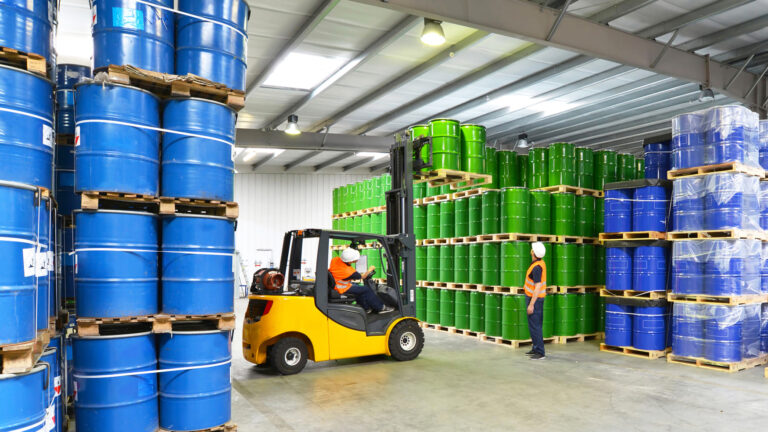
Chemical Warehousing & HAZMAT Storage: Safety, Standards, and Best Practices
Chemical warehouse storing drums of hazardous substances under safety controls. Chemical warehousing (also called hazardous materials or HAZMAT warehousing) refers to specialized storage of chemicals and other dangerous goods under strict safety and regulatory controls. These facilities are designed to prevent accidents by segregating incompatible substances and complying with rigorous safety standards. In North America, […]

Complete Guide to Dry Warehouse Storage and Dry Goods Shipping (2025 Update)
In today’s fast‑moving supply chains, ambient storage plays an essential role in keeping non‑perishable products safe, organized and ready for distribution. Dry warehouse storage refers to facilities that keep goods at room temperature and protect them from moisture, pests and contamination. Unlike cold storage, which relies on refrigeration or freezing, dry warehouses provide clean, climate‑stable […]
Ready to streamline your warehousing needs?
Request a quote today and discover how OLIMP's tailored solutions can optimize your operations
