West Coast vs New Jersey Fulfillment: Same‑Day & 2‑Day Shipping Compared
03/19/2026
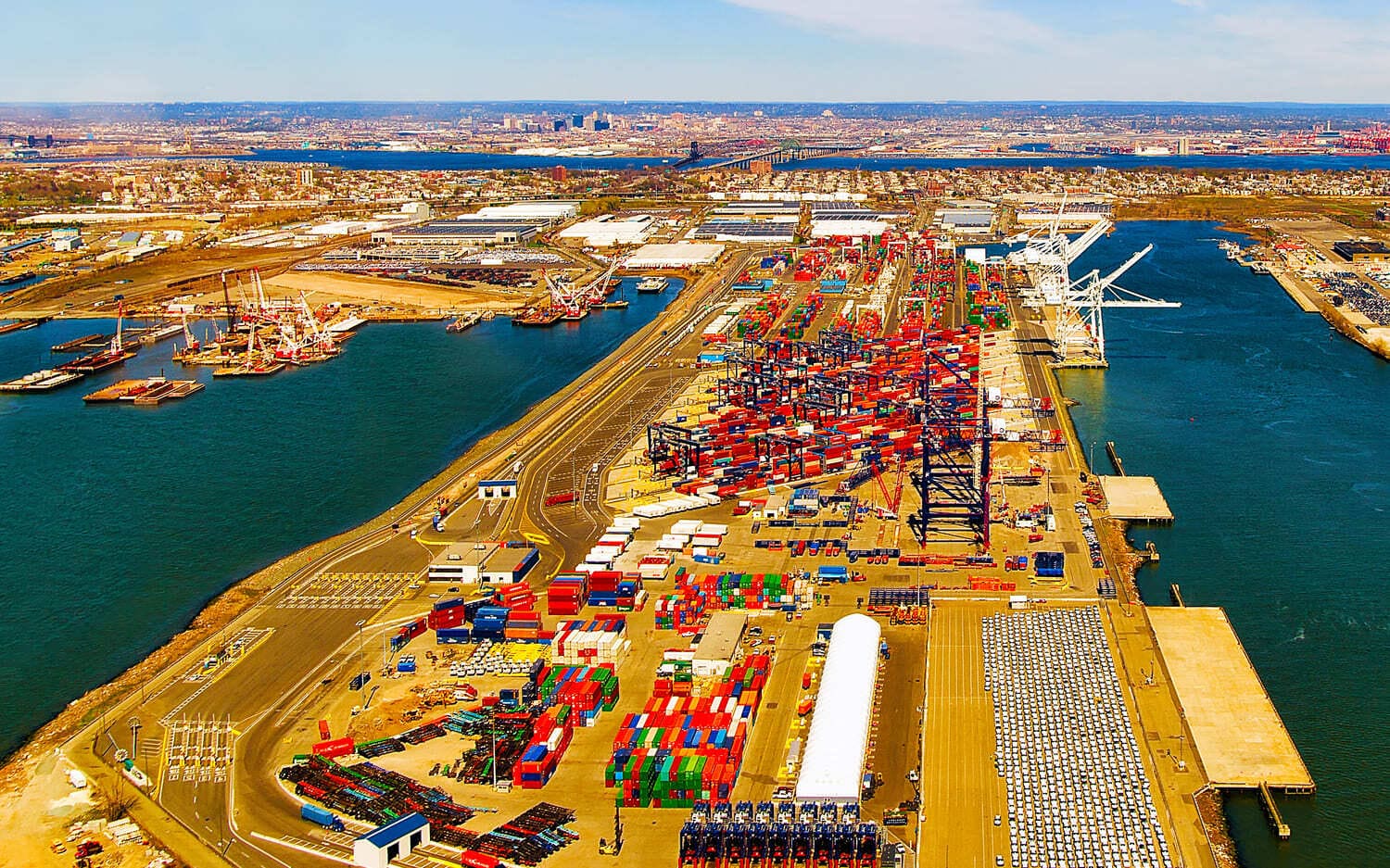
- Location matters for shipping speed and cost. Distance‑driven shipping zones mean a West Coast warehouse can serve California and adjacent states quickly but pushes East Coast shipments into high‑cost zones. A New Jersey warehouse offers low zones across the Northeast and Mid‑Atlantic but struggles to deliver truly two‑day ground to the Pacific Coast.
- Same‑day shipping is local. Achieving same‑day delivery usually requires a pick‑and‑pack facility near your customer base. Ground carriers typically advertise 1–5 business days for contiguous‑U.S. deliveries, so cross‑country same‑day service relies on costly air or regional courier networks.
- Two‑day shipping often relies on multiple locations. FedEx, USPS and other carriers tie delivery windows and pricing to zones. “Nationwide 2‑day” from a single warehouse is often a paid workaround (air + regional carriers), not a geography miracle.
- Consider a second node when 30‑40 % of orders go to the opposite coast. Adding a West Coast or East Coast location can reduce high‑zone exposure and shipping costs if a large share of customers reside on the other side of the country. However, it increases inventory complexity and storage costs.
- A central hub may be a middle step. A Midwest (Illinois) or Texas warehouse produces more balanced zones nationally and reduces extreme coast‑to‑coast lanes.
Shoppers expect fast delivery, and direct‑to‑consumer (DTC) brands that can’t meet those expectations risk cart abandonment. Fulfillment location drives how quickly you can deliver and how much it costs. This guide compares West Coast and New Jersey fulfillment services for both same‑day and two‑day shipping. It answers common questions about pick‑and‑pack warehouses, shipping zones, and when to expand to a second or central fulfillment node. If you’re evaluating a warehouse near New Jersey or considering a West Coast pick‑and‑pack operation, this article will help you make an informed decision.
What Do “Same‑Day” and “Two‑Day” Shipping Really Mean?
- Same‑day shipping: The order is picked, packed and handed off to a carrier on the same day it is received, often for delivery within hours. Achieving same‑day delivery typically requires a warehouse close to the end customer and the use of local courier services. Nationwide same‑day shipping is rarely practical without air freight.
- Two‑day shipping: The order arrives within two business days. Ground carriers like FedEx and USPS publish delivery windows of 1–5 business days depending on distance. For coast‑to‑coast parcels, two‑day delivery often necessitates air shipment or multiple warehouses.
Understanding these definitions helps set realistic customer expectations and choose the right fulfillment model.
Shipping Zones and Distance‑Based Pricing
Carriers divide the U.S. into zones based on the origin and destination ZIP codes. Higher zones correspond to greater distance, longer transit times and higher shipping costs. The USPS explicitly states that “the farther it travels the more you pay”. FedEx Ground’s transit map similarly shows 1–5 day windows based on distance. In practice:
- Zones 1–3: Local or regional shipments (1–3 business days); cheapest.
- Zones 4–5: Mid‑distance shipments (2–3 days) – typical for cross‑region but same coast.
- Zones 6–8: Long‑distance shipments (4–5+ days) – often coast‑to‑coast.
Shipping zones are a fundamental lever for cost and speed. For same‑day or two‑day delivery, you must keep customers within low zones or be prepared to pay for premium services.
Comparing Fulfillment Services: West Coast vs New Jersey
West Coast Fulfillment Warehouses
Strengths
- Proximity to Pacific customers: A California warehouse keeps West Coast deliveries in Zones 1–3 and can offer next‑day or same‑day ground service in major metropolitan areas.
- Import gateway advantages: The combined Port of Los Angeles and Port of Long Beach handled about 31 % of U.S. containerized trade in 2024. For brands importing products from Asia, staging inventory on the West Coast reduces drayage and inland freight costs.
- Pick‑and‑pack speed: Many West Coast 3PLs specialize in ecommerce fulfillment and can support fast pick and pack operations for same‑day processing.
Weaknesses
- High‑zone penalties to the East Coast: Orders shipped from California to New Jersey or New York land in Zones 7–8, pushing delivery times toward 5–7 days and increasing postage costs. Air shipping can meet two‑day commitments but erodes margins.
- Potential bottlenecks at West Coast ports: Congestion and labor disputes can delay inbound freight, although this varies by year.
Use West Coast fulfillment when:
- A large share of your customers is located on the West Coast or in western states.
- You import from Asia and want to reduce inbound freight costs.
- You need same‑day or next‑day delivery in California, Oregon or Washington.
New Jersey Fulfillment Warehouses
Strengths
- Dense consumer base: New Jersey sits in the densest corridor of U.S. consumers and logistics infrastructure. A warehouse here can reach most of the Northeast and Mid‑Atlantic quickly.
- Access to major ports and airports: The Port of New York and New Jersey is the largest container operation on the East Coast and the third largest port in the U.S.. JFK, Newark and Philadelphia airports support express shipments.
- Two‑day reach into the Midwest: From New Jersey, mid zones cover a substantial share of the Midwest, enabling cost‑effective two‑day ground to states like Ohio and Illinois.
Weaknesses
- Slower West Coast delivery: Shipping to California, Oregon or Washington from New Jersey usually takes 5–7 business days unless you pay for air services.
- Higher warehousing costs: Real‑estate and labor costs near New York/New Jersey can be higher than in certain western states.
Use a New Jersey fulfillment warehouse when:
- Your customer base skews heavily toward the East Coast.
- You need two‑day coverage for the Northeast and Mid‑Atlantic and acceptable three‑day reach into the Midwest.
- You want port access for European imports or flights into Newark/JFK.
Pick‑and‑Pack Operations & Same‑Day Delivery
Pick‑and‑pack warehouses receive bulk inventory, store it and then pick individual orders for shipment. For same‑day shipping you need:
- Cut‑off times aligned with carrier pick‑ups: Orders must be in by late morning or early afternoon to make same‑day dispatch.
- Efficient pick routing and automation: Barcode scanning and warehouse management systems reduce errors and speed up packing.
- Local courier partnerships: Same‑day delivery often relies on courier networks that handle last‑mile transport within a metro area.
West Coast warehouses in large metropolitan areas (e.g., Los Angeles, San Francisco, Seattle) can coordinate same‑day delivery using local couriers. A New Jersey facility can support same‑day service in the tri‑state area (New York, New Jersey, Connecticut) but will not cover California without air freight.
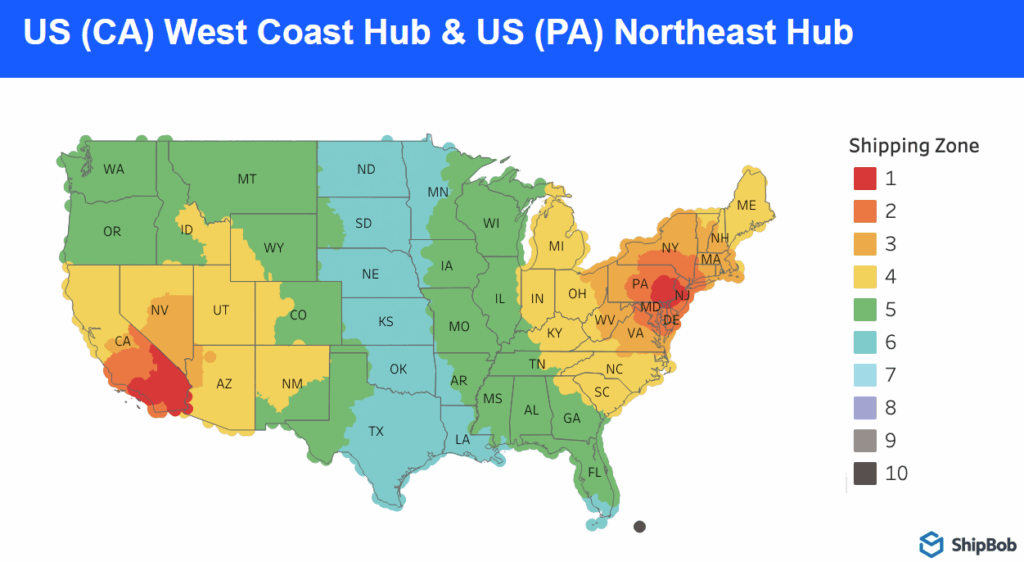
Example shipping zone map illustrating how warehouse origin affects national delivery zones.
Source: ShipBob U.S. shipping zone reference.
Key insight: A single warehouse creates a high-zone penalty for customers on the opposite coast, which increases shipping costs and delivery times.
Same‑Day vs Two‑Day Coverage: What’s Realistic?
- Nationwide same‑day coverage requires a network of strategically placed micro‑fulfillment centers or expensive air shipments. For most DTC brands, this is impractical.
- Two‑day ground coverage is possible regionally but seldom coast‑to‑coast from a single warehouse. Carriers openly state that ground service takes 1–5 business days depending on distance.
- Hybrid models mix ground and air. Some 3PLs offer “2‑day nationwide” by using FedEx Express or similar services for high‑zone destinations. This can satisfy customer expectations but increases shipping costs.
When to Add a Second Fulfillment Warehouse
Adding a second node (e.g., a West Coast pick‑and‑pack warehouse for East Coast brands or a New Jersey facility for West Coast brands) is a strategic decision. Consider it when:
- 30–40 % of orders consistently ship to the opposite coast: High‑zone shipments hurt margins and delivery‑time complaints spike.
- Your average cost per order decreases by adding a second node: For example, if you ship 1,500 orders/month and 35 % go to the opposite coast, saving US$2.25 per order could reduce monthly postage by ~US$1,180.
- You can manage regional inventory: A second warehouse creates additional forecasting, stock‑out and inbound freight planning complexity. Brands need systems and staff to handle multiple locations.
Central Hub Alternatives
Rather than jumping to bi‑coastal fulfillment, some brands open a central U.S. warehouse (Illinois, Texas). This reduces extreme coast‑to‑coast lanes and places most customers in mid‑zones. A central hub cannot fully replace a second coastal node for heavy West Coast or East Coast demand but offers a cost‑effective middle ground.
Decision Framework
- Map your customer distribution: Export the last 60–90 days of orders and bucket them by region or shipping zone.
- Calculate your high‑zone tax: Compare average shipping costs and times to opposite‑coast customers versus local/regional orders.
- Model savings with a second node: Estimate the percentage of orders re‑routed to the new location and the potential postage savings.
- Account for added costs: Factor in additional warehouse storage minimums, inbound freight splits and increased safety stock.
- Decide between coastal or central: If your customer base is balanced, a central hub may provide 2–3 day shipping nationally. If demand is heavily bi‑coastal, two nodes may be the best option.
Conclusion
Fulfillment location directly impacts shipping speed, cost and customer satisfaction. West Coast warehouses excel at same‑day and two‑day delivery for western customers and simplify Asian import logistics, while New Jersey warehouses provide fast two‑day coverage for the Northeast and access to Atlantic trade lanes. Because shipping zones drive transit times and costs, no single warehouse can deliver 2‑day ground nationwide without premium services. Use your own order data to map demand, model savings and weigh the complexity of additional nodes. A central hub might suffice, but when 30-40 % of orders consistently ship across the country, adding a second warehouse, whether West Coast or New Jersey, can improve speed and reduce costs.
Frequently Asked Questions (FAQ) – OLIMP Warehousing
Q: Can one warehouse cover the entire U.S. in 2 days?
Not reliably with ground shipping alone. Ground services commonly publish distance-dependent delivery windows (e.g., 1–5 business days), so coast-to-coast lanes tend to land near the slow end.
Q: Is New Jersey a good fulfillment location?
Yes, especially for brands with heavy East Coast demand. It’s also linked to major logistics infrastructure and a major East Coast port gateway.
Q: When should ecommerce brands add a second warehouse?
When a large share of orders ship to the opposite coast (often 30%–40%+), high-zone shipping is hurting margins, and you can manage regional inventory without frequent stockouts.
Q: Does splitting inventory increase costs?
It can. You may pay more total storage, carry more safety stock, and spend more on inbound freight planning, though you may save on outbound postage and reduce time in transit.
Q: How do USPS shipping zones work?
USPS uses zones to measure distance, and for zoned mail/shipping, “the farther it travels the more you pay.” Zones are based on origin/destination ZIP pairing.
Q: Is a central U.S. warehouse better than bi-coastal fulfillment?
Sometimes. Central placement can reduce extreme coast-to-coast lanes and create more balanced zones nationally, depending on where your customers live.
Q: What’s the quickest way to decide if a second warehouse is worth it?
Use your last 60–90 days of orders: calculate customer distribution, compare opposite-coast shipping costs/time, model savings from re-routing those orders, then subtract the added storage/complexity costs.
Q: What makes a West Coast fulfillment warehouse ideal for same‑day shipping?
West Coast warehouses near major cities (e.g., Los Angeles, San Francisco) keep local deliveries in low shipping zones, allowing ground carriers or local couriers to deliver in one day or even same day. They also handle imported goods efficiently because the LA/Long Beach port complex processes about 31 % of U.S. containerized trade.
Q: Why can’t one warehouse provide true two‑day ground shipping nationwide?
Carriers tie delivery windows to distance; FedEx and USPS ground services take 1–5 business days. A warehouse on one coast pushes opposite‑coast shipments into high‑distance zones, so “two‑day nationwide” usually involves air shipping or multiple warehouses.
Q: What is a pick‑and‑pack warehouse?
A pick‑and‑pack warehouse receives palletized inventory, stores it, and then picks individual orders from shelves, packs them, and ships them. Efficient pick‑and‑pack operations rely on barcode scanning, optimized routing and carrier cut‑off alignment to support same‑day dispatch.
Q: How do shipping zones affect fulfillment costs?
Shipping zones are distance tiers used by carriers; the farther a package travels, the higher the zone and cost. Keeping customers in low zones reduces postage, while high‑zone shipments (often coast‑to‑coast) increase costs and delivery times.
Q: When should a brand add a second warehouse?
A second warehouse makes sense when 30–40 % of orders consistently go to the opposite coast, high‑zone shipping erodes margins, and the brand can manage regional inventory without frequent stock‑outs.
Q: Is a central U.S. warehouse better than bi‑coastal fulfillment?
A central location (e.g., Illinois or Texas) balances shipping zones nationwide, reducing extreme coast‑to‑coast lanes and enabling 2–3 day ground delivery. However, it may not satisfy same‑day or next‑day expectations for customers concentrated on one coast.
Q: Can a West Coast warehouse serve New Jersey customers efficiently?
No. Shipments from a California warehouse to the East Coast typically fall into Zones 7–8 and take 5–7 business days unless expedited. To serve New Jersey customers with two‑day shipping, a second warehouse near the East Coast is recommended.
You may be interested in
Kansas City Warehousing: Public, Contract & FTZ Benefits
Choosing where to position inventory is one of the most consequential decisions in a supply‑chain network. Facility location determines how quickly you can deliver orders, how much you spend on transportation and how well you can serve national customers. A poorly placed warehouse can translate into long haul routes, missed service levels and excess stock. […]
Reliable Ecommerce Fulfillment & 3PL Services in California
California is one of the most important logistics markets in the U.S. for e-commerce brands, retailers, importers, and growing online stores. With access to major ports, large consumer markets, dense transportation networks, and strong warehousing infrastructure, the state gives businesses many options for fulfillment, storage, shipping, and distribution. For online retailers, California’s strengths make it […]
How to Locate Warehouse Addresses Across the USA
Locating warehouse addresses across the United States can feel like hunting for a needle in a haystack. America’s industrial landscape spans coast‑to‑coast corridors, regional hubs and thousands of private facilities, and much of this real estate is leased directly rather than advertised publicly. To navigate this complex environment, you need a strategy that balances transportation […]
Ready to streamline your warehousing needs?
Request a quote today and discover how OLIMP's tailored solutions can optimize your operations