B2B Fulfillment Services: How B2B Order Fulfillment Works
06/12/2026

- B2B fulfillment moves goods from one business to another rather than directly to an individual consumer.
- B2B fulfillment services can include receiving, storage, inventory management, order processing, pick and pack, palletization, labeling, freight coordination, returns, and value-added services.
- B2B orders are often larger and more operationally complex than B2C orders because businesses may have specific freight, documentation, packaging, labeling, and delivery requirements.
- EDI and system integrations can automate the exchange of purchase orders, shipment information, invoices, and other business documents.
- A third-party B2B fulfillment provider can be useful when warehouse capacity, compliance requirements, technology needs, freight coordination, or order growth become difficult to manage internally.
- The right provider should be evaluated on capabilities, integrations, compliance experience, operational metrics, scalability, and total cost, not on storage rates alone.
B2B fulfillment is the process of receiving, storing, picking, packing, and shipping products from one business to another. Instead of sending individual consumer orders, B2B order fulfillment often involves cartons, pallets, bulk quantities, freight transportation, purchase orders, and buyer-specific shipping or labeling requirements.
Companies use B2B fulfillment services when they need to deliver inventory to retailers, wholesalers, distributors, corporate customers, warehouses, or other commercial locations. A B2B order fulfillment solution may handle the entire workflow – from inbound receiving and inventory storage to retailer compliance, shipping coordination, tracking, and returns.
The biggest difference between B2B and B2C fulfillment is not simply order size. B2B fulfillment usually adds another layer of operational requirements: negotiated delivery windows, freight appointments, purchase-order details, carton or pallet specifications, electronic documents, and customer-specific receiving rules.
What Is B2B Fulfillment?
B2B, or business-to-business, fulfillment is the end-to-end process used to fulfill orders sold by one company to another company.
For example, a manufacturer may ship pallets to a distributor, a consumer-products brand may replenish inventory at a retailer’s distribution center, or an importer may fulfill bulk orders for multiple regional wholesalers. These are all forms of B2B order fulfillment.
The workflow can be operated in-house or outsourced to a third-party logistics provider. In either model, the core objective is the same: deliver the correct products, quantities, packaging, documentation, and shipment information according to the customer’s agreed requirements.
B2B fulfillment frequently involves fewer but larger orders than consumer fulfillment and can require freight rather than parcel shipping, along with more formal documentation and receiving requirements. DHL, Shopify, and Cart.com all identify larger order quantities, different picking methods, freight requirements, scheduled delivery, system integration, or compliance as important distinctions between B2B and B2C operations.
Why It Matters
Efficient B2B fulfillment builds strong business relationships and can account for a significant portion of a supplier’s revenue. Reliable fulfillment helps partners avoid stockouts, meet production schedules and maintain their own customer commitments. With B2B e‑commerce projected to reach $20.9 trillion by 2027, mastering B2B logistics is essential for growth.
What Are the Key Elements of B2B Fulfillment?
A successful B2B fulfillment program rests on several interlocking components. Understanding each area helps suppliers design an efficient operation.
1. Inventory Management
Keeping accurate inventory is critical. Suppliers must maintain enough stock to meet business demand without over‑stocking. Effective B2B inventory management relies on demand forecasting, stock replenishment systems and real‑time visibility. Implementing warehouse management systems (WMS) and enterprise resource planning (ERP) software helps track product locations and forecast replenishment needs.
2. Order Processing
Order processing covers receiving orders, validating details, checking inventory and entering orders into management systems. Accuracy is paramount: mis‑entered quantities or SKUs can lead to costly shipment errors. Automated order management systems reduce manual mistakes and improve speed.
3. Warehouse Operations
Efficient warehouse operations ensure that products can be picked and packed quickly. For B2B fulfillment, warehouses must handle palletized goods, heavy items and multi‑SKU orders. Facilities often employ zone or FIFO (first‑in, first‑out) storage strategies and may require temperature‑controlled areas for sensitive products.
4. Shipping and Transportation
B2B orders rely on freight carriers and scheduled pickups. Transportation may involve multiple modes (truckload, less‑than‑truckload, rail or sea) and must meet tight delivery windows. Documentation such as bills of lading, commercial invoices and electronic data interchange (EDI) messages is often required. Carriers and fulfillment partners must coordinate to avoid missed windows that could lead to chargebacks or damaged relationships.
5. Technology and Automation
Modern B2B fulfillment uses technology to manage complexity. ERP, WMS and customer relationship management (CRM) systems integrate inventory, orders and customer data. Automation-such as robotic picking, AI‑based order routing and IoT sensors-helps handle large order volumes efficiently. Real‑time data improves visibility and decision‑making across the supply chain.
How Does the B2B Fulfillment Process Work?
A typical B2B fulfillment workflow can be understood in seven stages.
Order receipt: A business customer submits an order. Depending on the relationship, the order may arrive through an ecommerce portal, ERP connection, EDI message, API, email, or another approved ordering system. EDI remains an established method for electronically exchanging standardized business documents between trading partners.
Order validation: The order is checked for important details such as SKU, quantity, inventory availability, destination, required ship date, routing instructions, packaging requirements, and account-specific rules.
Inventory allocation: Available inventory is reserved against the order so the warehouse knows which stock should be picked.
Picking and packing: Warehouse personnel or automated systems retrieve the correct products. The shipment is packed or palletized according to the customer’s specifications. Warehouse-management systems are designed to coordinate processes including order creation, picking, packing, shipping confirmation, and inventory updates.
Compliance preparation: Required labels, shipment identifiers, packing information, and other documents are prepared. Where GS1 logistics standards apply, an SSCC can uniquely identify a logistics unit such as a pallet and support the connection between the physical shipment and electronic information.
Shipping and notification: The carrier is scheduled and the order leaves the fulfillment center. Electronic shipment information may also be sent to the receiving business. X12, for example, maintains transaction sets for purchase orders and shipment notices used in EDI environments.
Delivery, reconciliation, and returns: After delivery, shipment records can be reconciled against the original order. Damages, shortages, rejected goods, or authorized returns are processed according to the agreed reverse-logistics procedure.
The exact workflow depends on the buyer. That is why a B2B fulfillment operation should be designed around account-level requirements rather than assuming every commercial customer can follow the same process.
B2B Fulfillment vs. B2C Fulfillment
B2B and B2C fulfillment share many warehouse functions, but their operational priorities differ.
| Area | B2B Fulfillment | B2C Fulfillment |
|---|---|---|
| Customer | Retailer, wholesaler, distributor, company, institution, or other business | Individual consumer |
| Typical order profile | Fewer, larger orders; cartons, cases, or pallets are common | Larger number of relatively small orders |
| Shipping | Freight or parcel depending on shipment | Frequently parcel |
| Delivery requirements | May include appointments, receiving windows, routing instructions, or commercial docks | Usually residential or consumer delivery |
| Packaging | May require buyer-specific carton or pallet preparation | Usually standardized brand or parcel packaging |
| Documentation | Purchase orders, packing lists, shipping notices, invoices, or other commercial documents may be required | Usually simpler order and shipping documentation |
| Technology | EDI, ERP, WMS, OMS, portals, and APIs may need to work together | Ecommerce-platform, OMS, WMS, and carrier integrations are common |
| Compliance risk | Buyer-specific errors can cause receiving problems, disputes, deductions, or rejection | Errors primarily affect the individual customer experience |
| Relationship | Often part of an ongoing commercial account | Usually an individual transaction |
Current guidance from Shopify, DHL, and Cart.com consistently identifies order size, freight, packing methods, integrations, documentation, and compliance as important differences between B2B and consumer fulfillment.
A business can also operate both models simultaneously. A brand might ship individual ecommerce orders directly to consumers while also sending case quantities or pallets to retail partners. In that situation, the fulfillment operation must support different order profiles without confusing the requirements of one channel with another.
B2B Fulfillment Compliance, EDI, and Technology
One of the most important differences between basic warehouse shipping and mature B2B fulfillment is the ability to follow the requirements of each trading partner.
Purchase Orders, EDI, and Advance Shipping Information
Electronic Data Interchange, or EDI, allows organizations’ systems to exchange standardized business documents electronically. IBM identifies purchase orders, invoices, and shipping notices among the documents commonly exchanged through EDI.
In an EDI-enabled B2B workflow, a retailer or distributor can send a purchase order electronically, the seller can process the order without manually retyping the entire document, and shipment information can be exchanged as the order moves toward delivery.
X12 maintains specific EDI transaction standards used in supply-chain processes, including the 850 Purchase Order and 856 Ship Notice/Manifest transaction sets.
The practical benefit is consistency between trading partners. But EDI alone does not guarantee accurate fulfillment. The warehouse still needs the correct product master data, inventory information, packaging instructions, shipment identifiers, and operational procedures.
Pallet Labels, Barcodes, and Buyer Requirements
Commercial receivers may require products, cartons, or pallets to carry specific labels.
GS1’s logistics-label framework uses the Serial Shipping Container Code, or SSCC, to uniquely identify a logistics unit. GS1 notes that the SSCC can support tracking and the connection between physical logistics units and electronic business messages.
Not every B2B shipment needs the same label or standard. The important operational principle is to capture each customer’s requirements before the warehouse releases the order.
That means the fulfillment provider should be able to answer questions such as:
- What label format does this account require?
- Does the customer require carton-level or pallet-level identification?
- Are there routing instructions or carrier requirements?
- Is an appointment required?
- What shipment data must be transmitted before delivery?
- Are there account-specific packing or pallet configurations?
This is where B2B fulfillment becomes account management as well as warehouse execution.
WMS, ERP, OMS, and API Integrations
Technology should remove avoidable manual work and improve operational visibility.
A warehouse management system (WMS) manages warehouse processes such as receiving, inventory, picking, packing, and shipping. Oracle’s current WMS materials describe receiving, picking, packing, and shipping among the core workflows managed by warehouse software.
An ERP typically holds broader business information such as purchasing, orders, inventory, finance, or customer data. An OMS, where used, coordinates order-management logic across channels. EDI and APIs can move information between systems and trading partners.
IBM describes EDI integration as connecting an EDI platform with internal enterprise systems such as ERP and supply-chain or workflow systems so that data can move automatically between the organization and external trading partners.
For a business evaluating a B2B fulfillment center, the key question is not simply, “Does the warehouse use technology?” It is:
Can the provider’s technology exchange the information our business and our customers require without creating a new manual bottleneck?
How Much Does B2B Fulfillment Cost?
There is no single meaningful price for B2B fulfillment because two businesses can require very different levels of storage, handling, compliance work, and transportation.
Rather than publishing an unsupported “average fulfillment cost,” evaluate the components that will actually affect your quote.
Common cost drivers include:
- Receiving. How inventory arrives matters. Floor-loaded containers, palletized freight, individual cartons, unusual products, inspection requirements, and receiving volume can require different amounts of labor.
- Storage. Pricing may depend on pallet positions, floor space, cubic volume, special storage conditions, inventory turns, and the amount of space reserved.
- Picking and handling. A full-pallet order has a different labor profile from a mixed-SKU case-pick order.
- Packing and palletization. Pallets, stretch wrap, cartons, dunnage, special packaging, or custom configurations can add material and labor costs.
- Compliance work. Account-specific labels, documentation, relabeling, routing, or manual portal work may add operational steps.
- Value-added services. Kitting, assembly, repacking, pallet rework, inspection, or other custom projects are generally priced according to the work required.
- Transportation. Freight charges depend on shipment characteristics, origin and destination, service level, carrier selection, and other transportation requirements.
- Returns and exception handling. Rejected freight, returns, damaged inventory, rework, and special disposition can create additional handling.
- Technology and account requirements. EDI onboarding, custom integrations, reporting, or dedicated account-management requirements can affect the overall commercial structure.
For a useful B2B fulfillment quote, prepare information about SKU count, pallet count, inventory profile, monthly order volume, average order size, order destinations, freight modes, customer requirements, integrations, seasonality, product dimensions, and required value-added services.
That creates a much more meaningful comparison than asking several providers for a generic “price per order.
Challenges in B2B Fulfillment
B2B logistics comes with unique obstacles:
Managing complex supply chain relationships: Multiple suppliers, carriers and customers require continuous, transparent communication.
Handling large or irregular orders: Suppliers may face irregular bulk orders or seasonality; flexible processes and sufficient inventory buffers help meet demand.
Meeting strict retailer compliance: Retail partners often have precise labeling, packaging and delivery requirements; failing to comply can result in chargebacks or rejected shipments.
Navigating international shipping and customs: Cross‑border shipments involve complex regulations, tariffs and customs paperwork. Knowledge of international trade rules and strong logistics partners are vital.
Maintaining inventory accuracy: Real‑time visibility and automation are necessary to track stock levels and locations.
Best Practices for Excelling in B2B Fulfillment
- Leverage advanced technology: Use integrated ERP and WMS platforms to streamline orders and inventory. Consider AI and IoT tools to automate tasks and gain predictive insights.
- Develop strong supplier and customer relationships: Clear communication with suppliers and buyers prevents delays and fosters trust.
- Build flexible processes: Adapt to demand fluctuations by designing scalable workflows and using 3PL partners for extra capacity.
- Prioritize accuracy and quality: Invest in training and quality control to ensure every pallet and box meets customer requirements.
Why Outsource B2B Order Fulfillment?
Many growing suppliers consider outsourcing B2B fulfillment to a third‑party logistics provider (3PL) or fulfillment specialist. Outsourcing shifts operational responsibilities to an expert and can deliver several benefits:
- Improved customer satisfaction: Professional fulfillment providers employ supply‑chain experts and advanced processes, resulting in faster, more accurate deliveries.
- Access to industry best practices: Experienced partners bring logistics expertise and proven techniques to optimize shipping and reduce costs.
- Advanced technology: Outsourced fulfillment offers real‑time inventory visibility and predictive analytics through modern software.
- Optimized inventory distribution: Fulfillment partners can strategically place inventory across networks to minimize transit time and shipping costs.
- Seasonal flexibility and scalability: Outsourced arrangements provide flexible capacity to handle peaks and seasonal demand.
- Cost savings: Eliminating the need to own warehouses, hire staff and invest in infrastructure reduces overhead.
- Greater specialization: Outsourcing allows suppliers to focus on core competencies while experts handle logistics.
When Should a Supplier Consider Outsourcing?
Outsourcing isn’t always necessary, but there are clear signs that indicate it’s time to look for a fulfillment partner:
- Demand exceeds in‑house capacity: If you struggle to meet order volumes or experience frequent stockouts, a fulfillment partner can provide additional capacity.
- Fulfillment costs erode margins: High shipping costs or inefficiencies may signal that a third party could optimize distribution and reduce expenses.
- Operations distract from core business: When logistics tasks distract your team from product development, sales and marketing, outsourcing allows you to refocus.
Use Cases for B2B Fulfillment
B2B fulfillment supports a range of business models:
- Retailers: Providing palletized shipments and EDI‑compliant orders to physical or online stores.
- Distributors and wholesalers: Shipping large volumes to distribution centers with high accuracy and warehouse‑ready packaging.
- Corporate buyers: Supplying office supplies, equipment or branded goods in bulk to businesses, universities and institutions.
- Franchises and multi‑location businesses: Delivering consistent inventory or promotional materials to multiple locations, often involving custom kits and repeated orders.
- Subscription box or B2B2C providers: Supplying products in bulk to businesses that assemble boxes for end consumers, requiring assembly and customized packaging.
Find the Right B2B Order Fulfillment Solution
B2B order fulfillment is central to modern supply chains. Delivering bulk orders accurately and on time strengthens relationships and supports business growth. By understanding the unique elements of B2B logistics, from inventory management to returns processing, suppliers can design efficient operations or partner with experts to handle complexity.
If your business needs reliable B2B fulfillment across North America, Olimp offers comprehensive services. Our network of warehouses, experienced logistics team and advanced technology ensure that your products reach retailers, distributors and corporate buyers quickly and accurately. Whether you’re shipping pallets to a big‑box retailer or bulk supplies to a franchise network, we can tailor a solution. Contact the Olimp team for a quote or to explore a customized B2B fulfillment strategy today.
Frequently Asked Questions (FAQ) – OLIMP Warehousing
Q: What is B2B fulfillment?
B2B fulfillment is the process of storing, processing, picking, packing, and shipping orders from one business to another. Orders commonly go to retailers, wholesalers, distributors, corporate customers, or other commercial locations and may involve cartons, pallets, freight, and buyer-specific requirements.
Q: What do B2B fulfillment services include?
B2B fulfillment services can include receiving, warehousing, inventory management, order processing, case or pallet picking, packing, labeling, freight coordination, shipment documentation, returns, and value-added services such as kitting or repacking. The exact service scope depends on the products and customer requirements.
Q: What is the difference between B2B and B2C fulfillment?
B2B fulfillment ships orders to other businesses and often involves larger quantities, freight, commercial documentation, scheduled receiving, and buyer-specific compliance. B2C fulfillment generally handles a higher number of smaller orders sent directly to individual consumers, often through parcel networks.
Q: What is a B2B fulfillment center?
A B2B fulfillment center is a warehouse or distribution facility that stores inventory and fulfills orders for business customers. It may support pallet storage, case picking, commercial labeling, freight staging, order processing, and other workflows required by retailers, distributors, wholesalers, or corporate buyers.
Q: What is EDI in B2B order fulfillment?
EDI stands for Electronic Data Interchange. It enables businesses to exchange standardized documents electronically between computer systems. In fulfillment, EDI can be used for documents such as purchase orders, invoices, and shipment notices.
Q: How much do B2B fulfillment services cost?
B2B fulfillment pricing depends on receiving, storage, picking, pallet or carton handling, packaging, compliance work, transportation, returns, integrations, and order volume. Because workflows vary significantly, businesses should compare complete quotes based on their actual inventory and customer requirements rather than relying on a single industry-average rate.
Q: How do I choose a B2B fulfillment provider?
Choose a provider based on its B2B experience, customer-compliance capability, warehouse and freight services, EDI/API integrations, inventory visibility, scalability, performance metrics, pricing transparency, and account support. The provider should be able to demonstrate how it will handle your actual order and customer requirements.
You may be interested in
3PL vs In-House Logistics: When to Use a Warehouse or 3PL? (Essential Guide)
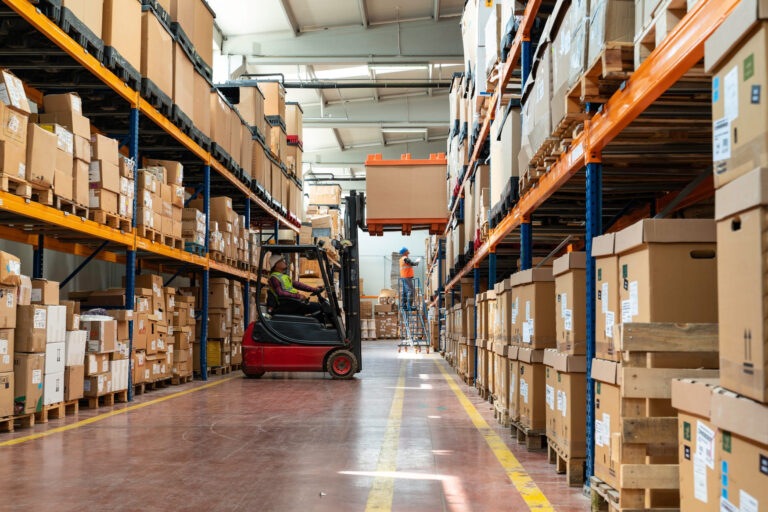
Running order fulfillment from your garage or back room can save money at first, but growth brings new challenges. In-house logistics means you handle everything yourself – storing inventory, packing boxes, managing shipping, and processing returns. This gives you full control and customization, but it becomes complex as orders grow. A 3PL (third-party logistics) provider […]
Amazon FBA vs 3PL: 2026 U.S. Cost Comparison and Guide
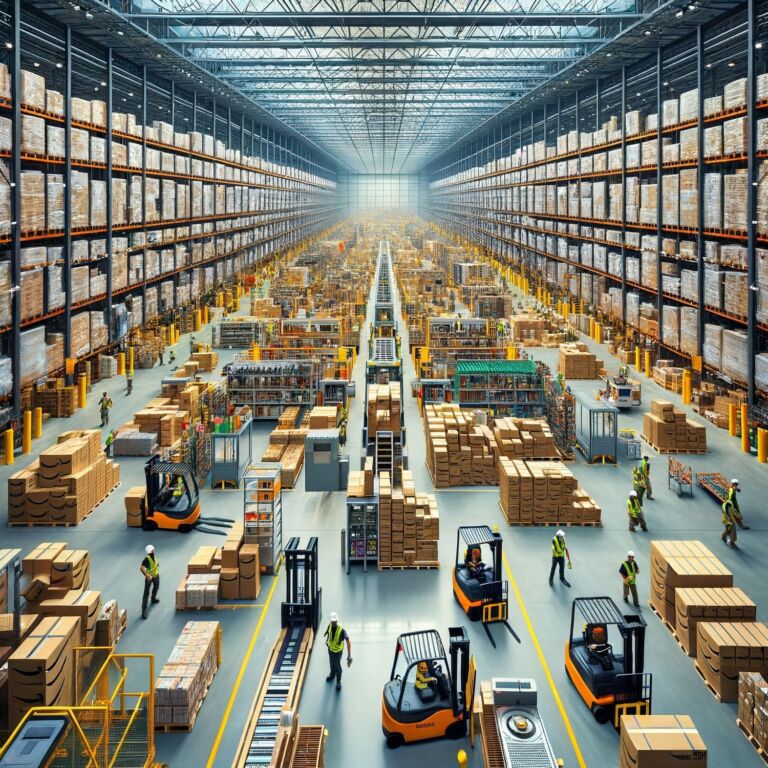
A 3PL (third-party logistics) provider is a company you outsource warehousing and fulfillment to, typically covering storage, pick/pack, shipping, and often returns. Fulfillment by Amazon (FBA) is a program where you send inventory into Amazon’s network and Amazon stores it, then picks, packs, ships, and handles customer service and returns, while also enabling fast Prime […]
Best D2C Fulfillment Solutions for Branded Shipping 2026
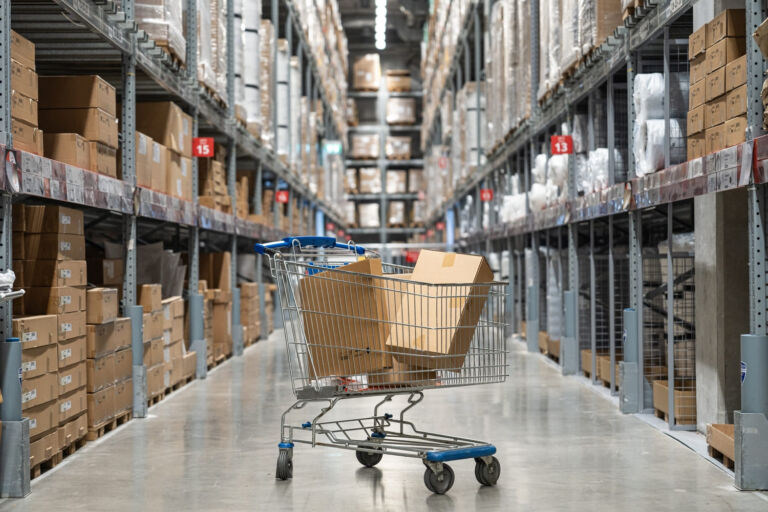
The direct-to-consumer (D2C) landscape is evolving rapidly. Brands are no longer just selling products, they are creating experiences. Today’s consumers expect seamless, fast, and personalized delivery that reflects the brand’s identity. That’s why best D2C fulfillment solutions for branded shipping have become a critical differentiator for 2026. Companies that invest in modern, efficient, and customer-centric […]
Ready to streamline your warehousing needs?
Request a quote today and discover how OLIMP's tailored solutions can optimize your operations