What Is a 26-Foot Box Truck, and How Much Can It Carry?
09/11/2026
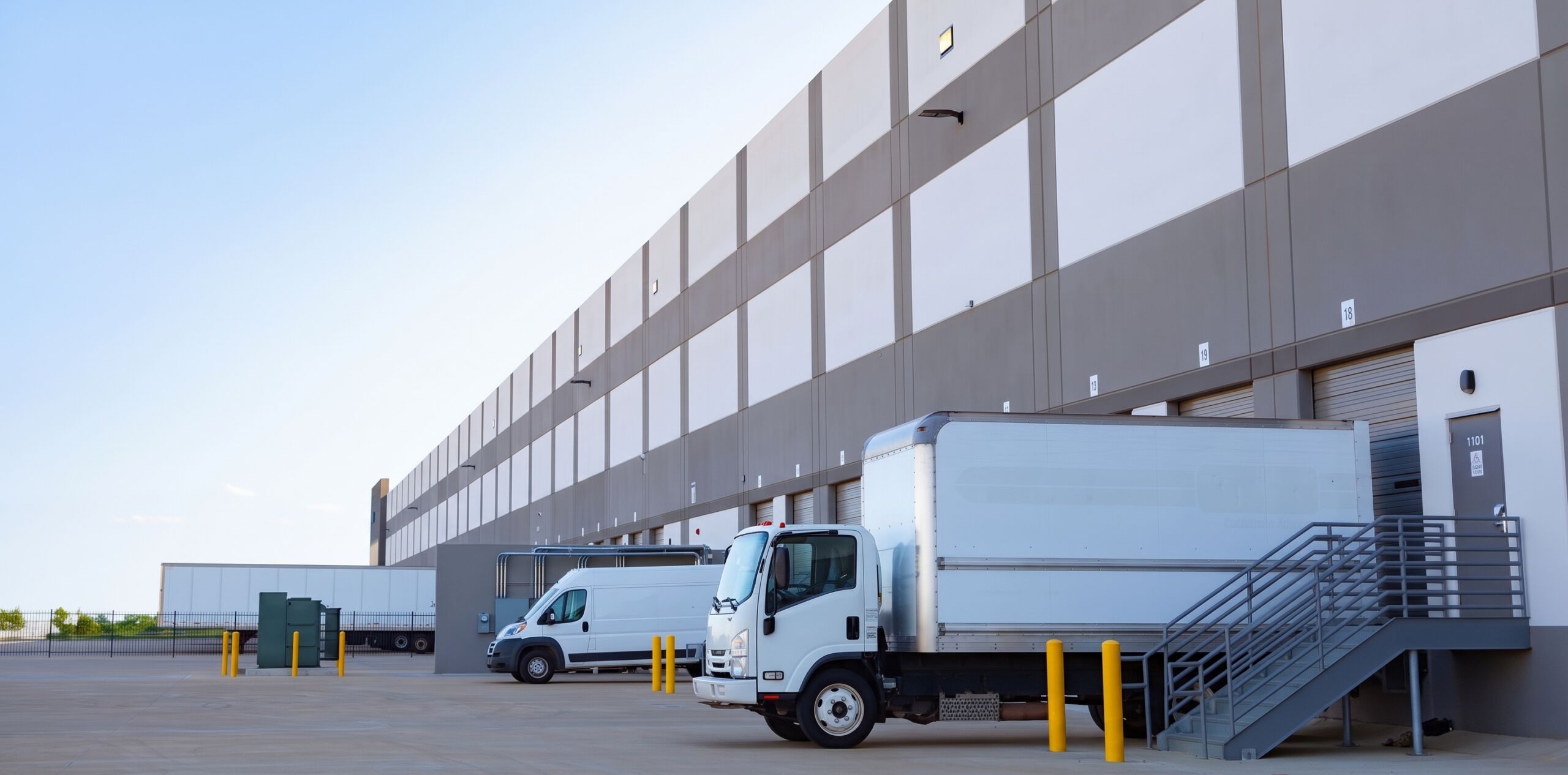
A 26 foot box truck is a straight truck with an enclosed cargo body approximately 26 feet long mounted on the same chassis as the cab. It is one of the largest common box-truck sizes used for palletized freight, commercial deliveries, warehouse transfers, furniture, appliances, and large moves.
What Are the Dimensions of a 26 Foot Box Truck?
The “26-foot” measurement normally refers to the approximate length of the enclosed cargo box, not the truck’s total exterior length.
Typical interior measurements include:
| Measurement | Typical Range |
| Cargo-box length | 26–26.2 ft |
| Interior width | 8–8.5 ft |
| Interior height | 8–8.5 ft |
| Cargo volume | 1,600–1,800 cu. ft. |
| Rear-door width | About 7.5–8.5 ft |
| Rear-door height | About 6.8–8.5 ft |
| Exterior clearance | About 12–13.5 ft |
For example, Enterprise lists one commercial 26 ft. box truck with a 26-foot-by-102-inch-by-102-inch cargo body. Its configuration includes a roll-up door, E-track, tie slats, dock-height body, and tuck-under liftgate.
U-Haul’s moving configuration has interior dimensions of 26 feet 2 inches by 8 feet 1 inch by 8 feet 3 inches, providing up to 1,682 cubic feet of space.
Did You Know?
A truck’s interior height is different from its exterior clearance height. Always check the full exterior clearance before entering parking structures, tunnels, loading areas, or spaces with low overhead obstacles.
How Much Weight Can a 26 Foot Box Truck Carry?
A 26 foot box truck commonly carries approximately 8,000 to 13,000 pounds of cargo, but payload varies considerably between vehicles.
Enterprise advertises payload capacity of up to 10,000 pounds for its commercial model, while U-Haul lists a maximum load of 12,859 pounds for its 26-foot moving truck. These differences show why box length alone cannot determine carrying capacity.
The legal payload can be estimated using this formula:
Available payload = GVWR − empty vehicle weight
The empty vehicle weight must account for the truck body and installed equipment. Fuel, occupants, tools, liftgates, refrigeration systems, and other additions also reduce the weight available for freight.
A truck may run out of legal payload before it runs out of physical space. This is particularly important when transporting beverages, paper products, machinery, metal components, or other dense freight.
Pro tip: Never estimate load capacity based only on cubic volume. Check the truck’s GVWR, empty weight, axle ratings, and manufacturer-stated payload before loading.
How Many Pallets Fit in a 26 Ft. Box Truck?
A 26-foot box truck typically accommodates 12 standard 48-by-40-inch pallets in a practical single-layer layout. The exact number depends on:
- Pallet dimensions and orientation
- Interior box width
- Wheel-well or liftgate intrusions
- Space required between pallets
- Load-securing requirements
- Freight overhang
- Total shipment weight
Nonstandard pallets may reduce capacity. Double-stacking can increase the number of pallets only when the products, packaging, pallet strength, interior clearance, and weight limits safely allow it.
For comparisons with smaller vehicles, see OLIMP’s complete guide to box truck sizes, dimensions, and cargo capacity.
What Types of Freight Can a 26-Foot Box Truck Transport?
A 26 ft. box truck is well suited to regional, final-mile, and short-haul shipments that need more capacity than a cargo van but do not require a full tractor-trailer.
Common loads include:
- Palletized retail products
- Food and beverage shipments
- Furniture and appliances
- Trade-show equipment
- Building materials
- Packaged consumer goods
- E-commerce inventory
- Warehouse transfer loads
- Office equipment
- Freight recovered after a delivery disruption
Specialized trucks may also transport refrigerated, frozen, medical, or other controlled freight. These loads require the correct equipment, operating procedures, and regulatory compliance.
When Is a 26-Foot Box Truck Better Than a Tractor-Trailer?
A 26-foot truck can be a practical alternative when a shipment is too large for a van but too small for a 53-foot trailer.
It is especially useful when:
- The destination has limited maneuvering space
- Freight must reach an urban or residential area
- The shipment contains around 12 pallets or fewer
- A full trailer would leave substantial unused capacity
- The receiver does not have a loading dock
- Fast local or regional delivery is required
A liftgate-equipped truck can lower freight to ground level at locations without a dock. However, the liftgate’s platform dimensions and weight rating must match the cargo.
Do You Need a CDL to Drive a 26 Foot Box Truck?
Not automatically. Truck length does not determine whether a CDL is required.
Under federal CDL rules, a Class B license applies to a single vehicle with a GVWR or actual gross vehicle weight of 26,001 pounds or more, subject to the applicable definitions and exceptions. States issue CDLs under these federal standards.
That is why many 26-foot rental trucks are configured just below the threshold. U-Haul and Enterprise both publish 25,999-pound GVWRs, while Penske markets non-CDL commercial box trucks with GVW of up to 26,000 pounds.
However, non-CDL does not mean “not a commercial motor vehicle.” For interstate commerce, federal safety regulations generally define a commercial motor vehicle as one with a GVWR, GCWR, GVW, or GCW of 10,001 pounds or more, among other qualifying conditions. Commercial operators should therefore evaluate all applicable DOT and state requirements, not just CDL status.
Hazardous-material and passenger operations can also create separate CDL requirements.
How Should You Prepare Freight for a 26-Foot Box Truck?
Before dispatch, confirm the following details:
- Measure the full shipment, including pallet overhang.
- Calculate the total freight and pallet weight.
- Verify the truck’s payload and door-opening dimensions.
- Confirm whether the location has a dock or requires a liftgate.
- Check whether a pallet jack or forklift is available.
- Distribute weight evenly and keep the load within axle limits.
- Secure freight with straps, load bars, or E-track attachments.
- Confirm that the truck can access the pickup and delivery sites.
Accurate load information helps prevent rejected pickups, loading delays, cargo damage, and last-minute vehicle changes.
Is a 26-Foot Box Truck Right for Your Shipment?
A 26-foot box truck offers substantial enclosed capacity while remaining more maneuverable than a tractor-trailer. Before booking one, verify the shipment’s dimensions, total weight, pallet count, loading method, door clearance, and destination access. These checks are the simplest way to avoid capacity problems and keep freight moving efficiently.
Frequently Asked Questions (FAQ) – OLIMP Warehousing
Q: Is a 26-foot box truck the same as a straight truck?
Yes. A box truck is commonly called a straight truck because the cab and cargo body are mounted on the same chassis.
Q: Do you need a CDL to drive a 26-foot box truck?
Not necessarily. Under federal standards, a Class B CDL generally applies to a single vehicle with a GVWR or gross vehicle weight of 26,001 pounds or more. State requirements and certain cargo types may create additional rules, so drivers should verify the specific vehicle and jurisdiction.
Q: How many standard pallets fit in a 26 ft. box truck?
Approximately 12 standard 48-by-40-inch pallets usually fit in a practical single-layer arrangement. Actual capacity depends on pallet orientation, cargo dimensions, and weight.
Q: What is the maximum payload of a 26-foot box truck?
Payload commonly ranges from 8,000 to 13,000 pounds. Always use the rating for the exact vehicle because liftgates and other equipment affect capacity.
Q: Can a 26-foot box truck load at a warehouse dock?
Many commercial models are dock height, but dock compatibility is not universal. Confirm the truck’s deck height and the facility’s dock configuration before arrival.
Q: Can a forklift enter a 26-foot box truck?
Only if the truck floor, body, and loading setup are rated for it. In many situations, a forklift places freight at the rear while a pallet jack moves it inside.
Q: Is a 26-foot box truck suitable for long-distance freight?
Yes, depending on the vehicle’s condition, cargo weight, operating cost, and route. However, tractor-trailers may be more efficient for larger or heavier shipments.
You may be interested in
Box Truck Sizes & Dimensions (10–26 ft): Cargo Capacity & Payload Guide
Box trucks (also called cube or straight trucks) have a rectangular cargo box mounted directly on the truck chassis behind the cab. They are the workhorses of logistics, used for local deliveries, moving household goods, and regional freight transport. Box truck sizes vary greatly: typical lengths range from about 10 feet up to 26 feet […]
Straight Truck Guide: Dimensions, Weight Limits & Choosing the Right Truck
A straight truck, sometimes called a box truck, is a medium‑duty vehicle in which the cab and cargo body are built on a single frame. Unlike tractor‑trailers, the cargo area is permanently attached to the chassis, so drivers do not pull a separate trailer. Straight trucks (class‑7 vehicles) connect all axles to one frame and […]

Full Truckload (FTL) Shipping Services: How It Works, Costs & Use Cases
Full truckload shipping (FTL) is a freight transport mode where one shipper’s cargo occupies an entire truck trailer. In FTL service – also known as FTL trucking or full truckload freight transport – a carrier dedicates a 48′ or 53′ trailer exclusively to one shipment. Unlike less-than-truckload (LTL) shipping (where freight from multiple shippers shares […]
Ready to streamline your warehousing needs?
Request a quote today and discover how OLIMP's tailored solutions can optimize your operations