What Is Chemical Logistics and How Does It Work?
08/21/2026
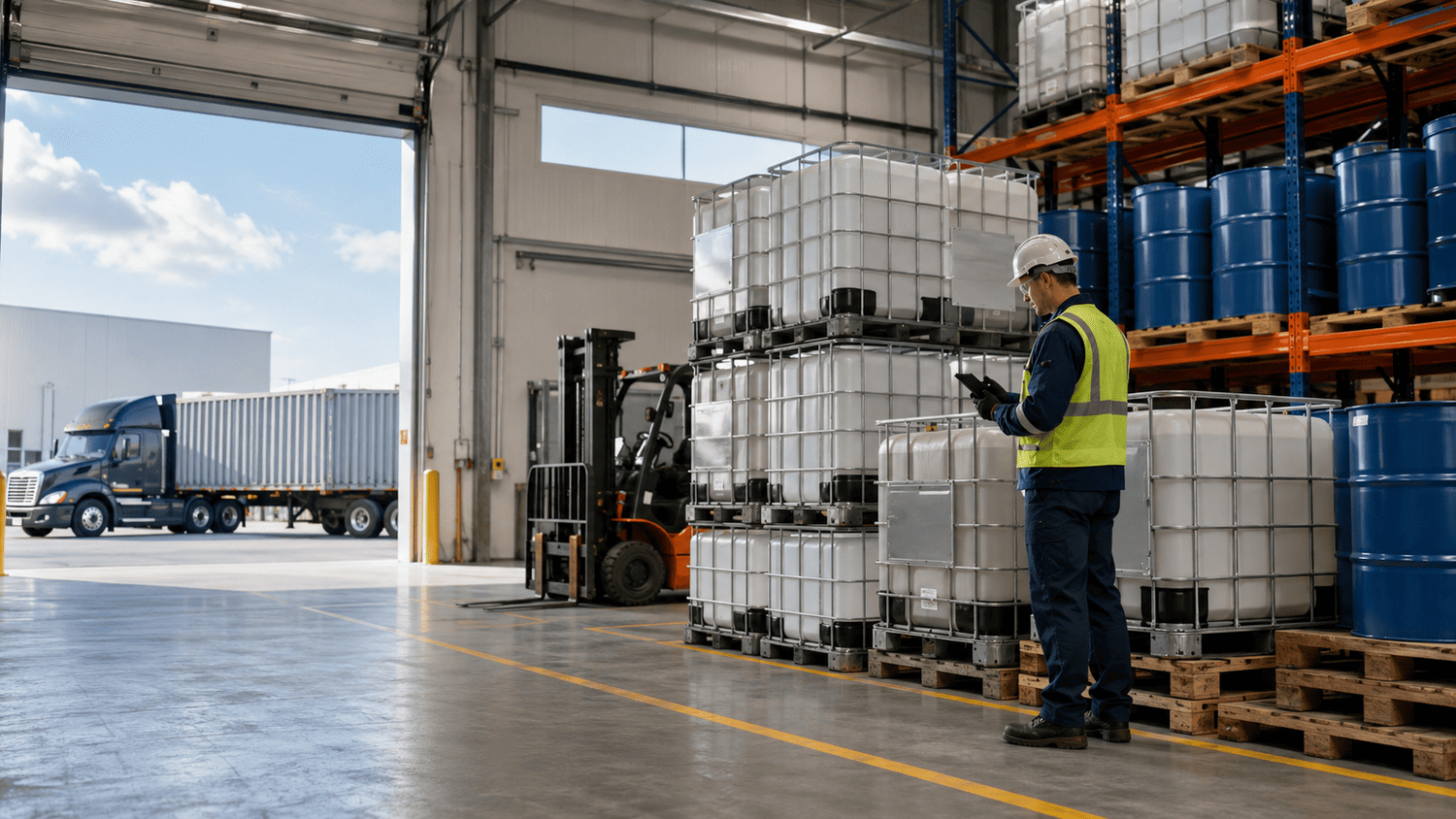
Chemical logistics is the coordinated storage, handling, transportation, and distribution of chemical products from suppliers to end users. It combines standard supply-chain management with product-specific controls for safety, quality, regulatory compliance, and environmental protection.
What Is Chemical Logistics?
Chemical logistics is a specialized branch of logistics that manages raw materials, intermediates, industrial chemicals, specialty chemicals, and finished chemical products. Depending on the shipment, it may include drums, totes, cylinders, bags, pallets, tank containers, or bulk loads.
The term is broader than hazardous materials logistics. Some chemicals qualify as hazardous materials or dangerous goods for transportation, while others do not. In the United States, PHMSA regulates the movement of hazardous materials. In Canada, dangerous-goods transportation is governed by the Transportation of Dangerous Goods Regulations.
Because the rules can change by product, quantity, jurisdiction, and transportation mode, chemical logistics begins with accurate product information, not assumptions based on a product name alone.
How Does the Chemical Logistics Process Work?
A reliable chemical supply chain uses controls at every handoff, from order planning to final delivery.
1. How Are Chemicals Classified Before Shipping?
The shipper first identifies the material’s physical and chemical properties, hazards, concentration, quantity, and intended use. The current SDS is a key source of information, but transportation classification may require additional analysis.
For regulated freight, the classification affects the proper shipping name, identification number, hazard class, packing group, packaging, markings, labels, placards, and documentation. Incorrect classification can create safety risks and cause rejected loads, fines, or delays.
2. How Are Chemicals Packaged and Labeled?
Packaging must be compatible with the product and suitable for the route and mode of transport. A corrosive material, for example, may require a different container and closure system than a flammable liquid or oxidizer.
Labels and documents must remain accurate and legible. OSHA’s Hazard Communication Standard requires workplace hazard information through labels and SDSs, while PHMSA rules address hazardous materials in transportation. Canadian shipments may also need to meet TDG and WHMIS requirements, including bilingual SDS and label information where applicable.
3. How Does Chemical Warehousing Protect Products?
Chemical warehousing does more than place containers on racks. A suitable facility evaluates whether it can legally and safely receive the product, then assigns storage based on its hazard class, compatibility, temperature range, container type, and quantity.
Common controls may include:
- Separation of incompatible materials
- Secondary containment for leaks or spills
- Ventilation and fire-protection systems appropriate to the product
- Controlled temperature or humidity when product stability requires it
- Restricted access and inventory location tracking
- Accessible SDSs, protective equipment, and spill-response supplies
- Inspection routines for damage, leaks, or deteriorating labels
Warehouse suitability is product-specific. A facility that handles one class of chemical may not be authorized or equipped to handle another.
4. How Are Chemicals Transported Safely?
Chemical transportation may involve highway, rail, ocean, air, or intermodal service. Mode selection should account for the product’s classification, volume, lead time, route, transfer points, and temperature requirements.
For regulated shipments, trained personnel must prepare the load and documentation, and the carrier must have the required authority, equipment, and qualified operators. PHMSA identifies packaging, shipping papers, marking, labeling, placarding, modal requirements, and security as core hazmat topics.
5. How Is Shipment Visibility Maintained?
Chemical logistics teams need to know more than a shipment’s estimated arrival time. Useful visibility can include:
- Lot, batch, and container identification
- Exact inventory location and quantity
- Temperature or humidity records when required
- Seal and custody information
- Shipment status and exception alerts
- SDS, shipping paper, inspection, and delivery records
This traceability supports recalls, inventory control, and incident response.
Why Is Chemical Logistics More Complex Than General Freight?
Chemical products can react to heat, moisture, contamination, incompatible substances, improper packaging, or rough handling. A small documentation error can also stop a shipment even when the physical freight is undamaged.
The main challenges include:
- Safety: Spills, fires, exposure, and reactions can harm people, property, and the environment.
- Compliance: Requirements may involve multiple transportation, workplace-safety, environmental, fire-code, and local authorities.
- Product integrity: Temperature excursions, contamination, or damaged packaging can make material unusable.
- Capacity: Suitable space is more limited than general dry storage, especially for specific hazard classes or large quantities.
- Coordination: Every party must share accurate product and shipment information.
- Cross-border movement: U.S. and Canadian requirements are related but not identical, so labels, documents, and operating procedures must be reviewed for each jurisdiction.
In the U.S., EPA requirements may also apply to inventory reporting and emergency planning. Under EPCRA, covered facilities report certain chemical storage, use, and releases to the appropriate authorities.
What Services Are Included in Chemical Logistics?
The exact service mix depends on the chemical, shipment profile, and customer’s operating model. Chemical logistics services may include:
- Short-term, long-term, overflow, and temperature-controlled storage
- Hazardous materials warehousing
- Inbound receiving and outbound distribution
- Cross-docking and transloading
- Drayage and intermodal coordination
- Inventory and lot tracking, order picking, and pallet preparation
- Container unloading and freight inspection
- Returns, quarantine, and disposal coordination
Not every provider or facility offers every service. Shippers should confirm capabilities before booking rather than relying on a general “hazmat” designation.
How Can Companies Improve Chemical Supply Chain Management?
Strong chemical logistics starts before the shipment is tendered. The following practices reduce avoidable risk and delays:
- Maintain accurate product data. Keep current SDSs, classifications, packaging specifications, and emergency contacts.
- Share shipment details early. Provide the exact product, hazard class, UN or NA number when applicable, quantity, container type, temperature range, and requested services.
- Verify every facility. Confirm that the warehouse can accept the material and quantity and has the required permits, controls, trained staff, and insurance.
- Plan compatibility and segregation. Review chemicals against nearby inventory rather than grouping them only by broad category.
- Create exception procedures. Define what happens after a leak, rejected delivery, temperature excursion, damaged label, missed appointment, or transportation delay.
- Audit performance. Track inventory accuracy, damage, dwell time, safety events, documentation errors, and corrective actions.
How Do You Choose a Chemical Logistics Provider?
Ask specific, product-based questions instead of relying on general claims. A useful evaluation should cover:
- Which products, hazard classes, quantities, and packaging types can the facility handle?
- What permits, registrations, inspections, and insurance apply?
- How are incompatible chemicals separated?
- What fire protection, ventilation, containment, and monitoring are available?
- How are employees trained and procedures reviewed?
- Can the provider maintain the required temperature range and records?
- How are spills, damaged freight, recalls, and emergencies managed?
- Can it support transportation, transloading, drayage, or overflow storage?
The best fit is not necessarily the closest warehouse. It is the facility that can safely and efficiently support the exact product and service scope.
How Does OLIMP Support Chemical Warehousing Across North America?
OLIMP Warehousing connects shippers, manufacturers, carriers, freight forwarders, and freight brokers with a vetted network of more than 5,000 warehouse partners across North America.
For chemical freight, OLIMP can help identify facilities offering HAZMAT storage, temperature-controlled warehousing, transloading, cross-docking, drayage coordination, and short- or long-term storage. Acceptance depends on the product, hazard class, quantity, packaging, and facility requirements, so each request is confirmed individually. Businesses gain flexible warehouse support without building a facility or committing to unneeded space.
Build a Safer, More Flexible Chemical Supply Chain
Effective chemical logistics brings safety, compliance, product care, and operational efficiency into one coordinated process. If you need chemical warehousing or related freight support, share complete product and service details early so the right facility can be identified and verified before the shipment moves.
Frequently Asked Questions (FAQ) – OLIMP Warehousing
Q: What Is the Difference Between Chemical Logistics and Hazmat Logistics?
Chemical logistics covers the supply chain for all chemical products. Hazmat logistics specifically concerns materials regulated as hazardous during transportation or handling. Some chemical products are not classified as hazmat.
Q: What Information Is Needed for a Chemical Warehousing Quote?
Provide the product name, current SDS, hazard class and identification number if applicable, quantity, packaging type, pallet count, storage duration, temperature needs, service requirements, origin, and destination.
Q: Does Every Chemical Require Temperature-Controlled Storage?
No. Temperature control is required when the product specification, SDS, stability data, or applicable procedure calls for a defined range. Many chemicals can use ambient storage within stated limits.
You may be interested in
Chemical Warehousing & HAZMAT Storage: Safety, Standards, and Best Practices
Chemical warehouse storing drums of hazardous substances under safety controls. Chemical warehousing (also called hazardous materials or HAZMAT warehousing) refers to specialized storage of chemicals and other dangerous goods under strict safety and regulatory controls. These facilities are designed to prevent accidents by segregating incompatible substances and complying with rigorous safety standards. In North America, […]
Which 3PL Warehouse California Providers Should Brands Importing Through Long Beach Evaluate?
A 3PL warehouse in California stores, handles, and distributes inventory on behalf of another business. For brands importing through Long Beach, the right provider should do more than offer warehouse space, it should help coordinate containers, control port-related costs, maintain inventory accuracy, and move products into domestic distribution channels. The Port of Long Beach handled […]

Rail, Road, or Air Freight: Which Mode Should You Choose in 2026?
Choosing between rail, road, and air freight means balancing transportation cost against delivery speed, reliability, capacity, inventory risk, and customer expectations. In 2026’s volatile logistics market, the right answer is often not one mode, but a flexible transportation strategy that can change by shipment, lane, and urgency. Why Is Freight Mode Selection More Difficult in […]
Ready to streamline your warehousing needs?
Request a quote today and discover how OLIMP's tailored solutions can optimize your operations