Pallet Storage Cost per Month in the USA: 2026 Dry and Cold Rates
04/17/2026
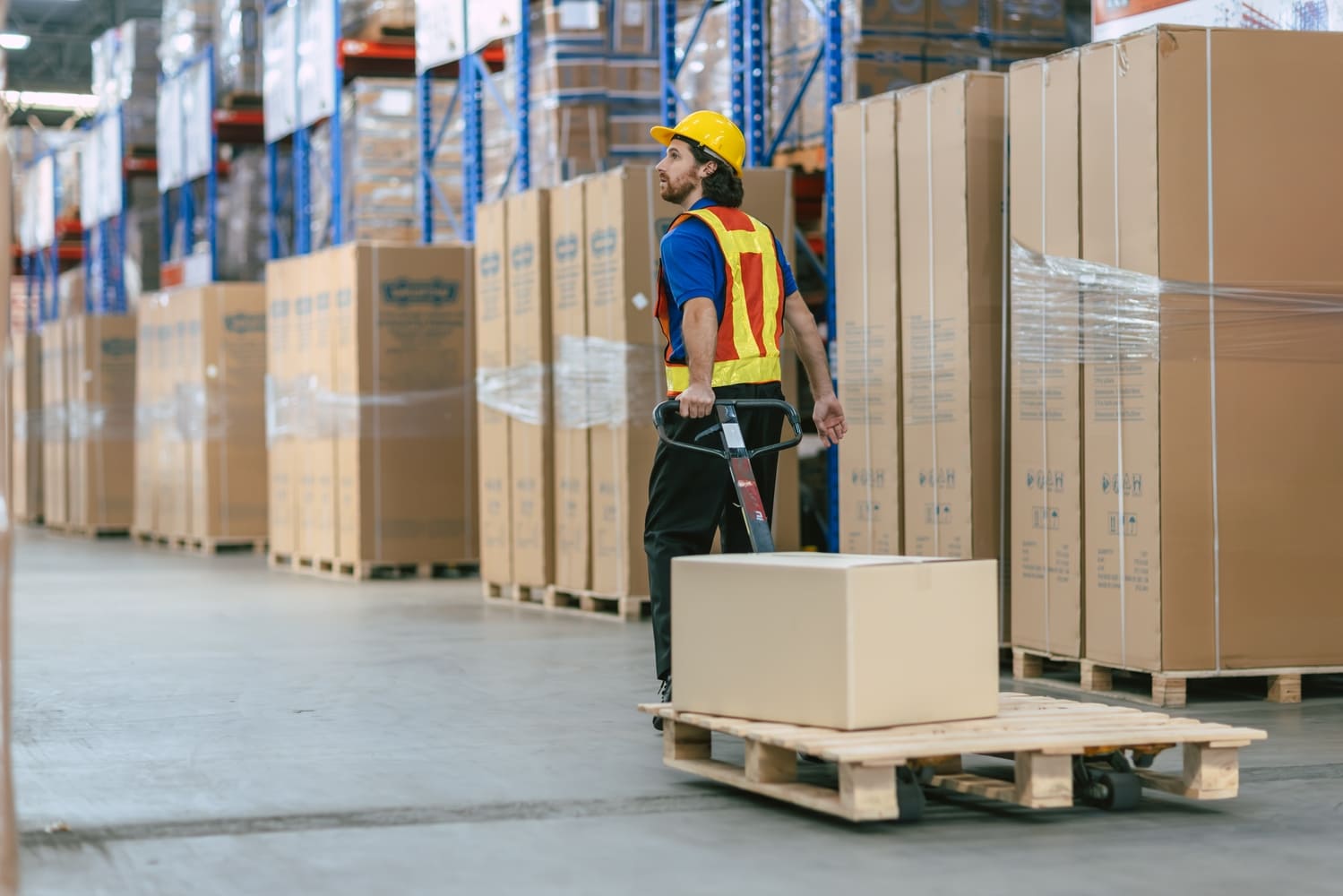
Budgeting for pallet storage starts with the space charge, but your total bill also depends on how goods arrive, move and leave. About $20 per pallet per month is a useful starting benchmark for standard storage. The Fulfillment Advisor’s 2026 survey reports an average of $19.37. Your quote may be higher or lower, especially for short-term bookings, small accounts, oversized loads or refrigerated goods.
This guide explains the benchmarks, additional fees and billing rules to check before booking warehouse space. The figures below are external reference points, not OLIMP prices or an all-inclusive quote.
Average pallet storage cost per month in 2026
Warehouses can charge by pallet position, cubic foot, square foot or bin. Compare quotes using the same unit and the same included services.
| Billing unit | Published 2026 monthly average | What to check |
| Per pallet position | $19.37 | Allowed dimensions, loaded height and weight |
| Per cubic foot | $0.45 | Measured inventory volume or reserved capacity |
| Per square foot | $1.26 | Occupied footprint or allocated area |
| Per bin | $3.03 | Bin dimensions and separate picking charges |
Source: The Fulfillment Advisor’s annual pricing table. These are outsourced storage charges; the square-foot figure is not a commercial property lease rate.
The underlying 2026 survey covers 500 providers, approximately 80% operating in the United States and 20% in Canada. It is a cross-border benchmark, not a U.S.-only average or a guaranteed local rate. The publisher does not provide a respondent count for every fee.
Short-term offers can look different. For example, Warehouse Exchange advertises month-to-month storage at $25–$35 per pallet, plus $20 per pallet inbound and $20 outbound. That is one provider’s published offer, not a market-wide range. It illustrates why the monthly storage price alone does not tell you the total cost.
What your warehouse storage bill includes
Ask the provider to separate recurring space charges from activity charges and transport. A low pallet rate can be offset by a minimum spend or frequent handling.
| Charge | What to confirm in the quote |
| Storage | Billable positions, rate, billing period and partial-month policy |
| Receiving and put-away | Whether unloading, counting, inspection and placement are bundled |
| Outbound handling | Retrieval, staging and loading charges per release or pallet |
| Inventory services | Portal access, stock reports, cycle counts and lot or expiry tracking |
| Additional work | Labeling, wrapping, re-palletizing, picking and packing |
| Transportation | Collection, delivery, fuel and accessorial charges |
| Minimums and account fees | Eligible charges, minimum spend and any separate administration fee |
| Special conditions | Temperature control, oversized loads and aged-inventory charges |
Receiving and pallet-in fees may describe the same bundled service, or different work. Have the warehouse define each line so you do not count the same activity twice. Likewise, a monthly minimum may replace a lower eligible subtotal rather than being added to it.
Storage can include inventory visibility without including every inventory-management task. Specify whether you need pallet-level counts, SKU-level reporting, lot tracking or order fulfillment, and confirm the price for each.
How to calculate your monthly pallet storage cost
Start with this calculation:
Storage charge = billable pallet positions × rate per position × billable period.
Then add receiving, outbound handling and other agreed services. Apply any minimum according to the contract, and add transport or other excluded items separately. Ask whether billable positions are based on average daily inventory, peak inventory, a monthly count or reserved capacity.
Example for 50 pallets
The following is a hypothetical budget, using assumed rates for illustration. It is not an OLIMP quote or a survey average.
| Cost item | Assumption | Amount |
| Storage | 50 positions billed for one month × $25 | $1,250 |
| Receiving and put-away | 50 inbound pallets × $10 | $500 |
| Outbound handling | 20 outbound pallets × $10 | $200 |
| Account fee | Assumed monthly charge | $50 |
| Total before transport and other exclusions | Sum of the four items above | $2,000 |
The assumed $25 storage rate produces a $2,000 bill once the listed services are included. In this example, $2,000 divided by 50 billed positions equals $40 per billed position for the month. That effective figure depends on the activity assumptions; it is not a new storage tariff. A later month with fewer receipts or releases could cost less.
For a simple storage-only comparison at an assumed $25 rate, 10 positions cost $250, 50 cost $1,250, and 100 cost $2,500 per full month, before handling and minimums. Do not assume volume discounts until they appear in the quote.
Why minimums matter for a small business
Suppose you need 10 positions at $25 each, but the contract sets a $500 storage-only minimum. The storage charge becomes $500, equivalent to $50 per occupied position, before separately billed services. If the minimum instead covers storage and handling together, the calculation changes.
For small inventories, compare the total expected invoice at your actual volume. Ask whether unused capacity is charged, which services count toward the minimum, and whether there are setup or exit fees.
Cold storage rates per pallet
Cold storage needs a quote for your product’s required temperature, handling and monitoring. Climate-controlled, refrigerated and frozen space are different service specifications.
The Fulfillment Advisor’s 2026 survey reports specialty-storage responses of $30–$40 per pallet and notes that many providers priced specialty space about 50% above standard storage. These observations combine multiple storage types; they are not separate national averages for chilled and frozen freight, or an upper limit on quotes.
Give the provider the required temperature range and tolerance, arrival condition, pallet dimensions and weight, expected storage period, and any lot or expiry-tracking needs. Confirm whether the service maintains already-chilled or frozen goods, or includes cooling or freezing on arrival. Those tasks should be specified separately.
Also ask about temperature records, loading arrangements, appointment requirements and charges for additional handling. Compare providers against your product specification rather than choosing from the pallet rate alone.
Explore OLIMP’s cold and frozen warehousing options and include these requirements when requesting availability.
How location and pallet size affect pricing
Location and transportation
A warehouse close to your port, supplier or customers may reduce transport expense even when its storage rate is higher. Compare the combined cost of storage, receiving, collection and delivery for the same freight movements.
Regional survey figures also need context. The 2026 survey reports monthly pallet-storage averages of $16.00 in Texas, $19.29 in California and $30.50 in New Jersey. Different respondent mixes and service requirements limit direct comparisons; these are not quotes for equivalent facilities or an OLIMP rate card.
Request quotes for the specific ZIP code or service radius you can use. Include delivery destinations and appointment requirements so transport savings can be weighed against the storage price.
Pallet footprint, height and weight
A common U.S. pallet footprint is 48 × 40 inches, but that footprint alone does not define a billable position. The warehouse also needs the loaded height, total weight, overhang and stacking restrictions.
Oversized or non-stackable freight may need more space or a different storage arrangement. Ask how it will be billed before arrival. The same checks apply to cold-storage pallet sizes: a temperature-controlled facility’s equipment and storage layout determine what it can accept.
If a provider prices by volume, a load measuring 48 × 40 × 60 inches occupies approximately 66.7 cubic feet, calculated as length × width × height ÷ 1,728. Confirm whether the provider bills actual load volume or allocated capacity before comparing it with a pallet-position quote.
Short-term storage and delivery or collection
For a few days or weeks, ask for the billing rule as well as the rate. A warehouse might charge daily, weekly, for a calendar month or for each started billing period. A monthly rate does not automatically mean daily proration.
For example, if a provider expressly agrees to prorate a $30 monthly rate over 30 days, 10 days would cost $10 per pallet for storage. Without that agreement, a full-period charge or minimum may apply. Receiving and release charges still need to be included.
If you need pallet storage with delivery and collection, provide the pickup address, warehouse area, delivery destination, dates and number of movements. Ask whether the quote includes transport or only storage and dock handling. Include any liftgate, restricted-access or appointment requirements.
OLIMP’s warehousing services support short-term and longer-term storage requests. Pickup and delivery options depend on the location and project, so include them in the request rather than assuming they are part of the storage fee.
How to compare providers and negotiate a better agreement
Send each provider the same inventory profile and activity forecast. A useful comparison shows the first month’s cost, a normal operating month and the cost of removing the inventory at the end.
Compare your expected volume. Price the number of positions you will actually use, including quiet periods and seasonal peaks.
Check minimums before negotiating the pallet rate. A lower rate may not reduce your bill if the minimum still applies.
Match services. Compare the same receiving, release, reporting and transport requirements.
Ask about volume and term pricing. Confirm the commitment, notice period and consequences if volume falls short.
Reduce avoidable work. Accurate labels, agreed pallet dimensions and clear receiving instructions can prevent extra processing.
Review inventory age. Confirm when an aged-stock surcharge starts and how it is calculated.
Evaluate total logistics cost. A distant warehouse with cheaper space may cost more once extra freight movements are included.
For budget-sensitive businesses, local shared storage, a 3PL with suitable minimums, or flexible warehousing can all be worth comparing. The best fit is the provider that meets your handling needs at the lowest comparable total cost.
Get a pallet storage quote from OLIMP
To request storage near your business or delivery destination, prepare:
City or ZIP code and acceptable search radius.
Number of pallets, dimensions, loaded height and weight.
Product description, stackability and any special storage requirements.
Arrival date, expected release dates and storage duration.
Expected receipts, releases and inventory-reporting needs.
Collection or delivery addresses and any additional handling services.
Ask for an itemized quote showing the storage rate, billable positions, minimum spend, receiving, outbound handling and transport. This gives you a budget you can compare with other offers.
Frequently Asked Questions (FAQ) – OLIMP Warehousing
Q: Is a pallet storage price the total monthly warehouse cost
Usually, it is one line of the quote. Confirm receiving, release, inventory services, account fees, minimums and transportation before calculating the total. The worked example above shows how those items change the bill.
Q: Can I rent space for only one or a few pallets
Ask about availability for your quantity and the minimum invoice. A provider may accept a small shipment while still applying a minimum charge. Specify your actual pallet count and duration when requesting a quote.
Q: Does pallet storage include delivery and collection
Only if the quote includes those services. Storage, dock handling and road transportation are separate activities. Confirm the addresses, number of trips, schedule and access requirements.
Q: Does a monthly storage rate include inventory management
The scope varies. Ask whether basic stock visibility is included and whether cycle counts, SKU-level tracking, lot control, integrations or order processing cost extra.
Q: How do I estimate storage for a 10,000-square-foot warehouse
First identify whether you are renting allocated storage space, leasing a building or installing storage equipment. For allocated space, multiply the billable square footage by the quoted rate and add services. For a facility lease, budget separately for occupancy and operations. Pallet capacity also depends on usable area, aisles, rack configuration and permitted loads; floor area alone is insufficient.
Q: Are pallet racking and automated storage costs included in this guide
This guide covers renting warehouse storage services. Purchasing selective racking, pallet-flow systems or automation requires a separate equipment and installation budget, including layout, capacity and operating requirements.
You may be interested in

3PL Warehousing & Distribution Services: Processes, Benefits & 2026 Trends
3PL warehousing and distribution refers to a company outsourcing the storage, handling, inventory management and delivery of its products to a specialist provider. 3PL providers operate warehouses and distribution centres, employ trained staff, and use technology to track and ship goods on the company’s behalf. Outsourcing logistics to a 3PL partner saves capital expense, provides […]

Amazon FBA vs 3PL: 2026 U.S. Cost Comparison and Guide
A 3PL (third-party logistics) provider is a company you outsource warehousing and fulfillment to, typically covering storage, pick/pack, shipping, and often returns. Fulfillment by Amazon (FBA) is a program where you send inventory into Amazon’s network and Amazon stores it, then picks, packs, ships, and handles customer service and returns, while also enabling fast Prime […]

Best Ecommerce Shipping Solutions & Logistics Platforms (2026)
Modern shoppers expect fast shipping, real‑time tracking and painless returns. For ecommerce brands juggling multiple carriers and fulfilment centres, meeting those expectations can be overwhelming. Shipping aggregators and logistics platforms solve this problem by connecting your store to dozens of carriers and automating everything from rate shopping to label printing. In this updated guide for […]
Ready to streamline your warehousing needs?
Request a quote today and discover how OLIMP's tailored solutions can optimize your operations