Complete Guide to Dry Warehouse Storage and Dry Goods Shipping (2025 Update)
09/26/2025

In today’s fast‑moving supply chains, ambient storage plays an essential role in keeping non‑perishable products safe, organized and ready for distribution. Dry warehouse storage refers to facilities that keep goods at room temperature and protect them from moisture, pests and contamination. Unlike cold storage, which relies on refrigeration or freezing, dry warehouses provide clean, climate‑stable environments for products with long shelf lives. This updated guide explains what a dry warehouse is, how it compares to cold storage, the benefits and best practices of dry warehousing, how dry goods shipping works and emerging trends shaping the industry.
What Is a Dry Warehouse?
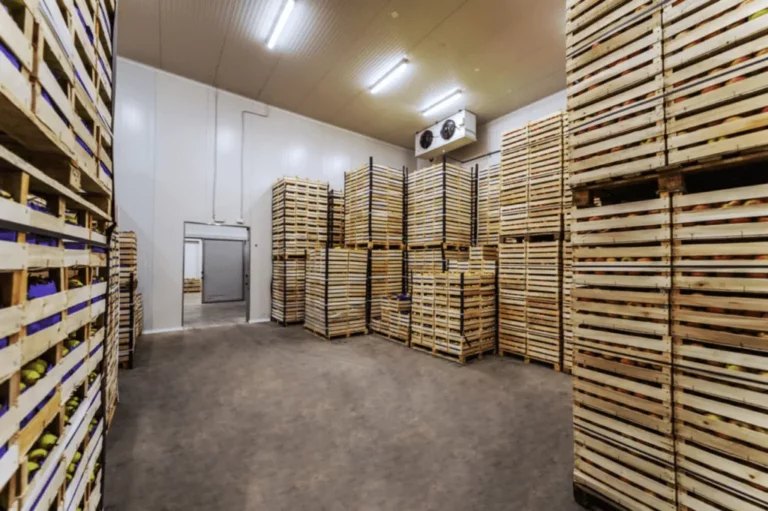
A dry warehouse is a storage facility for products that remain stable at ambient temperatures. It keeps goods dry and free from pests, and typically operates between 10 °C and 21 °C (50 °F – 70 °F) with humidity below 15 % to prevent mold and spoilage. Common items stored in these environments include:
- Packaged foods & dry ingredients: canned goods, cereals, grains and spices.
- Consumer goods: textiles, apparel, paper products and electronics.
- Industrial materials: tools, construction materials, raw materials and bulk goods.
- High‑value products: pharmaceuticals, metals and other items that need secure storage.
Because dry warehouses do not require refrigeration, they are generally less expensive to build and operate than cold storage facilities while still offering robust security and inventory control.
Dry Warehouse vs. Cold Storage vs. Ambient Storage
Dry and cold storage often get confused. A concise comparison illustrates their differences:
| Feature | Dry warehouse storage | Cold storage | Ambient/temperature‑controlled storage |
|---|---|---|---|
| Temperature & humidity | Room temperature (50–70 °F) with humidity <15 % | Refrigerated or frozen; strict temperature monitoring for perishables | Typically between dry and cold; used for goods needing mild temperature control |
| Products stored | Non‑perishables: packaged foods, electronics, textiles, paper, industrial goods | Perishables: meat, dairy, pharmaceuticals and other temperature‑sensitive items | Items sensitive to heat or cold but not requiring full refrigeration (e.g., wine, cosmetics) |
| Operational focus | Protection from moisture, pests and contamination; efficient inventory management | Maintaining constant low temperatures; monitoring cold chain integrity | Balancing energy efficiency with moderate temperature control |
| Cost & complexity | Lower build and operating costs compared with cold storage | Higher energy costs and stricter regulatory compliance | Moderate costs; may incorporate both dry and cold elements |
Businesses often utilize a combination of these facilities. For example, a grocery distributor may store canned goods in a dry warehouse and frozen products in cold storage, while an e‑commerce retailer may rely solely on dry warehouses for apparel and electronics.
Benefits of Dry Warehouse Storage
Well‑run dry warehouses provide numerous advantages that impact profitability and customer satisfaction:
Cost efficiency and long shelf life
Because dry warehouses operate at ambient temperatures, their energy consumption is lower than cold facilities. This makes them cost‑effective for businesses storing non‑perishable products. Properly managed dry storage conditions extend product shelf life by controlling humidity and preventing contamination.
Inventory visibility and management
Modern warehouses integrate warehouse management systems (WMS) and real‑time tracking to organize inventory efficiently. These systems facilitate pallet labeling, barcoding and FIFO (First‑In, First‑Out) rotation, which reduces waste and ensures older stock is shipped first.
Scalability and flexibility
Dry warehouses can easily scale to accommodate seasonal surges or long‑term storage needs. Many providers offer flexible contracts and customized handling for fragile or high‑value items. Because goods are stored at room temperature, they can be relocated quickly between storage zones, allowing providers to adjust space utilization as demand changes.
Security and compliance
These facilities incorporate surveillance systems, controlled access and adherence to food‑safety regulations. Cleaning and ventilation protocols ensure pest‑free environments. For food‑grade items, operators must also meet regulatory standards for sanitation and traceability.
Ideal Conditions and Best Practices for Dry Warehousing
To maximize efficiency and protect product quality, dry warehouse operators follow specific best practices:
- Maintain ambient temperature and humidity: keep storage areas at 50 °F – 70 °F with relative humidity below 15 %. Use sensors and HVAC systems to monitor conditions.
- Ensure sanitation and ventilation: regular cleaning prevents pests and contamination; good airflow reduces condensation. Install air curtains and dehumidifiers where needed.
- Use appropriate shelving and FIFO rotation: store goods on pallets or racks rather than on the floor, and implement the FIFO method to prevent expired stock.
- Separate incompatible goods: segregate chemicals, food products, and high‑value items to avoid cross‑contamination and simplify retrieval.
- Leverage warehouse management technology: invest in WMS and barcode/RFID systems to track inventory in real‑time and reduce manual errors.
- Plan for proximity and distribution: choose warehouses close to major markets to shorten transit times and maintain product freshness.
- Train staff and enforce safety protocols: comprehensive training on receiving, picking, packing and safety procedures reduces accidents and improves accuracy.
Dry Goods Shipping: What You Need to Know
Once products are stored properly, the next step is distribution. Dry goods shipping involves transporting non‑perishable items without the need for refrigeration. Key features include:
- Flexible modes of transport: dry goods can be moved via trucks, rail, sea or air without requiring refrigerated containers. This flexibility reduces costs and simplifies logistics.
- Standardized packaging: goods are typically palletized or containerized to maximize loading efficiency and protect items during transit.
- Lower transportation costs: eliminating refrigeration reduces fuel consumption and equipment expenses compared with cold chain logistics.
When arranging dry goods shipping, ensure that carriers follow FIFO practices, maintain cleanliness of trailers and containers, and provide tracking updates. For international shipments, verify that packaging meets customs regulations and that products are labeled appropriately. Integrating shipping operations with the warehouse’s WMS improves visibility across the entire supply chain and reduces delays.
How to Choose the Right Dry Warehouse Provider
Selecting the right provider can make or break your supply chain. Consider these factors:
- Location: choose a warehouse close to your suppliers or customers to minimize shipping times and costs. Proximity to ports or rail hubs also matters for import/export operations.
- Scalability: assess whether the provider offers flexible space options and can grow with your business. Ask about short‑term versus long‑term contracts and peak‑season capacity.
- Technology: look for providers that use advanced WMS, barcode or RFID tracking and real‑time reporting. Digital integration helps you monitor inventory and plan shipments effectively.
- Reputation & reliability: review client testimonials, industry certifications and case studies to ensure consistent service quality. Ask about their experience handling products similar to yours and how they handle disruptions.
- Compliance & security: confirm that the warehouse meets food‑grade regulations (if applicable) and has robust security measures. Make sure they implement cleaning schedules, pest control and staff training.
- Value‑added services: some providers offer cross‑docking, repackaging, labeling and order fulfillment services. These add convenience and may reduce your logistics costs.
Real‑World Applications of Dry Warehousing
Dry warehousing supports multiple industries:
- Food and beverage distributors: storing canned goods, bottled beverages and packaged foods before distribution.
- E‑commerce retailers: housing apparel, electronics and household goods for rapid fulfillment. Modern dry warehouses often integrate robotics and automated picking systems to meet same‑day delivery expectations.
- Manufacturers: holding raw materials and finished goods prior to shipment to dealers or end users.
- Industrial supply companies: keeping construction materials, chemicals and equipment ready for shipment.
- Pharmaceutical and health‑care suppliers: safeguarding medicines, medical devices and laboratory supplies that do not require cold storage.
Emerging Trends Shaping Dry Warehousing (2025 and Beyond)
The logistics industry is evolving rapidly. Staying competitive means embracing technological and sustainability trends:
Artificial intelligence and machine learning
AI has moved from buzzword to business imperative. The AI in logistics market is projected at US$ 20.8 billion in 2025, growing rapidly. AI algorithms perform dynamic inventory optimization, placing fast‑moving items in easily accessible locations and slow movers further back, reducing picking times by up to 30 % and improving efficiency. Predictive demand forecasting analyzes sales patterns and external factors to help managers maintain optimal stock levels, lowering stockouts and overstock situations by 25 – 40 %. AI‑driven vision systems also detect product defects in real‑time.
Robotics and automation
Robotics adoption is accelerating; more than 30 % of warehouses are expected to integrate robotics by 2024. Collaborative robots (cobots) handle repetitive tasks like picking and packing, freeing human workers for complex problem‑solving. Autonomous mobile robots (AMRs) navigate warehouses without fixed infrastructure, optimizing routes and enhancing flexibility. Companies implementing robotics typically see 20 % average ROI within two years.
Internet of Things (IoT) and real‑time monitoring
IoT devices provide real‑time asset tracking, offering precise location data for inventory, equipment and vehicles. Sensors embedded in forklifts and other equipment enable predictive maintenance, reducing unplanned downtime by up to 70 %. Environmental sensors monitor temperature, humidity and air quality throughout the warehouse, ensuring optimal storage conditions and improving worker comfort.
Sustainability and green logistics
Environmental responsibility has become a competitive necessity. The global green logistics market reached US$ 1.5 trillion in 2024 and continues to grow. Sustainable practices include:
- Energy‑efficient LED lighting that cuts energy use by up to 75 %.
- Smart climate control systems that adjust heating and cooling based on occupancy and weather.
- Solar panel installations to achieve net‑zero energy consumption.
- Adoption of lithium‑ion batteries and hydrogen fuel cells for material handling equipment, offering faster charging and longer lifespans.
Warehouse providers implementing green practices can lower operational costs and meet emerging regulations like the EU Green Deal.
Micro‑fulfillment and flexible warehousing
The rise of e‑commerce has driven demand for urban micro‑fulfillment centers – small facilities located close to consumers for rapid delivery. On‑demand warehousing, where businesses rent space only when needed, offers scalability and reduces fixed costs. These flexible models allow retailers to respond quickly to market changes without large capital investments.
Conclusion
Dry warehouse storage is the backbone of modern supply chains, providing cost‑effective, climate‑stable environments for non‑perishable products. By adhering to best practices-controlling temperature and humidity, implementing robust inventory systems, and training staff-you can maintain product quality and streamline operations. Integrating WMS, AI, robotics and IoT technologies improves efficiency and prepares your warehouse for the future. When evaluating providers, consider location, scalability, technology and compliance to ensure long‑term success. As sustainability and micro‑fulfillment reshape the logistics landscape, embracing innovation will help your business stay competitive in 2025 and beyond.
Ready to optimize your warehousing strategy? Reach out to OLIMP for tailored dry warehousing and shipping solutions that combine advanced technology with industry expertise.
Frequently Asked Questions (FAQ) – OLIMP Warehousing
Q: What is a dry warehouse?
A dry warehouse is a storage facility for non‑perishable goods that do not require refrigeration. It maintains room‑temperature conditions (about 50 °F – 70 °F) and controls humidity to prevent spoilage.
Q: What is the difference between dry storage and cold storage?
Dry storage keeps goods at ambient temperature and focuses on moisture control, while cold storage uses refrigeration or freezing to preserve perishable items. Cold storage facilities require more energy and stricter monitoring, whereas dry warehouses offer lower operating costs for non‑perishable products.
Q: Which products require dry warehousing?
Examples include packaged foods, canned goods, textiles, paper products, electronics, industrial materials and many pharmaceutical items. High‑value goods and bulk raw materials may also be stored in dry warehouses.
Q: How is dry goods shipping handled?
Dry goods shipping involves transporting non‑perishable items without refrigeration. Goods are typically palletized or containerized, shipped via truck, rail, sea or air, and managed using FIFO rotation and cleanliness protocols. Lower energy requirements make dry shipping more cost‑efficient than cold chain logistics.
Q: How do I choose a dry warehouse provider?
Evaluate providers based on location, scalability, technology (WMS, RFID), reputation, compliance with food‑safety standards and value‑added services like cross‑docking or order fulfillment. Visit facilities if possible and review case studies to ensure they meet your specific needs.
Q: Do I need dry storage or cold storage?
The answer depends on your products. Non‑perishable items such as canned goods, grains, textiles and electronics thrive in dry storage. Perishable goods like meat, dairy, seafood and pharmaceuticals that require precise temperature control need cold storage.
You may be interested in

What Is On-Demand Warehousing? Flexible Storage Solutions for Modern Supply Chains
On-demand warehousing is a flexible logistics solution that allows businesses to rent warehouse space and services on a short-term or pay-as-you-go basis. Instead of locking into long-term contracts, companies can scale storage as needed—ideal for seasonal inventory, unexpected overflow, or launching into new markets. OLIMP connects businesses to a nationwide network of vetted, available warehouses, […]
What Is a Cold Storage Warehouse? Types, Temperatures, and Costs
A cold storage warehouse is a facility that uses refrigeration to keep temperature-sensitive products within a specified temperature range. It provides chilled or frozen storage for goods such as food, pharmaceuticals, and agricultural products, with handling procedures designed to maintain those conditions during receiving, storage, and dispatch. For shippers, manufacturers, and distributors, choosing a facility […]

Best Practices for Warehouse Receiving Processes
Warehouse receiving is the essential first step of warehouse operations – it encompasses everything from unloading inbound deliveries to updating inventory records. In practice, an effective warehouse receiving process means checking in, inspecting, and storing all incoming goods promptly and accurately. How inventory is received at a warehouse sets the tone for the rest of […]
Ready to streamline your warehousing needs?
Request a quote today and discover how OLIMP's tailored solutions can optimize your operations