Warehouse Automation Trends 2026: AI, Robotics, Orchestration & Sustainability
06/03/2025
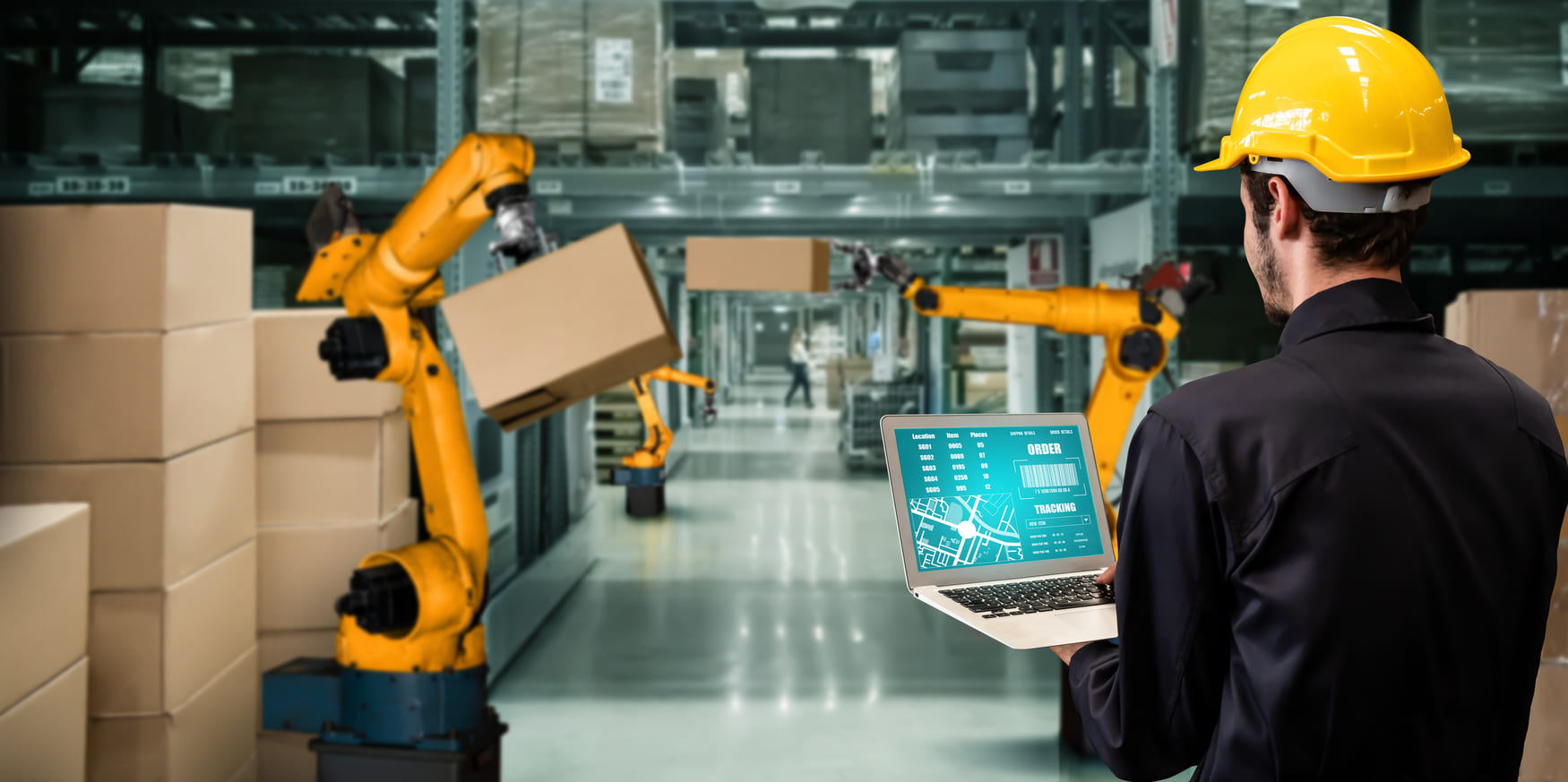
- AI becomes the backbone of warehouse operations: Machine‑learning models power demand forecasting, inventory planning and predictive maintenance, and 45 % of companies already use AI in multiple supply‑chain functions. Real‑time AI orchestration allocates tasks based on live variables such as congestion and battery levels.
- Robotics and human‑robot collaboration accelerate: By 2026 roughly 4.7 million robots will be deployed across more than 50 000 warehouses. Autonomous Mobile Robots (AMRs), cobots and robotic de‑palletizers handle repetitive tasks while people focus on exception management. New robots‑to‑goods (R2G) systems extend automation from picking to transport.
- Robotics‑as‑a‑Service (RaaS) democratizes automation: Subscription‑based models let facilities rent robots and scale up or down without heavy capital expenditure. ABI Research expects 1.3 million RaaS installations by 2026.
- Software and data outrank hardware: Warehouse Execution Systems (WES) unify robots, conveyors and AS/RS into a real‑time “central nervous system”. Digital twins simulate layouts and workflows before implementation, reducing guesswork and bottlenecks.
- Inbound automation and case handling rise: 2026 will see major investment in robotic de‑palletizing, auto‑traying and AI‑enabled vision inspection for inbound operations. Native case‑handling systems streamline inbound flows by moving cartons directly to storage.
- Sustainability shapes design: Companies track the carbon impact of every fulfilment action. Locus Robotics reports that reducing walking distance with AMRs can cut energy use and emissions by up to 80 %, and optimized packaging systems such as right‑sizing machines reduce material waste.
- Future outlook: The warehouse automation market is valued at roughly $30 billion in 2026 and could double by 2030. Only about 25 % of warehouses currently have any automation, leaving significant room for growth and innovation.
Warehouse automation has evolved rapidly over the past few years. In 2025 many facilities adopted advanced robotics, AI‑driven analytics and automated storage systems to keep pace with labour shortages and rising e‑commerce volumes. By 2026 the conversation has shifted from why to automate to how to orchestrate multiple technologies across distributed networks. This guide examines the latest warehouse automation trends, drawing on industry reports and market statistics to highlight where the technology is heading and how organizations can prepare.
What is Warehouse Automation?
Warehouse automation refers to replacing manual, repetitive tasks with digital systems, robots and software. Automation can be physical (e.g., robots, conveyors, Automated Storage/ Retrieval Systems) or digital (Warehouse Management Systems, AI analytics). The aim is to reduce labour costs, minimize errors and accelerate throughput. According to the Sellers Commerce statistics, automation can cut labour costs by 25–30 % and improve order‑fulfilment speeds by up to 300 %.
AI and Machine‑Learning Integration
Artificial intelligence (AI) and machine learning (ML) are now essential components of warehouse automation rather than experimental add‑ons. Modern warehouses use AI to analyse sales data, seasonal patterns and external signals to forecast demand. In a 2025 survey nearly 45 % of companies reported using machine learning for demand forecasting, and almost half applied AI in multiple functions such as inventory and supply‑chain management. AI also powers real‑time decision‑making: advanced orchestration software allocates tasks based on live variables like congestion, worker availability and battery levels.
Predictive Maintenance and Digital Twins
Sensors on conveyors, robots and AS/RS capture vibration, temperature and power‑usage data; ML models detect anomalies and schedule maintenance before failures occur. Digital twins – virtual replicas of physical warehouses – allow planners to simulate new layouts, validate workflows and test peak scenarios without disrupting operations. Digital twins reduce guesswork by modelling labour movements, robotic paths and space constraints, improving space utilization by 15-30 %.
Benefits of AI/ML
- Demand forecasting & inventory accuracy: AI analyses multi‑channel sales data and external factors to predict demand, enabling pre‑emptive restocking and reducing stockouts.
- Dynamic routing & labour allocation: AI adjusts pick paths and staffing levels in real time based on order volume and workforce availability.
- Predictive maintenance: Sensors and ML algorithms anticipate equipment failures, minimizing downtime.
- Continuous learning: Systems improve over time as more data is collected, leading to ongoing efficiency gains and cost reductions.
Robotics and Collaborative Robots (Cobots)
Robots are at the heart of modern warehouse automation. By 2026 about 4.7 million robots will operate across more than 50 000 warehouses worldwide, up from roughly 450 000 units sold in 2025. Robots include Autonomous Mobile Robots (AMRs), Automated Guided Vehicles (AGVs), robotic arms and collaborative robots (cobots). Instead of replacing workers, these machines enhance human capabilities by handling heavy lifting, repetitive transport and scanning tasks.
Key Robotics Trends
- Human‑robot collaboration: Cobots are designed to work safely alongside humans. They lift heavy totes, perform pick‑and‑place operations and scan packages, allowing people to focus on exception handling and quality control. Companies like Fleet Feet reported doubling productivity after deploying collaborative AMRs.
- Robots‑to‑Goods (R2G) Systems: Traditional “person‑to‑goods” picking is evolving into robots‑to‑goods, where autonomous robots transport items between zones, replenishment areas and returns stations. Integrating R2G with picking systems creates continuous end‑to‑end flow with minimal human transport.
- Inbound automation: 2026 will see major investment in robotic de‑palletizers, auto‑traying and AI‑enabled vision inspection. These systems handle mixed‑size cartons and identify products and barcodes in real time, streamlining inbound operations.
- De‑palletizing and pallet‑building: Advanced gripping and vision technology allows robots to de‑stack and build pallets with irregular packaging, improving throughput and ergonomics.
- Mini‑load and compact AS/RS: Smaller facilities can deploy modular, high‑throughput mini‑load systems that integrate with conveyors or shuttles.
Warehouse Robotics Benefits
- Higher throughput & consistency: Robots work 24/7 without fatigue, enabling faster picking and transport.
- Reduced labour shortages: Robots handle repetitive and physically demanding tasks, easing recruitment pressures and improving worker safety.
- Scalability: Robot fleets can be scaled up during peak seasons and scaled down afterwards, especially under RaaS models.
- Precision handling: Vision‑guided robots reduce mispicks and ensure consistent pallet integrity.

Robotics-as-a-Service (RaaS) and Scalability
The high capital cost of automation used to deter mid‑sized warehouses. RaaS flips that model by offering robots on a subscription basis that bundles hardware, software and maintenance. Companies pay a predictable monthly fee, turning robots into an operating expense and allowing technology upgrades without purchasing new units. ABI Research predicts 1.3 million RaaS installations by 2026, and RaaS deployments can scale robots 3–5 × faster than traditional capital purchases.
Advantages of RaaS
- Lower entry barrier: Minimal up‑front capital; subscription covers equipment, software updates and maintenance.
- Flexibility: Scale robot fleets up or down quickly to match demand peaks or business growth.
- Continuous innovation: Providers update software and hardware, ensuring access to the latest robotics technology without replacement cycles.
Automated Storage & Retrieval Systems (AS/RS) and Software‑Defined Warehouses
High‑density storage is crucial for maximizing space and reducing travel time. Automated Storage and Retrieval Systems (AS/RS) include vertical lift modules, shuttle systems, robotic carousels and cube‑based grids (e.g., AutoStore). These systems “build up, not out,” increasing capacity without expanding the footprint. The AS/RS market was nearly $10 billion in 2025 and is forecast to reach around $15 billion by 2030.
Beyond hardware, software orchestration now outpaces physical equipment. Warehouse Execution Systems integrate ERP, WMS, robotics and IoT into a unified platform, enabling real‑time coordination and virtual testing. Low‑code interfaces and teach‑by‑demonstration tools allow operators to program robotic arms quickly, reducing engineering costs.
Digital Twins & Simulation
Digital twins model warehouse layouts and processes virtually before changes are implemented. They help identify bottlenecks, test different slotting strategies and optimize routing without interrupting operations. Simulations reduce the risk of expensive mistakes and help design efficient, flexible warehouses.

Data Analytics, Real‑Time Visibility & Orchestration
Data sits at the core of next‑generation warehouses. IoT sensors, RFID tags and connected scales feed live inventory data to Warehouse Management Systems (WMS) and real‑time dashboards. This transparency prevents stockouts, enables dynamic labour planning and creates a continuous improvement loop. Only about 25 % of warehouses worldwide currently use any form of automation, yet more than 87 % of decision‑makers plan to expand warehousing capacity with automation by 2026, indicating a shift towards data‑driven operations.
Orchestration & Multi‑Node Networks
Warehouses are moving from isolated automation silos to fully orchestrated networks. In 2026 orchestration will evolve from visibility to foresight: algorithms will predict congestion, shift capacity and balance labour across distributed facilities. Multi‑node fulfillment networks – smaller, strategically located warehouses acting as a single system – are becoming the new standard. Companies like North Bay Distribution have demonstrated that flexible node design can reach 95 % of the U.S. population within two to three days while sharing labour and capacity virtually.
Continuous Improvement & Cultural Change
Successful automation programmes treat improvement as a continuous process rather than a one‑off project. Front‑line associates use robot data to suggest route or workflow refinements, and management implements changes weekly. Training evolves from procedural to analytical, preparing workers to interpret performance data and coordinate multi‑robot fleets.
Sustainability & Green Warehousing
Sustainability has become inseparable from warehouse efficiency. Automation reduces energy use and emissions by optimizing movement and packaging. For example, automated right‑sizing machines tailor packaging to each order and help companies like UPS cut waste. Energy management systems dim lights, adjust HVAC and monitor equipment to reduce power consumption. According to Locus Robotics, deploying AMRs reduces walking distance and travel time by up to 80 %, translating directly to energy savings and lower carbon emissions. New reporting requirements mean warehouses must track and report their environmental impact, making sustainable automation an operational and compliance imperative.
Greener Design
- Optimized packaging: Right‑sizing reduces materials and shipping costs.
- Energy monitoring: IoT sensors and EMS adjust lighting and climate based on occupancy.
- Vertical storage: High‑density AS/RS systems reduce the footprint, resulting in lower heating and cooling demand.
- Electric vehicles & renewable energy: Many facilities install solar panels and use electric yard trucks, further lowering emissions.
Future Outlook: 2026 and Beyond
The warehouse automation industry is poised for significant expansion. Market forecasts estimate that the global warehouse automation market will grow from $30 billion in 2026 to nearly $60 billion by 2030, reflecting an 18.7 % CAGR. Nevertheless, with only 25 % of warehouses currently automated, opportunities for growth remain immense. Key developments to watch include:
- Holistic orchestration: Managing multi‑node networks, robots and workers through unified intelligence platforms.
- Human‑robot specialization: Workers become coordinators and analysts rather than manual pickers.
- Inbound & reverse logistics automation: Robotic de‑palletizing, vision inspection and automated returns processing will expand.
- Edge intelligence & AI co‑pilots: Vision systems and neural processing units process data at the edge for real‑time decision‑making.
- Greater flexibility: Measuring adaptability (e.g., time to reconfigure workflows) becomes a core KPI.
Conclusion
Warehouse automation has moved from a niche investment to a strategic necessity. In 2025 organisations laid the groundwork with AI, robotics, AS/RS and sustainability initiatives. In 2026 and beyond, the focus shifts to orchestration, software‑defined operations and continuous improvement. Adopting these trends will help warehouses remain competitive amid labour constraints, rising customer expectations and stricter environmental standards. By leveraging AI, scalable robotics, data‑driven design and sustainable practices, companies can create resilient fulfilment networks that adapt quickly and deliver superior service.
Frequently Asked Questions (FAQ) – OLIMP Warehousing
Q: What are the top warehouse automation trends for 2026?
The leading trends include AI‑driven forecasting and orchestration, collaborative robots and robots‑to‑goods systems, Robotics‑as‑a‑Service (RaaS), advanced AS/RS and software‑defined operations, inbound automation such as robotic de‑palletizing, multi‑node fulfilment networks, and sustainability‑driven design.
Q: Are cobots worth it in warehousing?
Yes, cobots reduce strain and boost throughput; analyst data shows shipments re-accelerating in 2025 as logistics demand returns
Q: Is AS/RS only for big DCs?
No. Mini-load and cube systems scale for SMEs. Market growth through 2030–2032 reflects broader adoption.
Q: Is Robotics‑as‑a‑Service cost‑effective?
Yes. RaaS models let companies pay a monthly subscription instead of large capital purchases. The subscription covers hardware, software updates and maintenance, making automation accessible and scalable. ABI Research predicts 1.3 million RaaS installations by 2026.
Q: How does AI improve warehouse operations?
AI analyses historical and real‑time data to forecast demand, optimize inventory, route pickers and allocate labour. Predictive maintenance algorithms prevent equipment failure, and orchestration software uses live variables to manage robot missions.
Q: What benefits do collaborative robots (cobots) provide?
Cobots work safely alongside humans, handling repetitive lifting, scanning and transport tasks. This reduces worker fatigue, increases throughput and enables employees to focus on value‑added activities. Some warehouses reported doubling productivity after implementing collaborative AMRs.
Q: Are Automated Storage and Retrieval Systems only for large distribution centres?
No. Modular mini‑load systems and cube‑based AS/RS can scale for small and medium‑sized businesses. These systems maximise vertical space, improve picking speed and can be integrated incrementally.
Q: How does warehouse automation support sustainability?
Automation reduces energy consumption and waste by optimizing movement, packaging and space. AMRs can reduce walking distance and energy use by up to 80 %, right‑sizing systems cut packaging waste, and vertical storage reduces heating and cooling demands.
Q: What is the future of warehouse automation?
The future centres on orchestrated networks of multi‑node facilities, AI co‑pilots that manage real‑time decisions, and continuous improvement cultures. With only 25 % of warehouses automated today, the market will continue to grow, driven by labour shortages, e‑commerce expansion and sustainability requirements.
You may be interested in

AI in Logistics & Supply Chain: A Practical Guide for Shippers, 3PLs and Warehouse Operators
Most conversations about artificial intelligence (AI) in logistics still focus on futuristic concepts. Yet AI is no longer confined to research labs; it’s a practical tool delivering real business results today. Market analysts forecast that the global AI in supply‑chain market will grow from US$7.3 billion in 2024 to US$63.8 billion by 2030. DataM Intelligence reports that the AI in […]
Amazon FBA vs 3PL: 2026 U.S. Cost Comparison and Guide
A 3PL (third-party logistics) provider is a company you outsource warehousing and fulfillment to, typically covering storage, pick/pack, shipping, and often returns. Fulfillment by Amazon (FBA) is a program where you send inventory into Amazon’s network and Amazon stores it, then picks, packs, ships, and handles customer service and returns, while also enabling fast Prime […]

Blockchain in Supply Chain Management: Transparency and Procurement
Blockchain in supply chain management uses a shared digital ledger to record transactions, product movements, and document history across businesses. It can help authorized partners trace goods, compare records, and investigate discrepancies between purchasing, shipping, and receiving. The technology works best when several organizations need a dependable history of their interactions. Its usefulness still depends […]
Ready to streamline your warehousing needs?
Request a quote today and discover how OLIMP's tailored solutions can optimize your operations