How to Find Short-Term Warehouse Space in Chicagoland
10/30/2026
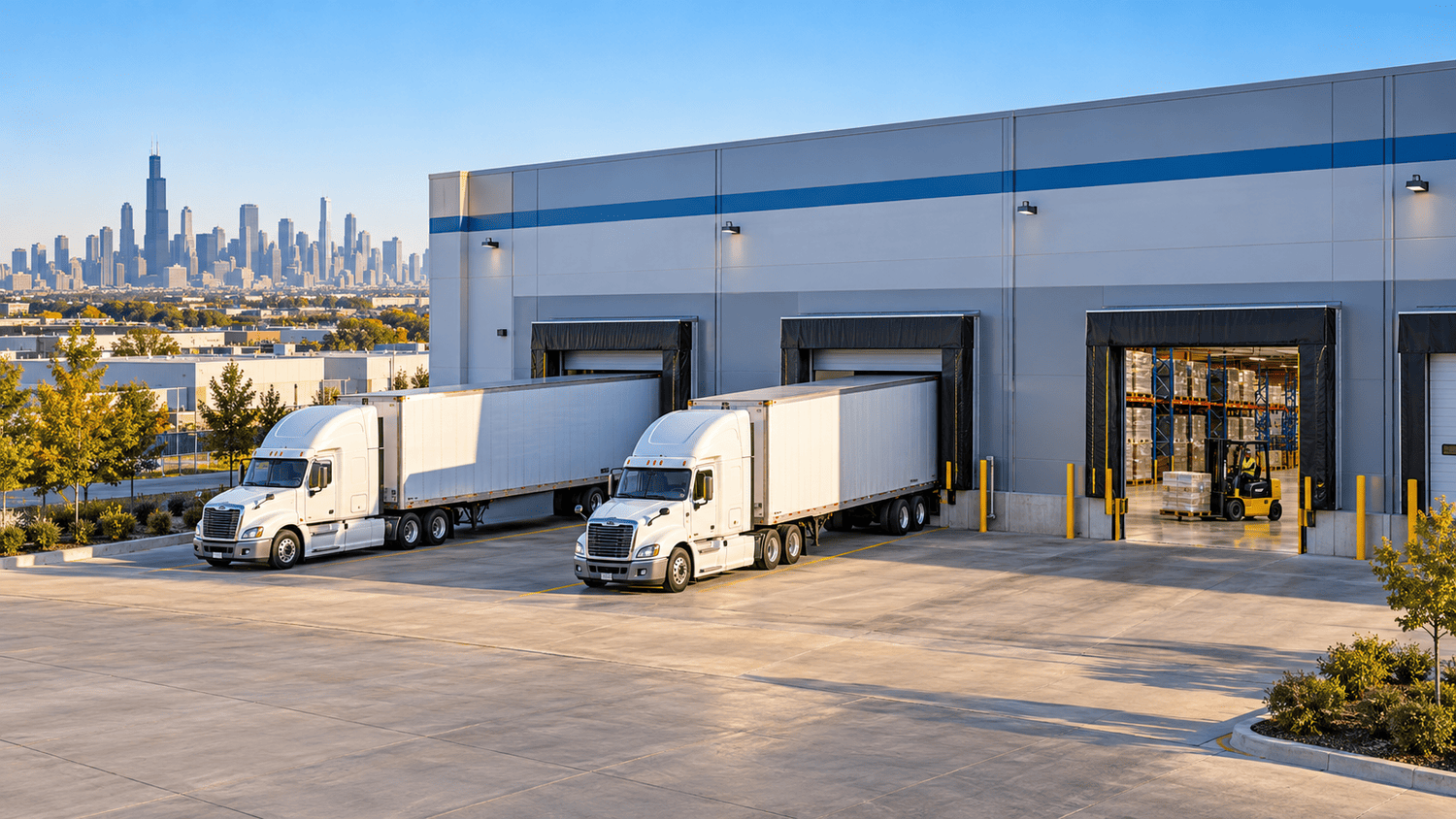
To find warehouse space in the Chicagoland area, identify your preferred location, pallet count, storage dates, and handling requirements. Search local warehouse operators and on-demand networks, request comparable quotes, and confirm the facility’s availability before dispatching your freight.
Short-term storage can help when a delivery appointment changes, inventory exceeds available space, or goods need a temporary stop between transportation stages. A suitable warehouse must match your shipment, schedule, and onward route.
Start with the right type of warehouse space
For temporary freight storage, look for managed pallet storage within an operating warehouse. Confirm which receiving, handling, and loading services are included. Leasing a dedicated building involves a different arrangement and may require you to organize equipment and staffing.
Search for phrases such as “short-term warehouse storage Chicago,” “daily pallet storage Chicagoland,” or “warehouse storage near O’Hare.” Add the destination ZIP code or required service to narrow the results.
Use facility websites, business directories, and warehouse networks to build a shortlist. Contact providers directly to verify capacity for your dates.
Choose a location around your freight route
Chicagoland includes Chicago and surrounding communities. The right search area depends on where freight arrives and where it needs to go next. These transport connections provide useful starting points:
| Search area | Transport connection | When to consider it |
| O’Hare area | Airport cargo facilities | Freight arriving or departing by air |
| Romeoville | Direct I-55 and I-355 access | Truck shipments using these corridors |
| Joliet–Elwood | Major intermodal facilities | Containers moving through nearby rail terminals |
Compare the exact warehouse address with your pickup point and receiver. Ask your carrier to assess truck access, tolls, travel time, and delivery appointments.
For example, suppose a shipment arriving near Joliet cannot reach its southwest suburban receiver until the following morning. Nearby overnight storage may fit the route, provided the warehouse accepts the freight and can reload it before the new appointment. Confirm both movements before booking.
Prepare a complete warehouse quote request
Send the same information to each provider so the proposed services and prices are comparable:
Product description and packaging condition.
Pallet count, dimensions, weight, and stackability.
Arrival date, estimated arrival time, and expected pickup.
Pickup location and final delivery ZIP code.
Required temperature range or special storage conditions.
Unloading, loading, and any pallet rework needed.
Photographs of oversized, damaged, or unstable freight.
State whether the shipment is palletized or floor-loaded. If your storage period could change, include the likely extension. For ongoing overflow, share expected inventory fluctuations and shipment frequency so the facility can assess your capacity needs.
Confirm handling and storage capabilities
Available space must be suitable for the product. Check dock access, forklift capacity, storage conditions, and any equipment needed for unusual loads.
For refrigerated freight, confirm the required temperature range, monitoring, and receiving conditions. For food products, explain relevant handling, segregation, and documentation requirements.
If an outbound truck is already scheduled, cross-docking in Chicago may suit a direct transfer. If freight needs to wait for its next appointment, confirm the storage arrangement and how it will be released for pickup.
Compare the full storage and transportation cost
Request an itemized quote covering unloading, storage, outbound loading, and additional services. Check minimum charges, after-hours fees, and costs for wrapping, labeling, or restacking.
Ask how storage is billed: per pallet, square foot, day, week, or month. For daily warehouse rental, clarify when the billing period starts and what triggers another day’s charge.
Include transportation into and out of the warehouse. Compare quotes using the same pallet count, duration, and handling requirements. This makes differences in the total cost easier to identify.
Confirm the booking and pickup arrangements
Obtain written acceptance and a receiving appointment before sending the driver. Confirm operating hours, late-arrival procedures, and direct contact.
Ask how the facility records pallet counts, documents freight conditions, and controls access. Review the agreed responsibilities for loss or damage and applicable coverage limits.
Confirm pickup instructions, release authorization, payment requirements, and extension terms. For recurring storage, a site visit or video walkthrough can help you assess the proposed operation before committing.
Request a quote for daily warehouse space
OLIMP Warehousing Solutions connects businesses with independent warehouse partners across North America, including Chicagoland. Our network offers daily rental options, including storage for as little as one pallet for one day, subject to facility availability and shipment requirements. Through our Chicago warehousing services, you can request space for temporary storage, overflow inventory, or freight awaiting delivery. Share your location, pallet details, and preferred dates to request a daily storage quote and confirm the proposed facility, handling services, and charges.
You may be interested in
How to Find Short-Term Pallet Storage Near Major US Ports
Finding temporary pallet storage near a busy port can be a race against the clock. Short‑term storage – usually days to a few months – allows businesses to unload containers quickly, avoid costly demurrage fees and position inventory close to markets without signing long leases. This guide explains why port‑area storage is essential, the challenges […]
Ecommerce Warehouse: What It Is & How to Find the Right Fulfillment Solution.
An ecommerce warehouse is a facility designed to store, organize and fulfill online orders quickly and accurately, and finding the right one involves matching your inventory, fulfillment and budget requirements with a warehouse’s location, equipment and management systems. What Is An Ecommerce Warehouse? An ecommerce warehouse is a specialized storage facility where products sold through […]

Top 5 Challenges in Finding a Warehouse & How to Overcome Them
Finding the right warehouse can be stressful and time-consuming, especially with logistics, availability, and cost challenges. Many businesses struggle to find storage and distribution solutions on their own. Here are five common problems and how to solve them. 1. Limited Availability & Location Constraints Businesses often struggle to find warehouse space in strategic locations that […]
Ready to streamline your warehousing needs?
Request a quote today and discover how OLIMP's tailored solutions can optimize your operations