Best Ecommerce Shipping Solutions & Logistics Platforms (2026)
10/07/2025

Modern shoppers expect fast shipping, real‑time tracking and painless returns. For ecommerce brands juggling multiple carriers and fulfilment centres, meeting those expectations can be overwhelming. Shipping aggregators and logistics platforms solve this problem by connecting your store to dozens of carriers and automating everything from rate shopping to label printing.
In this updated guide for 2026 we explain why shipping software matters, what features to look for, and which solutions perform best across different business models. Whether you’re a startup sending a handful of parcels a month or a global brand shipping across borders, the right platform can reduce costs, speed up delivery and enhance customer loyalty.
Why Ecommerce Brands Need a Shipping Aggregator
Manual shipping processes often lead to higher costs, slow delivery and operational inefficiencies. Without a centralized system, merchants miss out on discounted carrier rates, misroute orders and spend hours on data entry. A shipping aggregator consolidates carriers and services into one dashboard, allowing you to compare rates, print labels and track all shipments in real time. The result is reduced shipping expenses, faster deliveries and streamlined operations.
What Is an Ecommerce Shipping Solution?
An ecommerce shipping solution (also called a logistics aggregator) is software that integrates your online store with multiple carriers. Instead of negotiating rates separately with USPS, FedEx, DHL or regional couriers, you can compare prices and transit times in one place. Leading platforms offer:
- Consolidated carrier options: access to discounted rates and the ability to choose the fastest or cheapest service for every order.
- Centralized tracking: customers receive real‑time updates and branded tracking pages.
- Automated workflows: batch label creation, shipping rules and automated notifications reduce human error.
- Scalability: manage peak seasons and high order volumes without hiring more staff.
Key Features to Look for in Ecommerce Shipping Solutions
Choosing the right platform means evaluating more than just price. Look for the following must‑have features:
Multi‑Carrier Support & Carrier Coverage
A good aggregator lets you access many carriers-USPS, FedEx, DHL, UPS and hundreds of regional couriers. Platforms like Easyship advertise up to 550+ courier services and over 100 tech integrations, while ShipStation supports 400+ integrations and lets merchants shop rates across carriers. The more carrier options available, the easier it is to compare transit times and rates for every order.
Rate Comparison & Pricing Transparency
Real‑time rate shopping prevents overspending. A platform should surface the best rate automatically and let you choose between speed and cost. Pricing structures vary widely: ShipStation charges from $14.99/month, Veeqo’s basic plan is free, Shippo’s Pro plan starts around $19 per month and Easyship offers plans from $29/month. Look for transparent, scalable pricing with no hidden fees.
Seamless Integration & API Access
Your shipping software should integrate with popular ecommerce platforms like Shopify, WooCommerce, BigCommerce, Magento and marketplaces such as Amazon and eBay. ShipStation provides 400+ integrations and API access; Shippo offers universal compatibility across major platforms and a robust RESTful API; Sendcloud integrates with 100+ shop systems and has a developer‑friendly API. For enterprise needs, nShift connects deeply into ERP and WMS systems.
Automation & Workflow Rules
Automation reduces manual effort and ensures consistency. Evaluate whether the platform supports batch label printing, shipping rules by destination, weight or SKU, pick–pack–ship workflows and barcode scanning. Sendcloud’s “Pack & Go” module and shipping rules illustrate how automation simplifies fulfilment. ShipStation’s automation rules help with carrier selection and rate shopping. For developers, Shippo’s API allows custom workflows.
Post‑Purchase Experience & Returns
Branded tracking pages and proactive notifications keep customers informed and reduce support enquiries. Ask whether the platform allows multi‑channel notifications (email, SMS, WhatsApp) and whether it offers branded return portals. Sendcloud provides a self‑service returns portal. ShipStation includes branded tracking and return management.
Analytics & Reporting
Insightful dashboards help you monitor shipping performance, carrier efficiency and fulfilment costs. ShipStation’s analytics dashboard tracks customer engagement metrics, while Sendcloud provides real‑time insights into cost, carrier performance and exceptions. Look for exportable reports that support data‑driven decisions.
International Shipping Support & Localization
If you sell internationally, ensure your platform handles customs forms, duties and taxes. Easyship calculates duties and taxes and generates customs documentation automatically, while FedEx offers predictable flat‑rate international services to 195 countries. Sendcloud supports multi‑language checkout and localised delivery options. International readiness is crucial if you plan to expand beyond your home market.
Scalability & Support
The right platform should grow with your business. Evaluate whether it can handle increasing order volume, multiple warehouses and international expansion. Shippo scales from startup to enterprise with predictable pricing. Sendcloud and nShift offer dedicated account management and SLA‑backed support for larger merchants.
Top Ecommerce Shipping Solutions & Aggregators (2026)
Below are the leading platforms based on recent evaluations and user feedback. Ideal use‑cases and distinguishing features are included to help you choose.
Shippo – Versatile, Platform‑Agnostic Leader
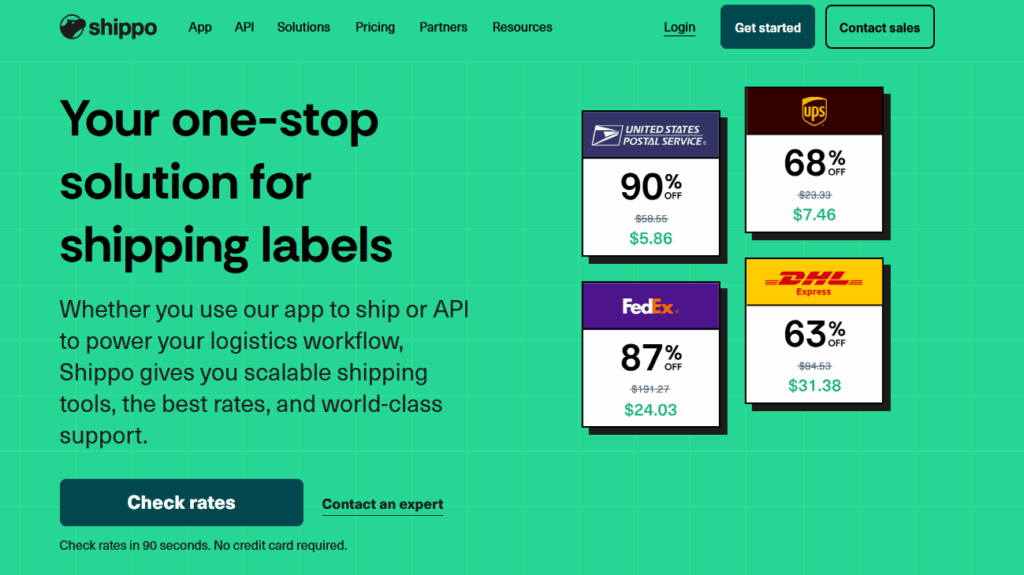
Shippo stands out in 2026 for its universal compatibility and comprehensive carrier network. It integrates with every major ecommerce platform (Shopify, WooCommerce, BigCommerce, Amazon, eBay and more) and supports 40+ global carriers. Its API‑first architecture makes it easy for developers to build custom workflows. Pricing is transparent: a free plan covers 30 labels/month and paid plans start around $19/month. Shippo is ideal for businesses that sell across multiple platforms or plan to scale internationally.
ShipStation – Feature‑Rich US‑Centric Favourite
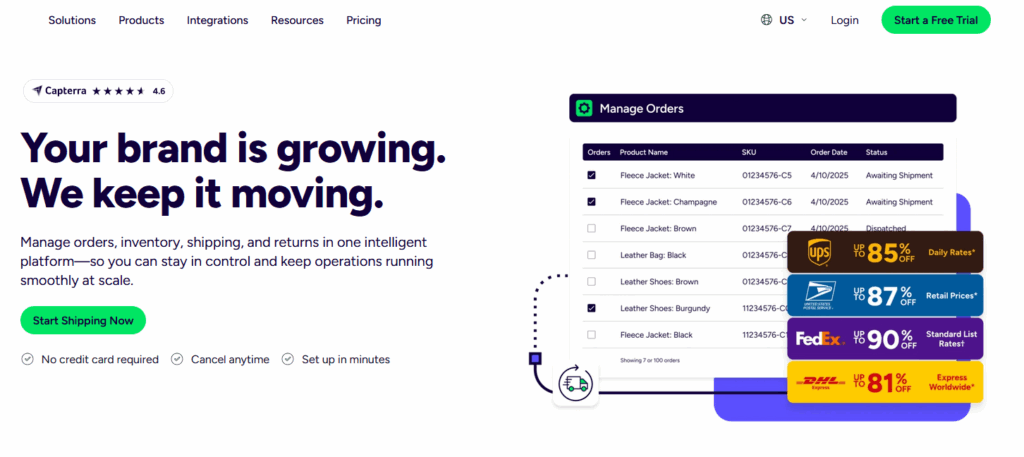
ShipStation remains one of the most popular shipping solutions in the US thanks to 400+ integrations, extensive automation rules and a large community of users. ShipStation offers plans starting at $14.99/month with 100+ carrier options and supports multi‑channel sellers. It excels at batch label printing, rate shopping and branded tracking pages but focuses primarily on US and UK carriers. Choose ShipStation if you manage orders across multiple US marketplaces and need robust automation.
Easyship – Cross‑Border Champion
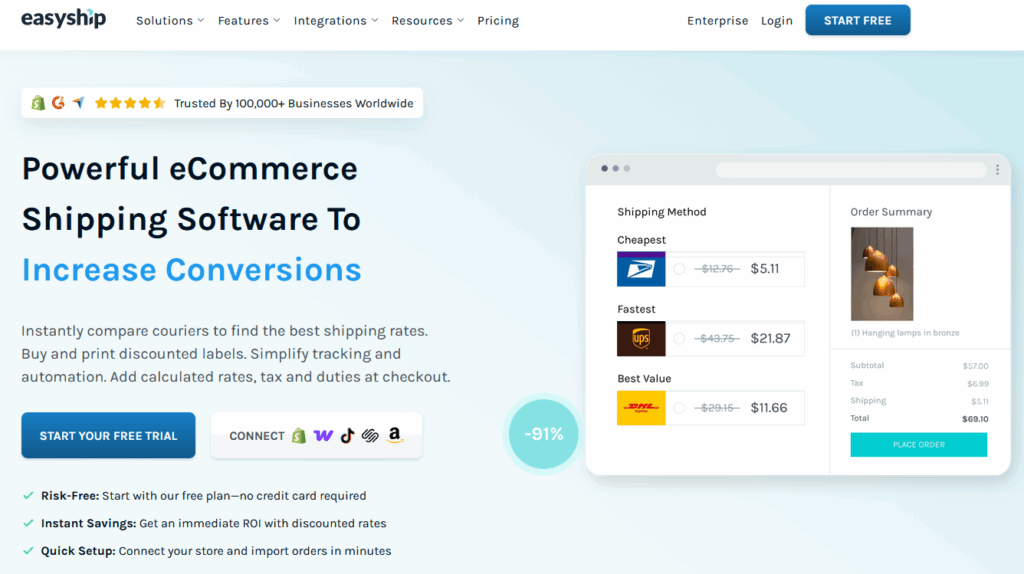
Easyship is designed for international ecommerce. With 550+ courier services worldwide and tools to calculate duties and taxes automatically, it simplifies cross‑border shipping. Plans start at $29/month and include automation rules, multi‑currency support and branded tracking pages. Easyship is ideal for brands expanding globally and those who need built‑in customs handling.
Veeqo – Free Plan for Multichannel Sellers
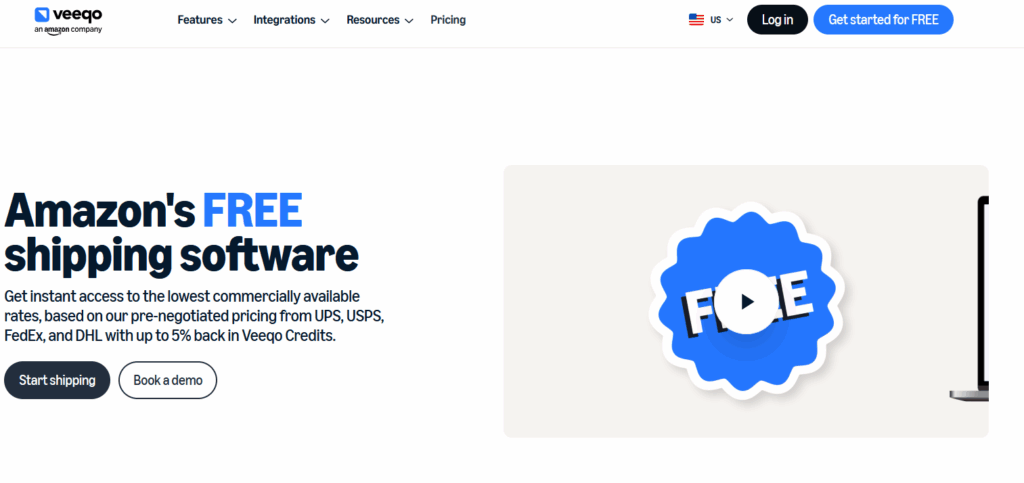
Veeqo, now owned by Amazon, offers a generous free plan with unlimited shipments and is especially attractive for Amazon multichannel sellers. It supports major US and UK carriers, custom workflows and inventory management (paid plans). Veeqo is best for sellers who operate on Amazon and other marketplaces and value a zero‑cost entry point.
Sendcloud – European Powerhouse
Sendcloud connects 160+ carriers and over 100 shop systems, offering strong European coverage, automated checkout options and a branded returns portal. It provides a free plan and multiple paid tiers, with automation features available from the Growth plan. Sendcloud is perfect for European merchants seeking local carrier options, multi‑language support and integrated returns.
Pirate Ship – Simple & Free US Shipping
Pirate Ship offers completely free shipping software for US small businesses. It supports USPS and UPS and provides commercial rates without monthly fees. While limited in carrier choice and lacking advanced automation, it’s ideal for cost‑conscious startups shipping primarily within the United States.
nShift – Enterprise‑Grade Flexibility
nShift supports more than 1,000 carriers and offers deep ERP/WMS integrations, advanced routing logic and enterprise workflows. It is built for mid‑market and enterprise retailers who need strict service‑level agreements, multi‑warehouse management and compliance. Pricing is custom and setup can be complex; however, the flexibility pays off for large, high‑volume operations.
ClickPost – Post-Purchase Powerhouse
ClickPost goes beyond the core job of connecting stores with carriers by putting more of the post-purchase experience inside the shipping platform. It connects with 700+ carriers and covers the usual shipping essentials, but its strength is what happens after an order is placed: branded tracking, proactive delivery updates, returns, exchanges, and order edits. That makes it a good fit for ecommerce brands that want more control over the customer experience after checkout, alongside their shipping operations. Pricing is custom and based on usage and shipping volume.
How Shipping Solutions Drive Ecommerce Success
Choosing the right shipping solution has a direct impact on customer satisfaction and profitability:
- Cost optimisation: Multi‑carrier rate comparison helps merchants choose the most economical option without sacrificing speed. Platforms like ShipStation and Shippo offer discounted rates and transparent pricing.
- Faster delivery: Access to multiple carriers and distribution centres allows you to offer two‑day or even same‑day shipping, reducing cart abandonment and boosting conversion.
- Improved customer experience: Branded tracking pages, proactive notifications and easy returns enhance customer satisfaction and build loyalty.
- Scalability: Automation and integrations help you handle seasonal spikes or rapid growth without expanding headcount.
- Simplified operations: Centralising shipping, inventory and returns management frees up time for strategic tasks such as marketing and product development.
Best Practices for Choosing an Ecommerce Shipping Solution
- Evaluate carrier options: Ensure the platform supports your preferred carriers and offers competitive discounts.
- Check integrations: Seamless integration with your ecommerce platform and marketplaces is essential for real‑time data sync and automation.
- Analyze pricing models: Look for transparent pricing. Flat‑rate shipping options (e.g., FedEx One Rate®) can simplify budgeting.
- Prioritize customer experience: Select solutions that offer branded tracking, proactive notifications and smooth returns management.
- Assess support and reliability: Reliable customer support is crucial during peak seasons or disruptions. Consider providers with extensive help centers, live chat and knowledge bases.
Real-World Use Cases & Examples
- Startup testing free shipping tools: A small Shopify store in Texas used a free shipping platform to compare USPS and UPS rates, print labels faster, and reduce manual order processing. As order volume increased, the business upgraded to a paid ecommerce shipping software plan for better automation and branded tracking.
- Multi-state ecommerce growth: A mid-size apparel brand shipping from California to customers across the U.S. used a multi-carrier shipping platform to compare FedEx, UPS, USPS, and regional carrier rates. This helped the brand improve delivery speed, reduce shipping costs, and manage peak-season order volume more efficiently.
- High-volume fulfillment automation: A large electronics retailer with inventory in multiple U.S. warehouses integrated shipping software with its ecommerce platform and WMS. Automated carrier selection, batch label printing, and real-time tracking helped the company manage thousands of orders per day while keeping delivery performance consistent
Conclusion
Investing in the right ecommerce shipping solution is more than a logistics decision, it’s a growth strategy. By leveraging multi‑carrier aggregators, international shipping tools and automated workflows, online retailers can reduce costs, offer fast and reliable delivery and enhance customer loyalty. Evaluate your business needs, compare leading platforms and choose a solution that scales as you grow.
Frequently Asked Questions (FAQ) – OLIMP Warehousing
Q: How do I set up global ecommerce shipping solutions?
Choose a platform that supports international carriers and handles customs documentation automatically. Solutions like Easyship provide tax and duty calculators, while FedEx offers flat‑rate international services to 195 countries.
Q: Which ecommerce platform has the best shipping?
The best platform depends on your needs. ShipStation excels in automation and integrations, Easyship offers extensive courier options, and ShipBob combines fulfillment with shipping software.
Q: What’s the best freight shipping option for ecommerce retailers?
For heavy or oversized shipments (>150 lbs), platforms like FedEx Freight offer economy and priority services with transit times of 1–6 business days. Some shipping software also partners with freight carriers to provide discounted rates.
Q: What is the best shipping solution for ecommerce stores?
Solutions like ShipStation and Easyship are popular for multi‑carrier rate shopping and automation. Evaluate features like carrier support, integrations and return management to decide which fits your store.
Q: What ecommerce integrations streamline shipping and carrier management?
Look for platforms with hundreds of integrations—ShipStation supports 400+ marketplaces and shopping carts, while Easyship offers 100+ tech integrations and a shipping API.
Q: Top platforms for fulfillment, shipping logistics and ecommerce?
ShipStation, Easyship, Shippo, Ordoro and AfterShip are leading aggregators. For direct fulfillment, ShipBob and FedEx provide warehousing and carrier services.
Q: What is an ecommerce shipping solution?
An ecommerce shipping solution is software that connects your online store to multiple carriers, automates rate shopping and label printing, provides tracking and handles returns. It consolidates shipping tasks into one system so you don’t need to log into each carrier separately.
Q: How do I choose the best shipping software for my online store?
Start by listing your key requirements: carrier coverage, integration with your ecommerce platform, automation needs, budget, and whether you ship internationally. Compare platforms based on these factors. Try free plans to test workflows before committing to a paid tier.
Q: Which ecommerce platform has the best shipping integrations?
Shippo is widely regarded as platform‑agnostic, integrating seamlessly with Shopify, WooCommerce, BigCommerce, Amazon, eBay and more. ShipStation also offers hundreds of integrations, while Sendcloud focuses on European marketplaces.
Q: Are free shipping software options reliable?
Yes, but they often come with limitations. Veeqo’s free plan supports unlimited shipments for US/UK sellers, and Pirate Ship provides free access to USPS and UPS rates. However, free tiers may limit label volume, carrier options or support, so assess whether those restrictions fit your business.
Q: What features should an ecommerce shipping solution have in 2026?
Look for multi‑carrier support, automated rate comparison, deep integrations, branded tracking and returns, advanced automation, analytics and international readiness. API access and scalability are increasingly important as businesses adopt custom workflows and expand globally.
Q: How do shipping aggregators handle returns?
Most modern shipping solutions provide branded return portals where customers can generate return labels and track the status of their return. Platforms like ShipStation and Sendcloud include automated return management, reducing manual workload and improving the customer experience.
You may be interested in

Ecommerce Warehouse: What It Is & How to Find the Right Fulfillment Solution.
An ecommerce warehouse is a facility designed to store, organize and fulfill online orders quickly and accurately, and finding the right one involves matching your inventory, fulfillment and budget requirements with a warehouse’s location, equipment and management systems. What Is An Ecommerce Warehouse? An ecommerce warehouse is a specialized storage facility where products sold through […]

Warehousing and Distribution: How to Choose the Right Warehouse
Warehousing and distribution combine inventory storage with order preparation and delivery to retailers, businesses, or consumers. The right distribution warehouse must fit your products, shipping destinations, order volumes, and delivery requirements. A useful comparison starts with the work each facility will perform: what arrives, how inventory is managed, and what must happen before an order […]

Intermodal Shipping: The Smart, Efficient Way to Move Freight
Intermodal shipping refers to moving freight by two or more transportation modes (truck, rail, ship, etc.) using standardized containers. Cargo stays sealed inside its container during transfers, reducing handling and speeding up delivery. This containerized approach cuts costs and transit time for long-distance shipments, making intermodal freight shipping a cost-efficient, secure method to move goods. […]
Ready to streamline your warehousing needs?
Request a quote today and discover how OLIMP's tailored solutions can optimize your operations