What Causes Conflicts Between Warehousing and Transport, and How Can You Resolve Them?
08/10/2026
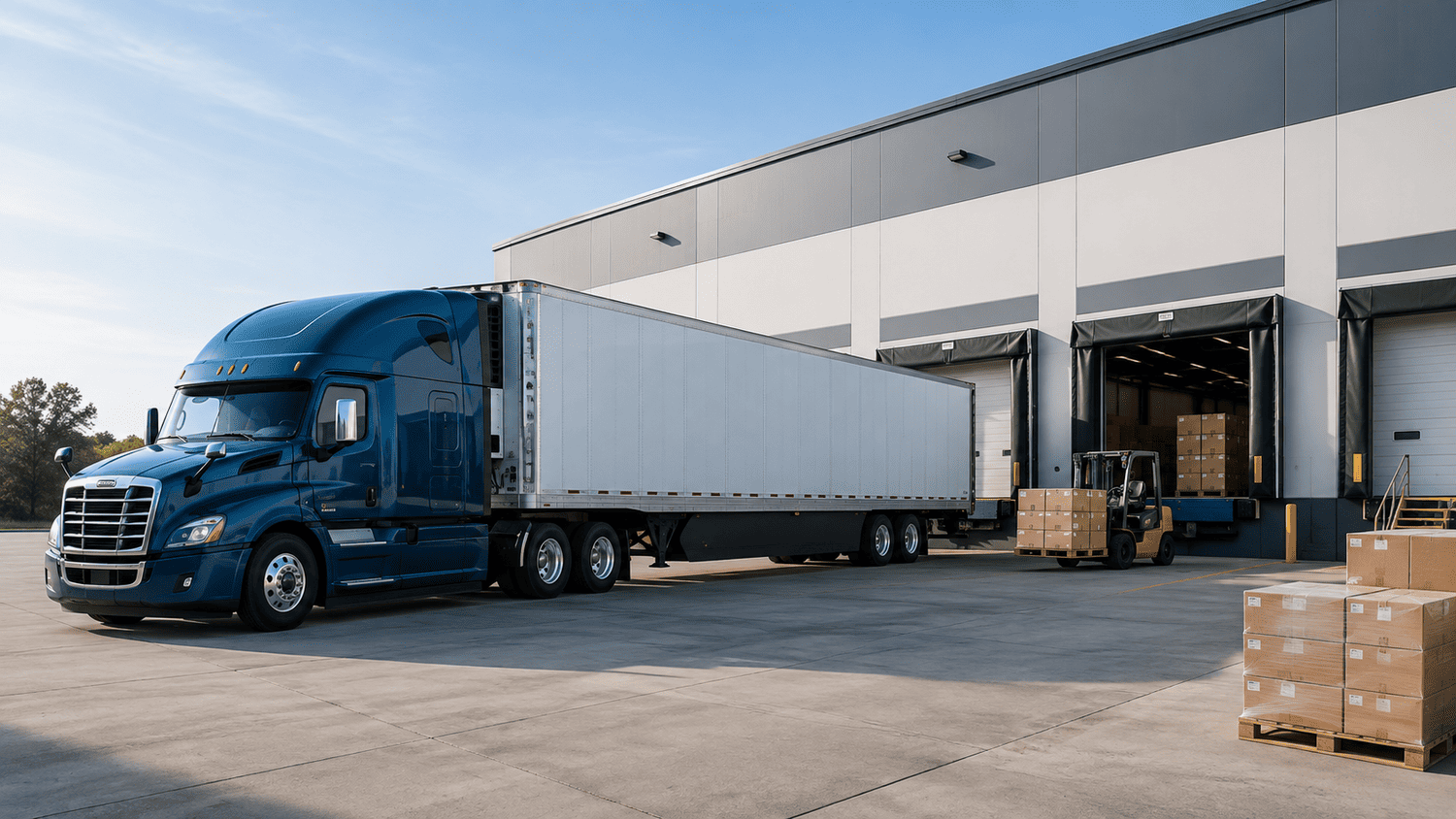
- Warehousing and transport often have different objectives. Warehouses want predictable workflows and efficient space utilization, while transportation teams want fast turn times and maximum vehicle utilization.
- The lowest departmental cost is not always the lowest total logistics cost. Reducing warehouse inventory can increase expedited freight, while consolidating shipments can increase storage and order-cycle time.
- Dock congestion is usually a coordination problem, not just a capacity problem. Unplanned arrivals, inaccurate estimated arrival times, incomplete orders, and uneven appointment scheduling create avoidable waiting.
- Shared data and shared metrics are essential. Warehouse management systems, transportation management systems, appointment schedules, and carrier updates should use consistent order and shipment information.
- Flexible warehousing can absorb disruptions. Overflow storage, cross-docking, transloading, pallet rework, and short-term warehouse capacity can prevent localized problems from stopping freight movement.
Conflicts between warehousing and transport occur when warehouse operations and transportation teams pursue different schedules, cost targets, capacity priorities, or service goals. Although both functions are responsible for moving goods through the supply chain, optimizing one function in isolation can create delays or added costs for the other.
A warehouse may prioritize efficient labor utilization, inventory accuracy, storage density, and orderly dock operations. Transportation teams, meanwhile, focus on vehicle utilization, route efficiency, on-time pickup and delivery, driver productivity, and freight cost. The conflict begins when a decision that improves one set of metrics damages the other.
For example, a warehouse may delay loading until every item in an order is available, protecting order accuracy but keeping a truck and driver waiting. Alternatively, a transportation team may send several trucks within the same narrow arrival window to improve routing efficiency, creating dock congestion and warehouse overtime.
Research has long recognized that warehousing and transportation perform better when they are optimized together rather than treated as independent functions. More recent fulfillment research likewise emphasizes integrating inbound warehousing, outbound transportation, inventory, and customer-service decisions.
Why do warehousing and transportation teams come into conflict?
Different goals and performance metrics
The most common source of conflict is that each function is measured differently.
Warehouse managers may be evaluated on:
- Cost per unit handled
- Picking and inventory accuracy
- Labor productivity
- Storage utilization
- Orders shipped per hour
Transportation managers may be evaluated on:
- Freight cost per shipment
- Trailer utilization
- On-time delivery
- Empty miles
- Driver and equipment productivity
These metrics can work against one another. Transportation may wait to combine orders into a full truckload, reducing cost per unit shipped but increasing warehouse dwell time. Warehousing may release many smaller shipments to clear staging areas quickly, increasing less-than-truckload or parcel costs.
The solution is not to abandon functional metrics. It is to add shared measures such as total cost per order, order-to-delivery cycle time, dock-to-departure time, detention hours, on-time-in-full performance, damage rate, and cost of exceptions.
Dock schedules and truck arrivals do not match
Warehouse labor and dock doors are finite resources. When too many trucks arrive simultaneously, the facility can experience long queues, blocked yards, unavailable doors, rushed loading, and employee overtime.
The Federal Highway Administration has identified driver waiting and loading time as a trucking productivity and service-quality concern. Its research notes that detention often results partly from a misalignment of incentives: the facility causing the delay does not always bear the full cost imposed on the driver and carrier.
The effects can extend beyond a single late shipment. A truck delayed at one facility may miss its next appointment, disrupt a route, exhaust available driver hours, or leave another warehouse waiting for an arrival that no longer matches the schedule. The U.S. Department of Transportation has also noted that excessive loading and unloading delays can interfere with drivers’ ability to complete deliveries within hours-of-service limits.
A 2018 DOT Office of Inspector General analysis estimated that a 15-minute increase in average facility dwell time was associated with a 6.2% increase in the expected crash rate. The report also estimated substantial annual income losses for drivers and motor carriers, although it cautioned that industrywide detention data were limited.
Inventory decisions create transportation trade-offs
Transportation teams often prefer large, consolidated shipments because fuller trucks generally reduce the transportation cost per unit. Warehousing and customer-service teams may prefer smaller, more frequent movements because they reduce local inventory, storage requirements, and the risk of holding slow-moving products.
Both positions can be correct. The problem is optimizing one cost without measuring the effect on the complete supply chain.
Consider a company that reduces safety stock at regional warehouses. Inventory carrying costs may fall, but the company could require more frequent replenishment, premium transportation, split shipments, or emergency transfers. In the opposite scenario, building larger inventories may reduce expedited freight but increase storage, handling, insurance, obsolescence, and working-capital costs.
Warehouse location creates a similar trade-off. Centralizing inventory in fewer facilities can simplify stock management, but it may increase distance to customers. A more distributed warehouse network can reduce final delivery distances and improve response times, but it can also require inventory to be spread across additional locations. The EPA highlights facility location, routing, forecast planning, container visibility, and harmonized information systems as strategies for reducing truck mileage, queuing, and idling.
Freight is not ready when the truck arrives
A truck appointment does not guarantee that an order is ready to load. Delays can result from incomplete picking, inaccurate inventory, production delays, missing documents, quality-control holds, damaged pallets, or last-minute order changes.
This creates immediate tension. The carrier expects the appointment to represent a ready shipment, while the warehouse may view the appointment as an estimated loading window. Without a shared definition, both parties can believe the other failed to perform.
Clear readiness milestones help prevent this problem. Before dispatching a truck, the responsible team should confirm that the order has been released, inventory is available, picking is substantially complete, packaging requirements are known, shipping documents are prepared, and the correct equipment has been scheduled.
Loading efficiency conflicts with delivery sequence
The easiest freight to load is not always the freight that should be loaded first.
Warehouse teams may want to load products according to picking completion, staging location, pallet dimensions, weight, or ease of forklift movement. Transportation teams may need freight arranged according to delivery-stop sequence, axle-weight limits, temperature zones, or unloading requirements.
Without coordination, a trailer can be packed efficiently but poorly sequenced. The driver or receiving location may then need to move freight unnecessarily to reach the correct pallets. That creates extra handling, longer unloading time, product damage risk, and missed appointments.
The loading plan should therefore reflect both warehouse handling requirements and the transportation route. Route planning and dock scheduling research supports integrating truck schedules and routing decisions rather than solving them separately.
Information is stored in disconnected systems
Warehouse and transportation teams frequently work from different records. A warehouse management system may show inventory and order status, while a transportation management system shows carrier assignments, routes, appointments, and estimated arrival times.
Conflicts arise when the systems disagree about:
- Pallet counts or shipment dimensions
- Pickup numbers
- appointment times
- Freight readiness
- Accessorial requirements
- Product condition
- Delivery instructions
A practical integration does not require every stakeholder to use the same software. It does require a common shipment identifier, standardized status definitions, time-stamped updates, and clear responsibility for correcting inaccurate information.
How can businesses resolve warehousing and transport conflicts?
The most effective approach is to manage warehousing and transportation as parts of one fulfillment process.
Create shared operating targets. Establish joint metrics for total logistics cost, order cycle time, on-time-in-full delivery, truck dwell time, loading accuracy, damages, and exception cost. A department should not be rewarded for savings that simply move costs elsewhere.
Use structured dock scheduling. Assign realistic appointment windows based on load type, pallet count, equipment requirements, labor availability, and expected handling time. Update appointments when estimated arrival times or order-readiness conditions change.
Introduce shipment-readiness checkpoints. Do not dispatch equipment solely because an appointment exists. Confirm inventory, documents, packaging, labor, dock capacity, and special handling before the truck arrives.
Plan inventory and transportation together. Evaluate replenishment frequency, shipment consolidation, safety stock, warehouse location, customer lead time, and transportation mode through a total-cost model. Freight consolidation can improve trailer utilization, while cross-docking can keep suitable shipments moving with little or no long-term storage. EPA freight-efficiency guidance identifies consolidation, network optimization, tracking, and improved pickup-and-delivery information as useful strategies.
Develop an exception playbook. Define what happens when freight is rejected, a pallet shifts, a truck misses its appointment, inventory is unavailable, or the scheduled warehouse lacks capacity. The playbook should identify the decision-maker, communication channel, documentation required, and approved alternatives.
Use flexible capacity where necessary. Seasonal peaks, rejected loads, port delays, promotions, returns, and unexpected inventory can overwhelm a fixed warehouse network. Short-term storage, temporary cross-docking, transloading, and freight rework can provide a buffer without committing the business to permanent capacity.
How can OLIMP help coordinate warehousing and transportation?
OLIMP Warehousing provides flexible warehousing services across North America through a network of more than 5,000 warehouse locations. Businesses can use the network for short- or long-term storage, cross-docking, transloading, pallet rework, fulfillment, disposal, drayage, and other specialized warehouse requirements. OLIMP’s on-demand model can accommodate needs ranging from one pallet for one day to larger and longer-term projects, helping shippers, carriers, brokers, retailers, and manufacturers respond to overflow inventory, rejected freight, missed deliveries, and urgent capacity requirements. Its platform also supports centralized quoting, dedicated coordination, and technology integration intended to connect transportation workflows with available warehouse capacity.
Resolving conflicts between warehousing and transport requires more than negotiating individual delays. Businesses need shared goals, connected information, realistic dock schedules, coordinated inventory decisions, and flexible contingency capacity. When warehousing and transportation operate as one system, companies can reduce waiting, control total costs, and deliver more reliably.
Frequently Asked Questions (FAQ) – OLIMP Warehousing
Q: What is the main conflict between warehousing and transportation?
The main conflict is the difference between warehouse efficiency and transportation efficiency. A decision that reduces storage or labor costs may increase freight costs, while a transportation decision that maximizes trailer utilization may increase inventory or warehouse dwell time.
Q: How does warehousing affect transportation costs?
Warehouse location, inventory availability, loading speed, order consolidation, dock capacity, and shipment accuracy all affect transportation cost. Poorly located or congested warehouses can increase mileage, waiting time, redelivery, and expedited freight.
Q: How does transportation affect warehouse operations?
Transportation determines when goods arrive and depart. Late, early, or clustered truck arrivals can disrupt labor plans, overload staging areas, reduce dock availability, and cause overtime.
Q: What is truck detention at a warehouse?
Truck detention is the additional time a driver waits at a shipping or receiving facility beyond the expected loading or unloading period. It may result from dock congestion, scheduling problems, unavailable freight, documentation issues, or insufficient labor.
Q: Can dock scheduling reduce warehouse and transport conflicts?
Yes. Effective dock scheduling matches truck arrivals with available doors, labor, equipment, and staging capacity. It works best when appointment information is updated with real-time arrival and freight-readiness data.
Q: Why is total logistics cost important?
Total logistics cost captures the combined effect of transportation, warehousing, inventory, handling, administration, delays, and service failures. It prevents one department from reporting savings that create a larger expense elsewhere.
Q: How can on-demand warehousing reduce transportation disruption?
On-demand warehousing can provide temporary storage, cross-docking, transloading, or freight rework near the point of disruption. This gives businesses an alternative when a load is rejected, a facility is full, or freight cannot continue directly to its destination.
You may be interested in
Box Truck Sizes & Dimensions (10–26 ft): Cargo Capacity & Payload Guide
Box trucks (also called cube or straight trucks) have a rectangular cargo box mounted directly on the truck chassis behind the cab. They are the workhorses of logistics, used for local deliveries, moving household goods, and regional freight transport. Box truck sizes vary greatly: typical lengths range from about 10 feet up to 26 feet […]

Full Truckload (FTL) Shipping Services: How It Works, Costs & Use Cases
Full truckload shipping (FTL) is a freight transport mode where one shipper’s cargo occupies an entire truck trailer. In FTL service – also known as FTL trucking or full truckload freight transport – a carrier dedicates a 48′ or 53′ trailer exclusively to one shipment. Unlike less-than-truckload (LTL) shipping (where freight from multiple shippers shares […]

Can One Mega Carrier Handle LTL, LCL and Air Cargo Freight?
Many shippers want one simple answer: can one mega carrier handle LTL, LCL, and air cargo freight from start to finish? The short answer is: one logistics provider can coordinate all three, but one carrier usually does not own and operate every truck, ocean container service, aircraft, warehouse, and final-mile network involved. That is why […]
Ready to streamline your warehousing needs?
Request a quote today and discover how OLIMP's tailored solutions can optimize your operations