How AI Is Driving New Warehouse Demand in Data-Center Logistics
07/02/2026
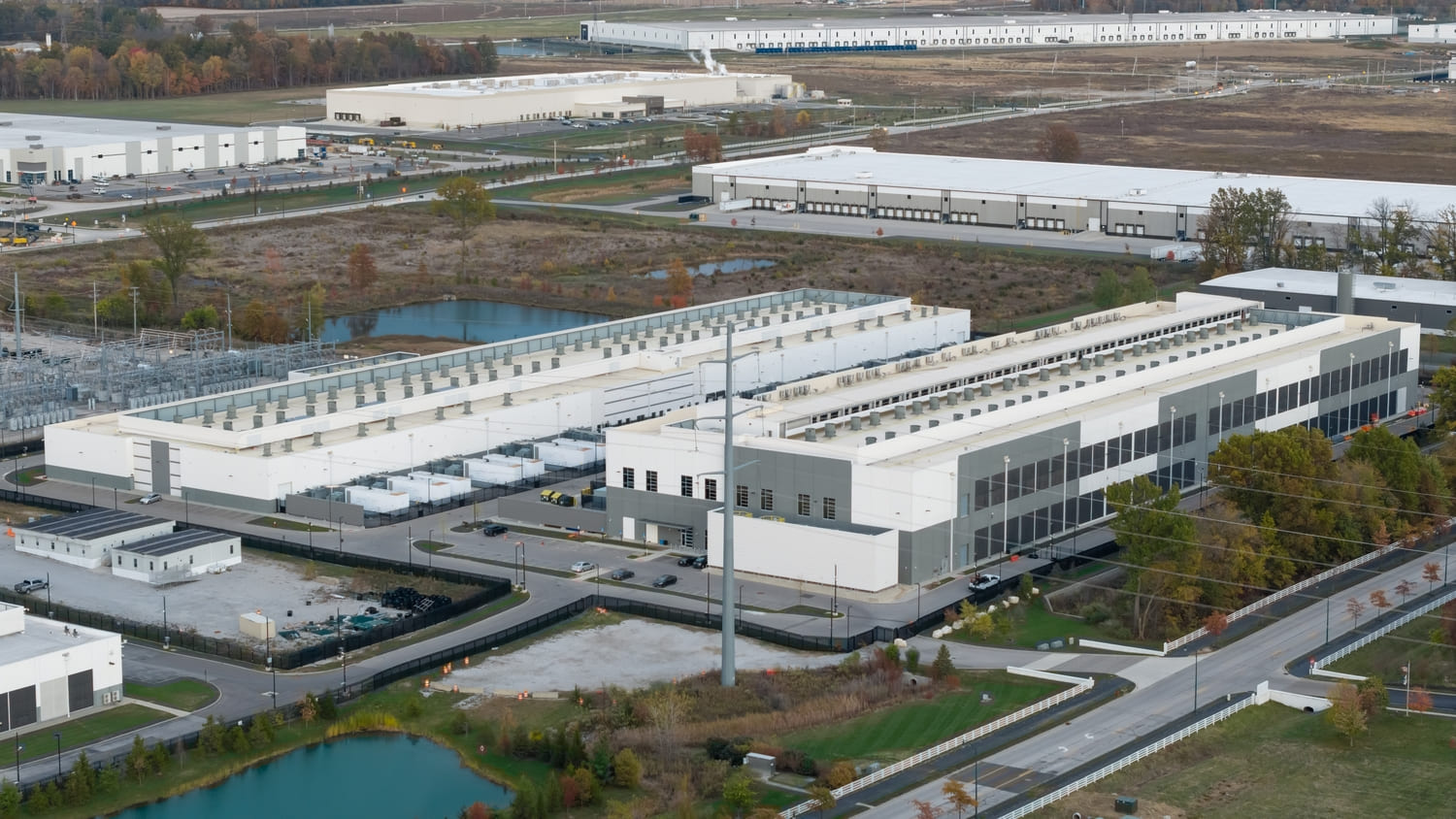
- AI infrastructure is scaling rapidly. Europe’s data‑center power capacity jumped from 26 GW in 2015 to 81 GW in 2024, and analysts expect it to reach 222 GW by 2030. This surge is tied to generative AI and cloud services, which require vast amounts of compute, storage and cooling.
- Data‑center logistics is a specialized field. Delivering and installing high‑value servers and cooling units involves tightly sequenced global supply chains, zero‑margin delivery windows and strict security requirements. White‑glove services-custom packing, anti‑static materials and trained crews-are critical.
- Market demand is exploding. The data‑center logistics market was worth about US$17.4 billion in 2025 and is projected to reach US$34.1 billion by 2033. The AI‑driven warehousing market itself could surpass US$135 billion by 2035.
- Hyperscalers need new warehouses. DHL is opening ten dedicated sites in North America with over 7 million sq ft of capacity to support hyperscale data centers, while Arvato has built a 25,000‑m² logistics hub in Texas for high‑security warehousing and white‑glove deliveries.
- Supply chains are shifting. Traditional just‑in‑time models don’t work for AI hardware. Operators use hybrid logistics with central hubs and local warehouses to keep critical spare parts close to decentralized data centers.
Data-center logistics refers to the specialized supply chains for deploying servers, racks, cooling units and other critical hardware under tight timing and security requirements. As generative AI and cloud services expand, companies are building more and larger data centers, which in turn drives unprecedented demand for warehousing that can handle these high-value assets. Below we break down the key factors, market trends, and solutions that explain why AI is creating a new wave of warehouse demand.
What Does “Data‑Center Logistics” Really Mean?
Data-center logistics involves the movement, storage and handling of the specialized components that power data centers (servers, racks, cooling systems, batteries, etc.), under strict conditions. Unlike normal supply chains, these assets are extremely high-value, often fragile, and must be deployed on tight schedules. Data centers may be located in remote or suburban areas (for power and space reasons), so supporting equipment must be pre-positioned in nearby warehouses. In practice this means:
- Secure Warehousing: Dedicated facilities with 24/7 surveillance, biometric access, and high inventory accuracy are required.
- Just-In-Time Delivery: Shipments of servers and parts arrive on-demand exactly when needed (often when technicians are on-site), so timing is critical.
- White-Glove Services: Skilled crews unload and unpack sensitive equipment, install it, or stage it for delivery, often with custom packing materials and anti-static measures.
- Continuous Supply: Data centers need ongoing supplies (replacement parts, cooling fluids, backup batteries) throughout their lifespan, creating a steady stream of logistics requirements.
Why Are Data‑Center Supply Chains Different?
Data-center supply chains require more precision, security, and specialized handling than typical retail or manufacturing logistics because the equipment is high-value, sensitive, and often tied to strict construction and installation schedules.
- High-value, sensitive equipment: GPUs, servers, UPS systems, cooling units, and electrical switchgear can be extremely expensive and fragile. Damage, vibration, static electricity, or improper handling can lead to costly delays.
- Strict security requirements: Data-center hardware often requires secure warehousing, controlled access, 24/7 monitoring, accurate inventory tracking, and environmental controls to reduce the risk of theft, tampering, or damage.
- Precise delivery windows: Servers, cooling systems, racks, and other components must arrive in the correct sequence and often at specific installation times. Delivering too early can create storage problems, while late shipments can delay construction or commissioning.
- White-glove handling and installation support: Specialized logistics may include custom packaging, anti-static protection, shock monitoring, careful unpacking, rack configuration, testing, and staging equipment so it arrives ready for installation.
- Infrastructure staging: During construction, components such as cooling systems, power units, steel structures, and modular equipment often need nearby warehouse space for temporary storage, assembly, and staging before final delivery.
- Supplier and spare-parts networks: Major data centers create demand from server manufacturers, cooling-system suppliers, power-equipment vendors, and maintenance providers, all of which may require local or regional warehouse capacity.
- Long-term inventory support: Warehouse demand continues after construction. Operating data centers need replacement servers, batteries, filters, electrical components, and other spare parts close to the facility to minimize downtime.
In short, data-center logistics is about ensuring that critical equipment is securely stored, carefully handled, and delivered to the right place at exactly the right time, ready for installation or use.
How AI Drives Demand for Specialized Warehousing
The AI Infrastructure Boom
An “arms race” among tech giants and AI startups is fueling explosive growth in data‑center capacity. Global data‑center power jumped from 26 GW in 2015 to 81 GW in 2024 and is forecast to reach 222 GW by 2030. Growth rates have accelerated from ~13.5 % annually (2015–2024) to about 18 % per year. In Europe, this expansion is expected to generate an additional 8.5 million sq ft of logistics demand.
As AI models like GPT and other generative systems require enormous compute clusters, hyperscale operators are racing to deploy thousands of servers, high‑density power modules and complex cooling solutions. The data‑center logistics market reflects this urgency: US$17.4 billion in 2025, rising to US$18.6 billion in 2026 and projected to US$34.1 billion by 2033 at a 9.1 % CAGR. North America accounted for roughly 38.7 % of revenue in 2025.
Hyperscalers Turn to Dedicated Warehouse Capacity
To meet AI demand, logistics providers are building dedicated facilities. In March 2026, DHL Supply Chain announced ten new data‑center logistics sites in North America totaling over seven million square feet. These warehouses offer white‑glove handling, rack pre‑configuration and specialized transport from warehouse to site. The aim is to move integration and testing out of the construction zone into controlled logistics hubs, reducing on‑site complexity and installation risk. A survey commissioned by DHL found that 85 % of data‑center operators prefer a single end‑to‑end logistics partner, but only 43 % have one, highlighting the need for unified service providers.
Meanwhile, Arvato opened a 25,000‑m² data‑center logistics hub in Denton, Texas. The site initially uses 14,000 m² but is designed for expansion and offers high‑security warehousing and white‑glove deliveries for hyperscalers and cloud providers. According to Arvato, the U.S. data‑center market is “scaling at unprecedented speed”; their hub combines secure warehousing, specialized handling and coordinated last‑mile execution to support AI infrastructure. A DC Velocity report adds that the facility comprises about 270,000 sq ft, with 150,000 sq ft allocated for operations, and provides white‑glove deliveries and high‑security handling.
Competition for Industrial Space
Data centers and logistics facilities often compete for similar locations. Speculative warehouse units are being leased and retrofitted as data centers; with data‑center returns outperforming traditional industrial assets, land that once fed future warehouse supply pipelines is being repurposed. In European markets like Dublin and Houston, datacenter projects accounted for about 10 % of logistics take‑up in 2025. Savills estimates that each megawatt (MW) of data‑center capacity under construction requires roughly 7,250 – 10,560 sq ft of logistics space, meaning the 950 MW under construction in the FLAPD markets (Frankfurt, London, Amsterdam, Paris, Dublin) could add ~8.46 million sq ft of warehouse demand.
AI‑Driven Warehousing
Beyond data‑center construction, AI itself is revolutionizing warehouse operations. Research Nester estimates that the AI in warehousing market was worth US$13.41 billion in 2025 and could reach US$135.25 billion by 2035, growing at more than 26 % CAGR. Warehouse operators are adopting machine learning, robotics and drones to streamline workflows, reduce errors and improve inventory management. Industry surveys cited by McKinsey and DHL suggest that about one‑third of logistics and transport companies already use AI, more than half of warehouses use robotics, and nearly half are adopting drones.
What Makes Specialized Warehousing Different?
Enterprises building AI data centers have unique warehousing needs. Specialized warehouses differ from standard ones in key ways, as shown below.
High-Security Storage
Data-center hardware must be protected against theft, damage and tampering. Specialized facilities often include:
- Restricted Access: Only vetted personnel can enter. Biometric readers and multi-factor authentication are common.
- Continuous Monitoring: 24/7 CCTV, motion sensors, and patrols. Some even have on-site security guards.
- Environmental Control: Precise climate control (temperature and humidity) to protect electronics.
- Inventory Accuracy: Real-time WMS tracking to ensure all items are accounted for (accuracy rates like 99.99% are expected).
These measures go beyond a typical distribution warehouse. For AI hardware – valued often at tens of thousands per rack – the liability of loss or damage is enormous. High-security storage preserves value and ensures equipment integrity until final installation.
Examples: Facilities like DFW Cargo in Dallas or Vault Logistics in NYC are early examples of high-security data-center hubs, offering features like gated perimeters and climate-controlled “vaults” for servers.
White-Glove and Heavy-Haul Capabilities
“White-glove” service in this context means high-touch handling: custom packing, climate boxes, anti-static procedures, and even on-site tech support. Many AI components (like GPU servers or precision cooling units) require:
- Careful Unpacking: These items may be shrink-wrapped or crated; unpacking them without damage is a skilled operation.
- Equipment: Heavy-duty forklifts, overhead cranes, and precision lift tables handle overweight racks. Some warehouses have special truck docks that lower to the ground for safe transfer.
- Expert Staff: Crews trained in handling electronics, ESD safety, and sometimes installation procedures.
For example, if a hyperscaler sends 500 servers to be installed, the warehouse team might unwrap and assemble racks on pallets, attach cables, test power, and only then load them into the final delivery trucks. This heavy-haul and white-glove work is far beyond “store-and-forget” warehousing. It often involves break-bulk services and detailed cross-docking with minimal touches to preserve equipment quality.
Value-Added Services
Dedicated data-center logistics centers also offer extra services to add value:
- Rack Pre-Configuration: Building complete racks (mounting servers, storage, network gear) in the warehouse, so only the pre-built rack needs shipment to site.
- Light Assembly & Testing: Plugging in systems and running diagnostics at the warehouse to catch issues early.
- Inventory Management: Integrated WMS with customs compliance and tracking for all data-center SKUs.
- Reverse Logistics: Handling returns or recycling of outdated servers and batteries – often a legal requirement for e-waste.
These value-added tasks minimize installation time on-site and reduce errors. They help hyperscalers keep complex projects on schedule by making the warehouse an active part of the deployment process, not just a waiting room.
Example: A company might store dozens of rack cabinets loaded with NVIDIA GPUs. Staff at the warehouse power them up and verify the arrays are complete. By the time these racks are trucked to the data center site, the only remaining step is bolting them into racks and connecting network cables. This significantly shortens deployment timelines.
How Are Logistics Networks Evolving?
Hybrid Logistics Models
Traditional just‑in‑time models are ill‑suited to AI hardware’s complexity and supply shortages. Data‑center operators need strategically designed, resilient networks with inventory buffers and on‑site services. As new data centers are built outside metropolitan areas, logistics must combine central hubs with local warehouse structures to keep spare parts close while maintaining efficient transportation routes. This hybrid approach ensures speed and reliability, a key benchmark for operational excellence.
Edge and Decentralized Supply Chains
The rise of edge computing pushes data centers closer to end users, increasing the need for smaller, decentralized facilities. Edge data centers demand agile, decentralized logistics networks capable of reaching multiple smaller sites quickly. These deployments often require modular equipment and frequent, time‑sensitive shipments.
Integration of AI in Logistics
AI isn’t just consuming warehouse space, it’s also optimizing logistics. Predictive analytics and AI‑powered systems can forecast demand, optimize inventory placement and detect equipment wear before failures occur. Real‑time tracking through IoT sensors and control towers provides visibility into asset location, temperature and shock exposure. As project timelines compress, digital coordination becomes essential to maintain schedule and quality.
Sustainability and Circular Logistics
Data centers face scrutiny over carbon emissions and resource use. Logistics providers respond by optimizing routes, using energy‑efficient vehicles and reducing packaging waste. Reverse logistics-secure removal, recycling or refurbishment of obsolete equipment-is becoming standard. Reuse of components and resources‑efficient processes are essential for a future‑proof supply chain.
Conclusion and Next Steps
The surge of AI and cloud computing is more than a technological trend, it is reshaping physical logistics. Data‑center operators need specialized warehouses, white‑glove handling and hybrid supply chains to deliver and maintain high‑value equipment. Market data show that investment in data‑center logistics and AI‑driven warehousing is set to grow dramatically over the next decade. At the same time, the logistics industry is integrating AI, sustainability and resilience into its own operations to keep pace with this demand.
As AI continues to evolve, expect to see further innovations-autonomous vehicles handling intra‑facility transport, AI‑driven route optimization and greater emphasis on circular supply chains. Businesses planning new data‑center projects should partner with logistics providers who offer comprehensive services, from high‑security warehousing and white‑glove deliveries to inventory management and reverse logistics.
Frequently Asked Questions (FAQ) – OLIMP Warehousing
Q: Why is AI driving demand for more warehouses?
Generative AI and cloud services require massive amounts of compute and storage. Hyperscale data centers deploy thousands of servers and high‑density power modules, creating a need for specialized warehousing to stage, pre‑configure and securely store equipment before installation. Each megawatt of data‑center capacity under construction requires roughly 7,250–10,560 sq ft of logistics space.
Q: What is white‑glove handling in data‑center logistics?
White‑glove handling refers to end‑to‑end services for high‑value equipment, including custom packing, anti‑static materials, shock sensors, secure transport, on‑site unpacking and placement, and debris removal. This level of care minimizes damage and installation delays, ensuring servers and power modules arrive installation‑ready.
Q: How big is the data‑center logistics market?
Grand View Research estimates that the global data‑center logistics market was worth about US$17.4 billion in 2025 and is projected to grow to US$34.1 billion by 2033. North America accounted for about 38.7 % of revenue in 2025.
Q: How is AI used within logistics operations?
AI enhances logistics through predictive analytics, real‑time tracking and automation. Predictive models forecast demand and optimize inventory placement; AI‑powered systems detect wear in components before failures occur. IoT sensors and control towers provide real‑time visibility into asset location, temperature and shock exposure.
Q: Are AI warehouses replacing human workers?
AI reduces labor needs in repetitive tasks by automating picking, packing and routing, but it doesn’t eliminate human roles. About one‑third of logistics companies use AI, while over half of warehouses employ robotics and nearly half adopt drones. Human oversight remains essential for complex operations, safety and maintenance.
Q: What are white-glove handling and heavy-haul services?
“White-glove” handling means careful, high-touch service. It includes custom packing materials, ESD safety, and often even tech support during unloading. “Heavy-haul” refers to moving very large or heavy equipment (e.g. full server racks, air conditioners). Warehouses supporting data centers have special forklifts, cranes, and trained staff for these tasks, ensuring that complex hardware is moved without damage.
Q: How is AI used within logistics operations?
Within logistics, AI is used for decision-support and automation. Examples include demand forecasting algorithms that predict part usage, machine-learning software that optimizes warehouse layouts or picking routes, and IoT-enabled tracking. In warehousing, AI-driven robotics and vision systems improve efficiency: roughly half of warehouses now use robotics, and many use predictive analytics to streamline operations.
You may be interested in

What Are Companies Actually Getting From AI in Supply Chains in 2026? Hype vs Real-World ROI
Artificial intelligence in supply chain management represents the systematic deployment of predictive machine learning, generative intelligence, and autonomous agentic systems to optimize end-to-end planning, procurement, and logistics operations. As global networks face persistent economic volatility, enterprises are increasingly allocating digital transformation budgets to artificial intelligence in supply chain systems to mitigate operational disruptions, optimize working […]
Why Did China–U.S. Ocean Freight Rates Rise for Eight Straight Weeks?
China–U.S. ocean freight rates are the prices shippers pay to move containers from Chinese ports to destinations on the U.S. West Coast, East Coast, and Gulf Coast. By early July 2026, spot container rates had risen for roughly eight consecutive weeks as importers accelerated orders, vessel capacity tightened, and geopolitical risks increased shipping costs. What […]
What Is Just-in-Time Shipping and How Does It Work in Container Logistics?
Just-in-time shipping is a logistics model that moves materials, containers, and cargo as close as possible to the moment they are actually needed. In practice, it reduces inventory and storage costs by synchronizing suppliers, carriers, ports, and inland delivery around a tight delivery window. What Is Just-in-Time Shipping and Logistics? At its core, just-in-time shipping […]
Ready to streamline your warehousing needs?
Request a quote today and discover how OLIMP's tailored solutions can optimize your operations