Importing From China to the U.S. Is a Compliance Minefield: How Top Importers Avoid Delays and Build a Smarter Warehousing Strategy
03/19/2026
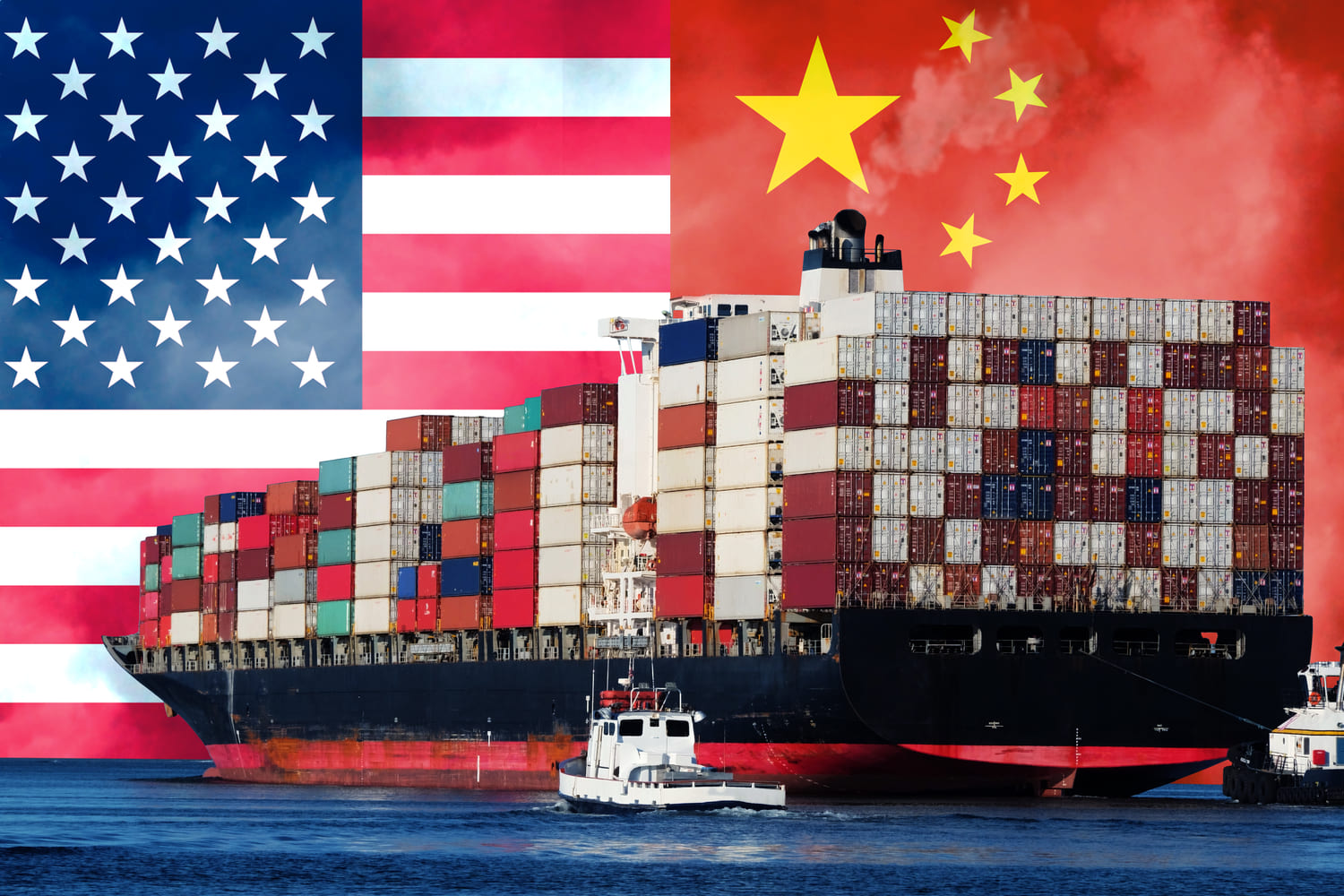
Top importers treat importing from China compliance USA as an operational system, not a last-minute paperwork task.
- It’s not just tariffs: U.S. imports are screened through a “single access point” system that supports many government agencies’ data needs, so errors can trigger holds or rework.
- Your HTS decision is a risk decision: Classification impacts duty/tariff exposure and how your product is treated at entry; only U.S. Customs is authorized to issue binding tariff-classification rulings/advice.
- Supplements are higher-risk: Dietary supplements are treated as “food” for Prior Notice purposes, and inadequate Prior Notice can lead to refusal/holding at the port.
- Bonded warehousing is a control lever: A bonded warehouse can store dutiable goods without payment of duty until withdrawal for consumption (and often supports export/destroy options under supervision).
- Warehousing is part of compliance: “Customs-ready warehousing” and port-centric positioning can reduce dwell time, demurrage/detention exposure, and scramble-driven mistakes.
Importing from China can look simple-book freight, pay duties, deliver to a warehouse-until a missing compliance detail turns “arrival day” into a weeks-long hold. In the U.S., import clearance is a multi-agency process where documentation accuracy and warehouse readiness directly affect speed, cost, and cash flow.
Why Importing From China Is a Compliance Minefield in the U.S.
Many importers assume the “problem” is cost (tariffs). In practice, China to USA import problems are often process failures: incorrect product data, missing agency filings, or a warehouse that isn’t prepared to receive goods still under customs control.
Multiple agencies, one choke point
The U.S. import ecosystem routes data through a shared electronic pathway.This matters because one shipment can trigger requirements across multiple domains (customs admissibility, food safety, labeling, etc.). When something doesn’t match-product description, manufacturer identity, facility registration, or timing-your cargo can stop moving while you fix it.
Delays compound into real money
When cargo sits, you can get hit with charges tied to container time and equipment use. For example, demurrage accrues when a container exceeds free time on a marine terminal, and detention is charged for extended use of intermodal equipment.Even if you manage the compliance fix quickly, port congestion, exam station scheduling, and handoffs can drag out the timeline.
A real-world pattern: “Tariffs weren’t the issue”
A common first-shipment scenario is not “we mispriced duties,” but “we missed a compliance trigger.” For FDA-regulated goods, inadequate Prior Notice is explicitly called out as a reason food can be refused and held at the port of entry.That’s why experienced importers build “pre-arrival certainty” with documented, repeatable checks, not a last-minute scramble.
HTS Codes and Classification: The Hidden Lever Behind Duties, Holds, and Penalties
If you want to minimize customs friction, you have to respect how powerful HTS code tariff classification is.
What an HTS code actually does
The Harmonized System is the global classification framework (about 5,000 commodity groups at the 6-digit level) developed by the World Customs Organization and used by more than 200 countries/economies as the basis for tariffs and trade statistics. In the U.S., the Harmonized Tariff Schedule is published and maintained by the U.S. International Trade Commission.
Crucially, the Office of the U.S. Trade Representative notes that the U.S. Customs and Border Protection is solely authorized to interpret the HTS and issue legally binding tariff-classification rulings/advice for imports.
Why misclassification causes more than “a wrong duty rate”
Even without overstating penalties, misclassification can create three practical problems:
- Cost exposure: Wrong classification can mean wrong duty/tariff treatment, sometimes dramatically.
- Delay exposure: If your entry data doesn’t support admissibility or raises questions, clearance may slow while you produce supporting details (composition, use, specifications). The law also requires entries be supported by invoices/bills of lading/certificates and other required documents (or electronic equivalents).
- “Fix it now” enforcement pressure: Regulations allow customs to tighten conditions for importers with repeated issues-for example, requiring entry summary documentation and estimated duties at time of entry before release in certain situations.
Best practice: treat HTS as an evidence-backed decision
Top importers create a “classification packet” that can survive scrutiny:
- product spec sheet + materials/bill of substances
- photos and packaging/label proofs
- intended use and consumer positioning
- version control (what changed since last shipment?)
This is a key part of compliance logistics best practices: you’re not just picking a code, you’re preparing the evidence trail that makes the code defensible and repeatable.
FDA Compliance for Supplements: Prior Notice, Facility Registration, and Import Alerts
Supplements are a frequent pain point because they sit in a heavily regulated lane, and simple mistakes (timing, facility IDs, labeling) can cause supplement import delays customs teams can’t “expedite” away.
Dietary supplements are “food” for Prior Notice purposes
Under federal regulation, “food” for Prior Notice explicitly includes dietary supplements and dietary ingredients.That’s why “FDA compliance supplements import” work often starts with Prior Notice.
Prior Notice basics (and why holds happen)
The U.S. Food and Drug Administration states that Prior Notice must be provided for all imported food (human and animal), and it can be filed through customs’ interface or FDA’s own system.
If you fail to give adequate Prior Notice, FDA guidance is blunt: the food is subject to refusal and, if refused, must be held at the port of entry unless directed elsewhere-and importing in violation is a “Prohibited Act.”
Why this matters operationally: even if your product is otherwise compliant, you can lose days to a preventable filing error.
Facility registration and “who must register”
For most supplement supply chains, a key question is: “Is the foreign facility registered, and do we have the correct registration details on file?”
FDA’s industry guidance explains that domestic and foreign facilities that manufacture/process, pack, or hold food for consumption in the U.S. must register, and renewal is required every other year during a defined window.
Foreign facilities must also designate a U.S. agent for communication purposes.
Import Alerts and DWPE (Detention Without Physical Examination)
Import Alerts are a major reason “one bad shipment becomes a recurring nightmare.”
FDA explains that Import Alerts are used to protect consumers against products with a history of violations; FDA may detain future shipments without physically examining them-called “DWPE.”
FDA also defines the common Import Alert list statuses:
- Red List: subject to DWPE
- Yellow List: intensified surveillance
- Green List: exempt from DWPE criteria (per the alert)
For import planning, this means you should be checking whether your product/manufacturer pattern aligns with heightened scrutiny before you ship, not after the container lands.
Customs-Ready Warehousing: Bonded, Port-Centric, and Documentation-Savvy Ops
This is where compliance stops being “a broker problem” and becomes a warehousing strategy problem.
What “customs-ready warehousing” should mean in practice
“Customs-ready warehousing” isn’t a formal legal term, it’s an operational standard: a facility and partner network able to handle freight that’s cleared, not yet cleared, or under special control processes without breaking chain-of-custody or losing critical paperwork.
Two facility concepts matter most:
Bonded warehouses (duty deferral + control)
A bonded warehouse is defined (in U.S. government export guidance) as a secured area where dutiable goods may be stored/manipulated (or undergo certain operations) without payment of duty.
Why this is a big deal:
- Bonded warehouse benefits: no duty is collected until merchandise is withdrawn for consumption, which improves cash flow timing.
- Merchandise can generally remain in a bonded warehouse up to 5 years from the date of importation (subject to certain extensions/approvals).
- The warehousing period and end-of-period disposition are defined in regulation (e.g., 19 CFR 144.5–144.7).
This is the compliance/finance crossover many importers miss: you can avoid paying duties on inventory you won’t sell this quarter, if you structure storage correctly.
Port-centric warehousing (velocity + fewer compounding failures)
Port-centric logistics places warehousing near a port so containers can move a short distance to a nearby facility for storage, sorting, or cross-docking, reducing long inland transport time and shortening the gap between arrival and delivery.
This doesn’t “solve compliance,” but it reduces the time and complexity penalties that come with holds, exams, and rework, especially when you’re coordinating brokers, drayage, and warehouse receiving windows.
Customs exams: why warehouse readiness matters
If merchandise is designated for examination, regulations describe bonded movement and liability rules for transferring cargo to a centralized examination station (CES), including movements from bonded facilities under bond.
Translation: your warehouse and drayage plan should anticipate the possibility of exam routing and avoid improvising under pressure.
Demurrage/detention avoidance is part of warehousing strategy
The Federal Maritime Commission defines demurrage/detention in operational terms (terminal free time vs. extended equipment use).
A compliance-aware warehouse strategy aims to shorten “sitting time” by planning:
- pre-arrival document validation
- flex receiving for exam outcomes
- quick transload/cross-dock pathways once released
Strategic Logistics Tools: Cross-Docking, Drayage Planning, and Broker Specialization
Once you accept that compliance and warehousing are linked, the best importers add tactical tools that reduce time-in-system.
Cross-docking for importers
Cross-docking moves inbound goods through a facility with little or no storage: receive, sort, and load to outbound trucks. One widely cited benefit is lower storage costs and faster delivery by reducing time products spend in warehouse space.
For regulated goods, the play is: clear → cross-dock → distribute, rather than clear → store → pick/pack, when the business case supports it.
Broker specialization (especially for FDA-regulated products)
The legal framework allows entries and data to be filed by the importer or, when designated, a licensed broker.
Operationally, not all brokers are equal. For supplements and other FDA-regulated products, your margin for error is smaller because:
- Prior Notice timing and completeness are strictly consequential.
- Import Alerts can create repeat detentions through DWPE.
“Broker expertise + warehouse execution” is how sophisticated importers keep velocity high.
Use the same mindset for “warehouse compliance services USA”
Whether you call it “warehouse compliance services USA” or “compliance-enabled fulfillment,” the practical requirement is the same: your warehouse partner must be able to confirm that what arrives matches what was filed, before it becomes a problem.
Practical Import Compliance Checklist Before Your Shipment Leaves China
Use this as a pre-departure gate. The goal isn’t perfection, it’s preventing preventable holds.
- Confirm product classification evidence (specs, composition, intended use) and lock your HTS code tariff classification approach before booking.
- Validate FDA status (if applicable): confirm whether your product is “food” for Prior Notice purposes (dietary supplements are included) and verify filing responsibility.
- File Prior Notice correctly and on time: FDA must receive and confirm Prior Notice before arrival; inadequate Prior Notice can trigger refusal/holding.
- Ensure facility registration is handled where required: food facilities that manufacture/process/pack/hold for U.S. consumption must register; renewals occur every other year, and foreign facilities need a U.S. agent.
- Pre-plan your “hold scenario”: know where cargo can go if moved under bond for exam/secure holding and who controls drayage instructions.
- Choose the right warehouse mode up front: decide whether you need bonded storage (duty deferral), port-centric staging (velocity), or standard domestic receiving-before arrival day.
Conclusion
Importing from China doesn’t have to feel like roulette. The importers who stay fast and profitable do three things consistently: (1) treat compliance as a documented system, (2) choose warehousing modes that match customs reality (bonded/port-centric when needed), and (3) design operations to handle holds without chaos.
If you’re tightening your process, a good next step is a 30-minute “pre-arrival” review of your next shipment: HTS support packet, FDA filings (if applicable), and a warehouse plan that still works if inspection or holding happens.
Frequently Asked Questions (FAQ) – OLIMP Warehousing
Q: Why do shipments from China get held at U.S. customs?
Because clearance depends on accurate data and (often) multiple agencies’ requirements; incomplete or inconsistent filings can trigger holds, exams, or rework.
Q: How do I find the correct HTS code for my product?
Start from the U.S. Harmonized Tariff Schedule framework and build an evidence-backed classification. For legally binding classification certainty, U.S. Customs is the authority that can issue binding rulings/advice.
Q: Do dietary supplements require FDA Prior Notice?
Yes, dietary supplements and dietary ingredients are included in the regulatory definition of “food” for Prior Notice, and FDA requires Prior Notice before arrival.
Q: What happens if I file Prior Notice incorrectly?
FDA guidance states that food with inadequate Prior Notice is subject to refusal and, if refused, must be held at the port of entry (unless directed elsewhere).
Q: What is an FDA Import Alert and what does “DWPE” mean?
An Import Alert flags products/firms with a pattern of violations; FDA can detain future shipments without physical examination (DWPE). FDA also uses Red/Yellow/Green list concepts to describe DWPE status and surveillance intensity.
Q: What is a bonded warehouse and when does it make sense?
A bonded warehouse can store dutiable goods without paying duty until withdrawal for U.S. consumption, supporting duty deferral and better cash-flow timing. Merchandise can generally remain in bonded warehouse up to 5 years from importation (subject to rules).
Q: How does cross-docking help importers reduce delays?
Cross-docking moves goods through a facility with minimal storage time, which can reduce storage costs and speed delivery, especially once shipments are released.
You may be interested in

Straight Truck Guide: Dimensions, Weight Limits & Choosing the Right Truck
A straight truck is a vehicle with the cab and cargo body mounted on one rigid chassis. Common examples include box trucks, refrigerated trucks, and single-unit dump trucks. Unlike a tractor-trailer, its main cargo body stays attached to the truck rather than traveling on a separate semitrailer. Straight trucks are widely used for local deliveries, […]

How Do You Know When Your E-Commerce Business Actually Needs an ERP?
An e-commerce business needs an ERP when managing orders, inventory, finances, suppliers, and customer data across separate systems starts creating errors, delays, and unnecessary manual work. However, reaching a specific revenue or order-volume milestone does not automatically mean you need an ERP. The real trigger is operational complexity: your business has outgrown its current tools, […]
How AI Is Driving New Warehouse Demand in Data-Center Logistics
Data-center logistics refers to the specialized supply chains for deploying servers, racks, cooling units and other critical hardware under tight timing and security requirements. As generative AI and cloud services expand, companies are building more and larger data centers, which in turn drives unprecedented demand for warehousing that can handle these high-value assets. Below we break […]
Ready to streamline your warehousing needs?
Request a quote today and discover how OLIMP's tailored solutions can optimize your operations